Federal judge partially blocks Idaho trans bathroom ban law with preliminary injunction
Jun 16, 2026 | 3:20 pm ET
Description
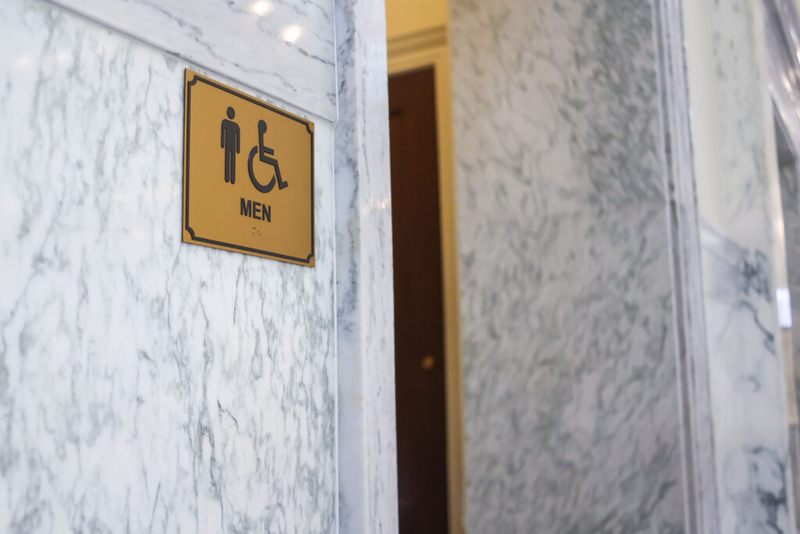
A men's bathroom sign as seen on March 16, 2026, at the State Capitol Building in Boise. (Photo by Pat Sutphin for the Idaho Capital Sun)
A federal judge in Idaho on Tuesday partially blocked enforcement of a new law that would’ve criminalized transgender people from using bathrooms that align with their gender identity.
The law was set to go into effect July 1. The portion of it that prohibits people from entering changing rooms that don’t align with their biological sex will still go into effect.
The federal court order comes in response to a lawsuit filed by six transgender Idahoans challenging House Bill 752, which the Legislature passed and Gov. Brad Little signed this year. The law makes it a misdemeanor crime, punishable by up to a year in prison, to use a bathroom in a public facility, or private business that’s open to the public, designated for another biological sex. A second offense is a felony, punishable by up to five years in prison.
U.S. District Court Judge Amanda Brailsford wrote in her decision that the way the law was written was vague and “invites arbitrary and discriminatory enforcement.” Idaho Attorney General Raúl Labrador, whose office defended the law, said he plans to appeal the decision.
The narrow block on enforcement protects transgender people seeking to use a single-user bathroom, or a multi-user bathroom when no single-user one is available.
Her order also granted class certification, meaning the law cannot be enforced against any transgender people in Idaho trying to use a bathroom that doesn’t align with their sex designated at birth.
Brailsford’s order did not weigh in on the lawsuit’s other challenges against the law, which include the contention that it violates due process and equal protection rights. She wrote that she will consider those claims as the case goes on.
ACLU of Idaho: Ruling means trans people ‘can continue participating in public life’
Attorneys from the national American Civil Liberties Union, the law firm Munger, Tolles & Olson, Alturas Law Group, PLLC, the ACLU of Idaho and Lambda Legal are representing the transgender Idahoans in the lawsuit.
“This ruling means trans folks in Idaho can continue participating in public life without the threat of being arrested for using the bathroom,” Paul Carlos Southwick, ACLU of Idaho legal director, said in an emailed statement. “Trans Idahoans have been understandably anxious about the disruption this unconstitutional law would cause in their daily lives. This ruling will relieve that anxiety for our trans friends and neighbors.”
Lambda Legal attorney Kell Olson said, “Our Constitution provides critical protections against laws that are unclear and that call on officers to make arbitrary judgments about how to enforce them, especially when the law threatens imprisonment. The court recognized that threat in providing relief to plaintiffs today. This ruling will allow transgender people throughout Idaho to find and use a public restroom, without the fear of arrest looming over them, while we continue the longer fight to permanently defeat this discriminatory law in court.”
Labrador’s attorneys argued that the law was necessary to protect people who are undressed in private, sex-designated spaces. He said that the law wasn’t vague, and that his office will “keep fighting until this commonsense protection is fully enforced.”
“This is a results-driven decision that misapplies the law, confuses the issues, and misrepresents the position of the State,” Labrador said in an emailed statement. “Biological sex is not vague, and neither is this law. The good news is that this ruling is narrow. Idaho’s law remains enforceable in most settings, including changing rooms and many restrooms. The injunction applies only in limited circumstances and to certain people.”
Why did the judge find the law vague?
There is a legal standard for laws to ensure a person of “ordinary intelligence” would be able to interpret them and know exactly what is prohibited. This standard is more highly scrutinized when there are criminal penalties in place, Brailsford wrote.
“Here, H.B. 752 imposes criminal penalties — up to a felony for repeat violations — yet leaves critical enforcement decisions to the unguided discretion of individual officers,” Brailsford said.
The judge pointed to the law’s exemption for if someone is “in dire need of urinating or defecating and such facility is the only facility reasonably available at the time of the person’s use.”
She wrote that the law doesn’t define “dire need,” or what “reasonably available” might mean.
“Different officers could reasonably reach different conclusions regarding identical conduct, not because the facts differ, but because the statute furnishes no standards by which those facts are to be evaluated,” Brailsford said.
She noted that law enforcement groups expressed this same concern during hearings on the bill. She quoted a letter from the Idaho Chiefs of Police Association to legislators regarding HB 752 that said it was “unclear how an officer responding to a call would reasonably determine whether someone was truly in ‘dire need,’ creating an enforceable standard that places officers in a difficult position.”
She also said that it would be difficult for a police officer to determine someone’s biological sex. The attorney general’s office attorney suggested during the hearing on whether to block the law that officers could use DNA testing. Brailsford said that a warrant allowing DNA collection or consent would be needed to do this. She quoted law enforcement leaders who told lawmakers ahead of the passage of the bill that determining someone’s sex would be an “unrealistic and absurd burden on Idaho law enforcement officers.”
Why allow the law to be blocked?
The block, or “preliminary injunction,” can usually only be put in place if there’s sufficient evidence that people may face harm if it isn’t. Having found that the law is likely “unconstitutionally vague,” Brailsford ruled in favor of the trans individuals who sued, because they adequately demonstrated they couldn’t be sure when they might be prosecuted under the law.
She wrote that she agreed with Labrador’s attorneys that the state had an interest in “promoting bodily privacy and protecting women and children in public restrooms from those who may seek to do harm.”
“The Court does not question the inherent privacy interest implicated by restroom use nor Idaho’s interest in protecting the public from wrongdoers,” Brailsford said. “But Idaho may protect those interests without infringing upon Plaintiffs’ constitutional rights.”
She said existing laws prohibiting assault, battery, rape, malicious harassment, indecent exposure, criminal trespass and disturbing the peace gave law enforcement the ability to protect citizens.
“Furthermore, the Court is not presently convinced that H.B. 752 furthers Idaho’s safety interest,” she said.
What happens next?
The partial block imposed Tuesday is temporary as the court weighs constitutionality of the law.
Idaho’s ban is unique in that it applies to private businesses. The ACLU has said that Idaho’s bathroom ban is the only state ban that extends to private businesses and has the steepest penalties out of the three states that have criminal bathroom bans.
The Idaho Legislature has in recent years passed a series of bills targeting transgender people that have been challenged in court.
Idaho’s 2020 law that bans trans women and girls from competing in sports that align with their gender is awaiting a ruling by the U.S. Supreme Court. The state’s 2023 trans bathroom ban in public schools took full effect last month. A high school group challenging the law dropped its lawsuit after a trans student part of the group died by suicide, the Idaho Capital Sun previously reported.
Correction: This story was edited at 2:50 p.m., June 16 to reflect that the law firms Munger, Tolles & Olson and Alturas Law Group, PLLC are also representing the plaintiffs in the lawsuit. It was corrected at 3:13 p.m. to reflect the narrow injunction applies to single-user bathrooms and multi-user bathrooms in narrow circumstances.
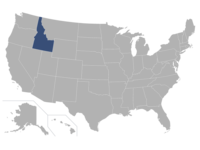
Boise, ID