FCC approves cellphone jamming in state prisons, a longtime priority for SC leaders
Nov 19, 2026 | 2:35 pm ET
Description
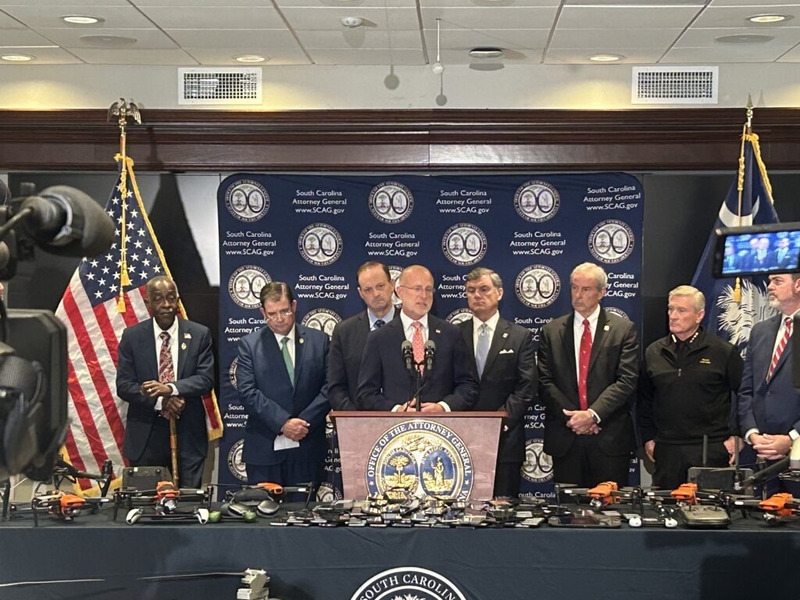
Federal Communications Commission Chairman Brendan Carr, surrounded by South Carolina law enforcement officials, talks about cellphone jamming at the attorney general's office in Columbia, S.C., on Wednesday, Nov. 18, 2026. (Photo by Skylar Laird/SC Daily Gazette)
States can ask the federal government for permission to jam cellphone signals in prisons after a federal commission vote Thursday.
The Federal Communications Commission’s vote came a day after South Carolina’s top law enforcement officials called for the regulation to pass, following more than a decade of advocacy from state leaders.
Chairman Brendan Carr and Commissioner Olivia Trusty voted in favor of the change in regulation, which will allow state prisons and local jails to block cellphone signals. Commissioner Anna Gomez agreed in part and dissented in part, raising concerns that the regulation didn’t do enough to ensure prisoners still have access to people on the outside.
After years of advocacy in SC, FCC poised to allow cellphone jamming in state prisons
South Carolina is ready to apply as soon as the rule is officially added to the Federal Register, said state prisons director Joel Anderson. That could take up to a few weeks, Carr said.
The Department of Corrections plans to implement the technology one facility at a time, starting with the Broad River Road complex, which includes five separate prisons, Anderson said Wednesday.
“South Carolina is ready to move forward and institute this crucial public safety technology,” Anderson said in a statement to the Daily Gazette on Thursday. “We will work methodically and strategically to make sure the public, our staff and inmates are safe.”
To start using the technology, the Department of Corrections will need more state funding, said spokeswoman Chrysti Shain. How much is unclear, since that will depend on which companies can prove their jamming technology works, she said.
Over the past two years, legislators spent $18.5 million on technology that tracks cellphones in prisons, allowing officials to report illegal phones and get them turned off. The same technology should be able to block cellphone signals, but that aspect is untested because jamming was previously illegal, Shain said.
Before a state prison or local jail can start jamming cellphone signals, officials must get permission from the FCC. Agencies must prove the technology works and won’t affect communications outside the prison before getting approval.
After that, the FCC will issue annual certificates to make sure the technology is still working as planned, said Wireless Telecommunications Bureau attorney Andrew Ware.
The commissioners agreed contraband cellphones are a major public safety issue. Prisoners have used the phones to have people killed, run scams, and traffic guns and drugs, officials have said.
In South Carolina, prisoners used cellphones to orchestrate a hit on contraband officer Capt. Robert Johnson in 2010, kicking off state leaders’ push to flush phones out of prisons. Johnson survived six bullet wounds from close range.
The largest crime ring in state history also relied on inmates with cellphones, according to the U.S. Attorney’s Office.
“While there is no dispute that this is a problem worth solving, one question has been how to effectively do so while protecting legitimate communications,” Trusty said.
The regulation does that through the specific requirements laid out, she and Carr said.
Despite the safeguards, Gomez still had concerns, she said.
Gomez worried jammers becoming widely available could get them into the hands of bad actors, who might sell them for use outside of prisons, leading to more crimes and other chaos.
“I want to make sure that we don’t harm public safety in the name of helping public safety,” she said.
The regulation addressed many of Gomez’s fears, she said. The change includes strict requirements about notifying nearby communities, proving jammers won’t interfere with other signals, and alerting the FCC immediately if a jammer is taken off prison property.
However, she felt the regulation didn’t do enough to ensure prisoners can still communicate with their families outside the prison walls. The FCC’s primary job in prisons is to ensure access to communication, not block it, she said.
“While correctional facilities should have safety and security services like jamming to prevent criminal activity, it is not the responsibility of the families of incarcerated people to pay the costs of these measures,” Gomez said.
Inmates aren’t spending thousands of dollars on contraband cellphones to talk to their families when they can do so on the prison-provided phones, Carr said.
States, including South Carolina, have tried other methods of keeping phones out of prisons, but none have proven as effective as jamming, Carr said. Prisoners will continue to get contraband and commit crimes without cellphones, but stopping the signals will make that more difficult, he said.
“This itself is not going to be a silver bullet, but I think it’s time that we stop denying this tool to state and local officials,” Carr said.
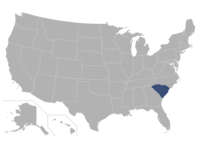
Columbia