Families testify about impact of transgender youth health care ban
Jan 19, 2024 | 8:10 pm ET
Description
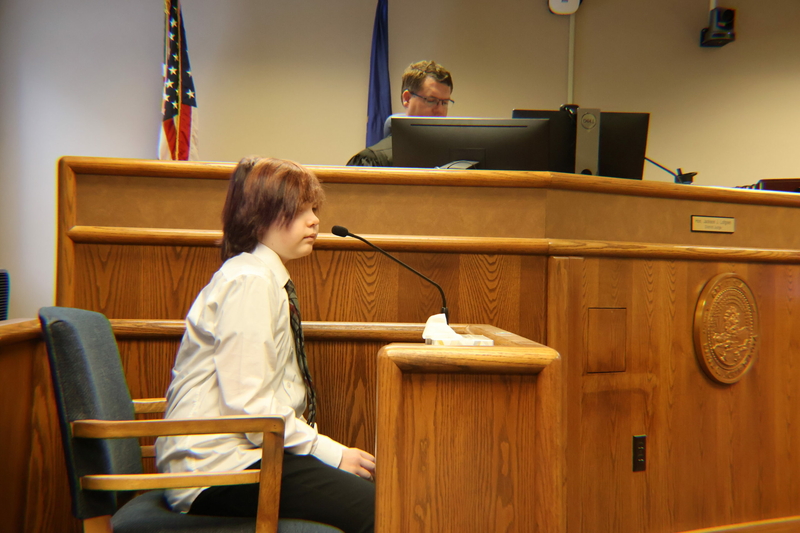
Tate Dolney testifies Jan. 19, 2024, during a hearing related to the North Dakota law on gender-affirming care for minors. South Central Judicial District Judge Jackson Lofgren presided over the hearing in Bismarck. (Amy Dalrymple/North Dakota Monitor)
When Peter Roe’s family takes their daughter, Pamela, to see the endocrinologist, it’s an all-day affair.
They have to pull Pamela, a high school freshman, out of school and make the three-hour drive to Moorhead, Minnesota.
Ever since Pamela started receiving gender-affirming care, she’s “blossomed,” her father said in a Friday court hearing for a case challenging a new North Dakota law banning the treatment for minors.
“She went from being terrified to leave the house, afraid to go to school, to having confidence again and being happy,” he testified.
But it’s a major time investment for the family — not least because Roe only gets two personal days a year from his employer.
North Dakota transgender youth traveling to Minnesota for health care
Pamela used to receive treatment closer to home, but under the ban, adopted by the North Dakota Legislature in 2023, that’s no longer an option.
“It feels like the state is throwing obstacles in front of me,” said Roe. “I’m trying to get the best possible care for my kid.”
Roe is part of a group of families and doctors that in September filed suit against North Dakota over the ban. He and his family are participating in the suit under pseudonyms for fear of public backlash.
Last fall, the plaintiffs filed a motion asking for a preliminary injunction that would halt enforcement of the law until a final decision in the case is made.
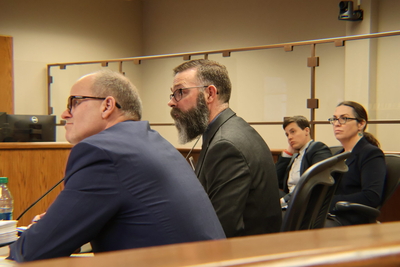
Roe and three other witnesses for the plaintiffs made their case before South Central District Court Judge Jackson Lofgren in a daylong hearing Friday in Bismarck.
The plaintiffs claim the ban, signed into law as an emergency measure by Gov. Doug Burgum on April 19, is unfairly keeping essential medical treatments away from transgender adolescents despite the fact that the same medications are still prescribed to other kids for other reasons. They also say it infringes on parents’ freedom to make medical decisions on behalf of their children.
Attorneys for the state have said previously that the law — which passed the Republican-dominated Legislature with more than two-thirds support from legislators — must be left in place to protect children.
Gender Justice, a Minnesota and North Dakota advocacy group, is representing the plaintiffs.
The text of the law includes an exemption for adolescents who had been receiving gender-affirming care before the policy took effect, which was intended to make sure no children were abruptly pushed off treatment.
But even kids like Pamela, who started care before the ban, can no longer receive the treatment in North Dakota, the plaintiffs say.
They say health care providers do not trust the exemption because the language of the law does not specify which treatments are covered by the clause.
Dr. Luis Casas, an endocrinologist and witness for the plaintiffs, said he no longer sees transgender adolescents for treatment in North Dakota for fear that he could be prosecuted under the new law.
For this reason, kids who see Casas for gender-affirming care must visit his clinic in Moorhead. But he said he’s only there once a month, Casas told the court Friday.
Not all of his patients have been able to continue seeing him after the ban, he added.
While Casas usually doesn’t know the reason someone stops care, he said that two people who discontinued treatment when the law took effect came back after they turned 18.
Health care providers who administer medication as part of gender-affirming treatment in violation of the law could face up to 360 days in jail, fines of up to $3,000 or both. Medical professionals also fear a violation of the ban could affect their medical licenses, according to court filings.
The new law also makes it a class B felony to perform transition-related surgery on a minor. Anyone convicted of doing so could face up to 10 years in prison, a maximum $20,000 fine or both.
Health care professionals told lawmakers in hearings on the bill that transition-related surgeries are not performed on minors in North Dakota.
The defense has argued previously that Casas’ interpretation of the law is incorrect and the ban does not prevent health care professionals from administering gender-affirming care to patients who had already received treatment prior to the ban.
Casas and another witness for the plaintiffs, Bismarck psychiatrist and University of North Dakota faculty member Dr. Gabriela Balf, stressed that the treatments are accepted by the mainstream medical community and are safe.
Casas told the court that adolescents must receive a gender dysphoria diagnosis before they are referred to him. He only proceeds with gender-affirming treatment if he’s confident it’s a good fit for the child, and if the child and parents make an informed decision that it’s the best option, he said.
“It says liberty and justice for all. But I don't feel like I'm getting that justice if I'm not able to get things that non-trans kids get.”
Casas said there aren’t any unique risks to prescribing puberty blockers or hormone treatments for gender dysphoria versus prescribing the medications for other conditions.
Balf, who provides mental health care to adolescents experiencing gender dysphoria, said in wake of the ban, she can no longer refer patients to gender-affirming health care providers in North Dakota. The kind of support she provides them cannot substitute for that care, she said.
“The situation is akin to an abscess that you have that is big and painful and you’re giving antibiotics — which would be mental health (care) in our case — but you’re not draining it,” Balf said.
Tate Dolney, 12, also appeared as a witness for the plaintiffs. Dolney lives in North Dakota and receives treatment from Casas in Moorhead.
While Dolney’s family doesn’t live far from the state border, that doesn’t mean the new law hasn’t affected his care, he said. Since Casas only practices out of Moorhead once a month, it’s harder for the Dolneys to communicate with Casas and to schedule appointments.
Dolney said the new law has made him fearful about the future.
During the hearing, Brittany Stewart, lead attorney for the plaintiffs, asked Dolney how it feels to recite the Pledge of Allegiance every day in school with the new law in effect.
“It says liberty and justice for all,” Dolney replied. “But I don’t feel like I’m getting that justice if I’m not able to get things that non-trans kids get.”
Witnesses for the state argued the scientific community has not reached a consensus on the safety of gender-affirming treatment for children and that the safety of the medications is uncertain.
Dr. James Cantor, a psychologist and director of a private therapy clinic in Toronto, said that even though major American medical associations have embraced gender-affirming treatment, this stance is out of step with the international medical establishment.
“The U.S. is increasingly an outlier among the international scientific community,” he said.
Cantor has provided testimony defending anti-transgender legislation in more than two dozen U.S. court cases, according to a November report by the Canadian Broadcasting Corporation. Most of his career has focused on adult sex research.
During cross-examination, he told the court that he didn’t have expertise in the area of adolescent gender dysphoria or endocrinology. He said the fact he does not have a background in either field lends to his credibility as a witness because he doesn’t have a personal stake in the case.
Dr. Michael Laidlaw, a California adult endocrinologist, raised concerns about health risks related to puberty blockers and hormone therapy, and argued that the treatments were still experimental in nature.
Laidlaw has also testified as an expert witness defending anti-trans laws adopted in the U.S.
Balf, the Bismarck psychiatrist, said that although regulations related to gender-affirming care for minors are under evaluation in other countries — like Norway, Sweden, Finland and the U.K. — it’s a misconception that the countries are taking the treatments off the table. The treatments are still accessible to transgender adolescents in each of those countries, she said.
Balf also said that even though there are still areas of the transgender health care field that warrant more study, current research strongly supports that the treatments are reliable.
Lofgren asked the plaintiffs and defense to file written closing arguments within 30 days.
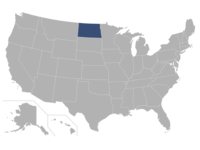
Bismarck, ND