New TBI agents ‘embedded’ with Memphis Safe Task Force
Sep 16, 2026 | 6:02 am ET
Description
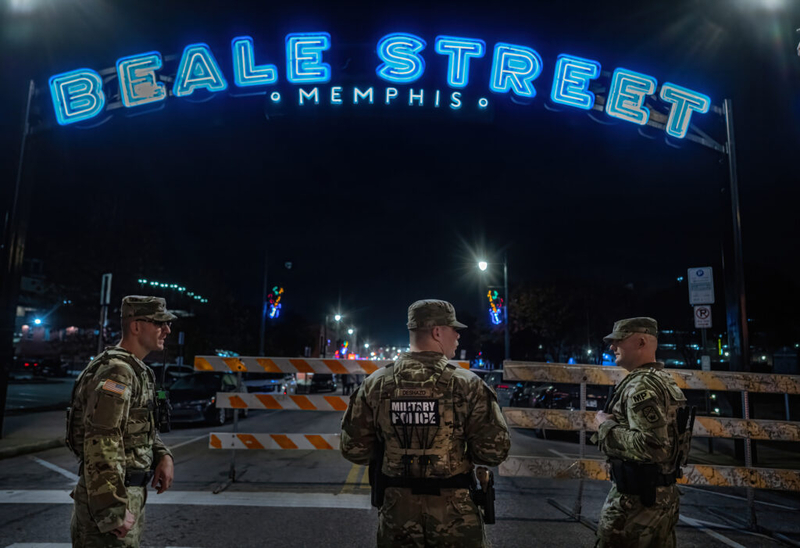
The Tennessee Bureau of Investigation will embed with the Memphis Safe Task Force, which already includes members of the state National Guard, pictured above. (Photo: John Partipilo/Tennessee Lookout)
The state is pouring $9 million this year into a Tennessee Bureau of Investigation task force given wide-reaching authority across the state, including working with the Memphis Safe Task Force.
The legislature set up an eight-member board with the power to initiate investigations and funded 32 positions for the agency’s new group, including agents, supervisors and intelligence analysts, 15 of whom are “embedded in existing operations” with the Memphis crimefighting initiative, according to TBI. The agency is in the process of hiring 17 more special agent criminal investigators. First-year costs include $3.8 million for salaries and $5.2 million for supplies, and in subsequent years the cost is expected to be more than $5 million.
Legislation passed by House Majority Leader William Lamberth of Portland and Republican Sen. Brent Taylor creates a board chaired by TBI Director David Rausch, which has the authority to send TBI agents into law enforcement jurisdictions across the state where crime is deemed too high or at the request of local officials.
The task force is attached to the TBI administratively and “shall determine when criminal activity in a particular jurisdiction is so prevalent as to endanger public safety and require additional law enforcement operations,” the legislation says.
Decisions on assignments and the rationale for deploying TBI task force agents are up to the board’s discretion. The task force is to meet quarterly or hold special meetings, when it can take up a member’s request and vote to send task force agents into a law enforcement jurisdiction. The task force would be subject to the state’s Open Meetings Act, but members could discuss matters in executive sessions closed to the public, then return to an open meeting for a vote.
A sheriff, police chief or district attorney general can request additional law enforcement from the task force for investigations. The board would not have to take a vote on those types of moves.
It has the authority to dispatch agents to investigate major criminal offenses such as murder, gang activities and other crimes such as disorderly conduct, riots and drug and weapons offenses.
Task force investigators also are authorized to make investigations in any judicial district in which the Memphis Safe Task Force is working, without a request from the sheriff, police chief or district attorney.
In addition, the TBI can enter agreements with other bureaus, agencies, departments or task forces in Tennessee, in other states or with federal agencies.
Democratic state Rep. John Ray Clemmons questioned the measure when it passed with supermajority Republican support in April, saying it would allow the task force to override the judgment of local law enforcement officials. Under the legislation, the TBI may open an investigation into a local jurisdiction on its own accord, even over the objection of local district attorneys or law enforcement officials.
“This somewhat defeats the very intent of the creation of the TBI,” Clemmons said, noting the agency was designed to operate independently, following a cash-for-clemency scandal surrounding former Gov. Ray Blanton in 1980.
Giving an appointed task force authority to direct the TBI’s operations undermines the agency’s original design, he said.
Lamberth said the measure only created a group that could take requests from local law enforcement officials and district attorneys for help investigating crimes.
Yet he acknowledged that if a law enforcement agency in the state declines to investigate a potential crime, the task force could step in.
“More investigations is never a bad thing,” Lamberth said.
The TBI’s responsibilities have increased substantially over nearly 50 years, Lamberth added. District attorneys already request TBI investigations for a variety of incidents, including officer-involved shootings, often to avoid the appearance of impropriety.
Even though those types of investigations are made following local requests, Lamberth acknowledged that the task force board could determine whether potential crimes should be investigated if local officials don’t want to look into them.
The TBI group’s involvement in Memphis also could be a sign of things to come.
Republican Rep. John Gillespie, an ardent supporter of the Memphis Safe Task Force, recently posted on Facebook that the group of federal, state and local agencies “started the process of making Tennessee a safer place. This year, we created the Tennessee Safe Initiative Task Force within the TBI to carry the mission forward, not only in Memphis, but across all of Tennessee.”
Memphis city officials didn’t request the task force, which was ordered by President Donald Trump and Gov. Bill Lee. A group made up of Memphis city officials and state lawmakers filed suit claiming deployment of the National Guard was unconstitutional, but the court ruled that they didn’t have standing to sue.
Besides Rausch, task force members are Department of Safety and Homeland Security Commissioner Jeff Long, Jackson Police Chief Thom Corley, District Attorney Russell Johnson of the 9th Judicial District in rural West Tennessee, District Attorney Mark Davidson of the 25th Judicial District in East Tennessee, Cumberland County Sheriff Casey Cox, Maury County Sheriff Buckly Rowland and Oak Ridge Police Chief Charles Smith.
Appointments were made by the governor, police chiefs association, sheriffs association, district attorneys general conference and House and Senate speakers.
- 11:47 amThis story has been updated to reflect that the task force would be subject to the Tennessee Open Meetings Act.
Nashville, TN