Estimated cost of proposed eastern South Dakota water pipeline is at least $8.4 billion
Jul 27, 2026 | 7:06 pm ET
Description
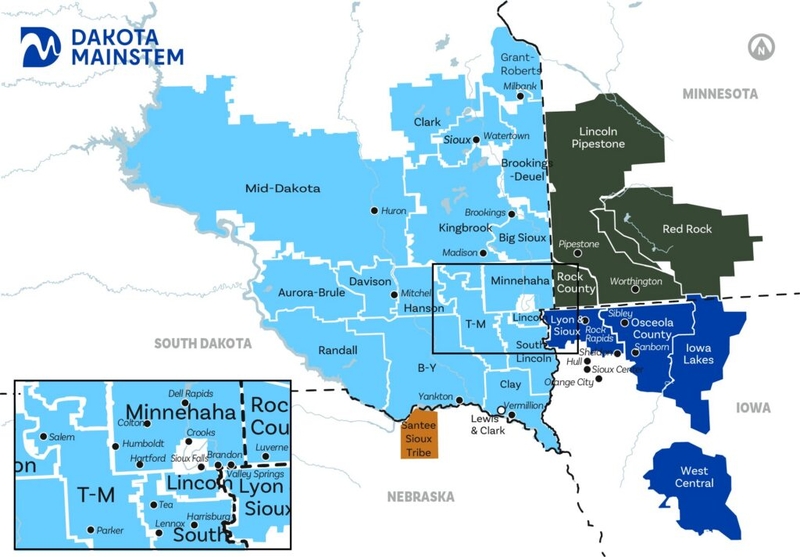
A map of water providers that would be served by the proposed Dakota Mainstem Regional Water System pipeline project. (Courtesy of Dakota Mainstem)
SIOUX FALLS — One of several proposed pipeline systems to deliver Missouri River water in South Dakota could cost $8.4 billion to $10 billion, according to estimates shared Monday.
Dakota Mainstem Regional Water System Executive Director Kurt Pfeifle was on a panel speaking to the Rotary Club of Downtown Sioux Falls.
“That includes about a 30% contingency, but right now, there’s just so many unknowns,” Pfeifle said, referring to a cost estimate buffer.
The system’s proposed pipeline would serve nearly 60 water providers across much of eastern South Dakota and portions of three neighboring states, with a capacity of 195 million gallons per day.
South Dakotan tells Congress of ‘growing water security risk’ if pipeline project is delayed
Pfeifle said the organization recently completed an initial study to arrive at those numbers and is beginning a $4.2 million feasibility study expected to take about two and a half years.
Pending federal legislation sponsored by South Dakota’s congressional delegation would provide funding to help with that study and two other studies for the proposed Western Dakota Regional Water System pipeline, which has an estimated projected cost of $4 billion, and a planned expansion of the Lewis & Clark Regional Water System in southeast South Dakota, which has an estimated project cost of $2.5 billion.
Lewis & Clark Regional Water System Executive Director Troy Larson and Minnehaha Community Water Corporation Executive Director Scott Buss were also on the panel.
Construction began on the Lewis & Clark system in 2003 and is ongoing, although the constructed portion already serves 20 member cities and rural water systems. Completion of the three-state, 44-million-gallon-per-day “base system” is estimated to cost $825 million, with completion sometime in 2028. Federal funding covers 80% of the cost.
Larson said the planned expansion will increase capacity to 60 million gallons per day by 2030. But he said the system’s members already project they will need an additional 95 million gallons per day over the next 40 years.
“That’s 60 plus 95, not 60 and then get to 95,” Larson said.
The projects are driven by industry and population growth.
Minnehaha Community Water is a member-owned utility that receives water from the Lewis & Clark pipeline and the Big Sioux River aquifer, and delivers it to 5,300 rural customers and seven cities. Buss said the system has approached its limits during recent summers — particularly during droughts — and has rejected some economic development opportunities because it could not guarantee it would be able to deliver enough water.

Pierre, SD