The election is over. For Virginia’s congressional delegation, now the real work begins.
Nov 16, 2026 | 5:26 am ET
Description
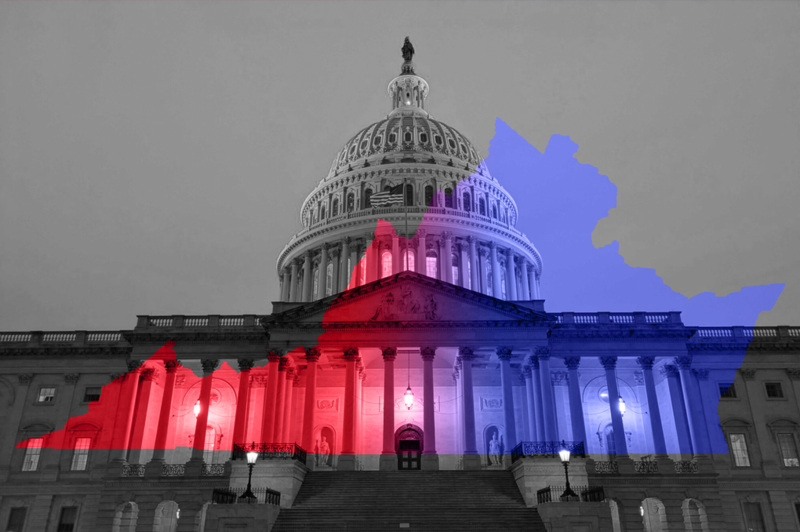
(Photo illustration by States Newsroom)
Virginians first elected Don Beyer to the U.S. House of Representatives in 2014 and with the recent midterms, he won a seventh term. The 8th Congressional District representative discovered an inspiring tradition when he arrived at the nation’s Capitol.
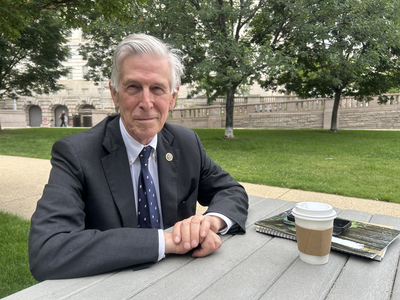
Once a month, every member of Virginia’s U.S. House delegation met, along with the state’s two U.S. senators, to discuss ways they could help each other. One member would bring the others lunch.
That tradition carried on pretty much undisturbed until the Jan. 6, 2021 insurrection, when supporters of Donald Trump invaded the Capitol to try to stop the peaceful transfer of power to newly-elected President Joe Biden.
After the attack, GOP U.S. House members from Virginia still refused to certify 2020 election results from two states. That caused a split in the delegation’s bipartisan spirit, Beyer said.
That division eventually healed, and the monthly bipartisan caucus returned to normal until 2025, when Virginia’s Democratic-run General Assembly decided to redraw House districts to favor Democrats.
It was a reaction to Trump’s order to Republican-controlled legislatures in several states to redraw maps to favor Republicans.
After that, Beyer told me, Virginia’s Republican U.S. House members “have not come to a single lunch.” They stayed away, even after the Supreme Court of Virginia overturned the referendum that would have favored Democrats in 10 of 11 districts,a decision the U.S. Supreme Court affirmed.
Now that the ugly 2026 election season is over, it is time for them to return to the monthly bread-breaking. And time for Democrats to welcome them back.
“This might be an opportune moment for members to find common ground on issues the public was pleading for in the election,” George Mason University professor and political analyst Mark Rozell told me.
But, he added, “the pressure is on the new majority party to do the outreach.”
On Nov. 3, the failure of Trump’s policies spawned a national voter revolt that caused Republicans to lose control of the House and Senate by huge margins.
In Virginia, supporting Trump’s unpopular policies cost two Republican incumbents their seats in congressional districts drawn to favor Republicans.
In this year’s midterms, the rest of the country learned what Virginia has known for a while
That fight is over. The Virginia delegation needs to resume helping one another.
Though they may continue to disagree based on political philosophies, their responsibility is to constituents who look to them for help, not the culture wars, name-calling and attack ads of the 2026 elections.
There is no fairy tale ending here. Real differences exist between Democrats and Republicans on critical issues, including solutions for affordable healthcare and taxes. What everyone should agree on is who they serve.
I reached out to every member of Virginia’s new U.S. House delegation to ask about meeting together in the same room to find issues they could all support in Virginians’ interest, rather than the president’s.
Beyer told me he hopes the remaining three Republicans representatives in the delegation – Morgan Griffith, Ben Cline and John McGuire — will return to the monthly lunch meetings.
“All three are good men,” he said.
Griffith, who represents the most Republican district in the state, sent me a one-sentence statement: “I am always willing to work with my colleagues for the betterment of Virginians.”
I hope he will prove it by rejoining the monthly caucus and bringing Cline and McGuire with him.
Democrat Shannon Taylor, who narrowly defeated 19-year incumbent Rob Wittman in Virginia’s 1st District, was a little more expansive:
“Virginians are struggling with spiraling costs and making ends meet, fueled by corruption,” she said in a statement. “I am willing, and eager, to sit down with anyone regardless of party who wants to work together cooperatively to address these issues … and I’ll support bipartisan work that moves us toward those critical goals.”
I hope she and others in the Virginia delegation will prove it by doing what longtime Virginia Republican Congressman Bill Whitehurst, who died recently at 101, called “recognizing that the other person has a piece of truth themselves.”
Richmond, VA