An earnest letter to Kansas legislators was met with contempt and false narratives
Aug 27, 2026 | 4:33 am ET
Description
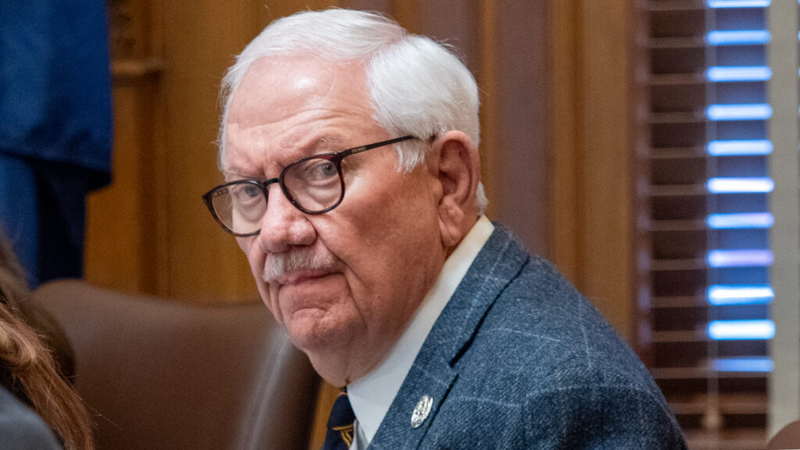
Rep. Rick Wilborn, R-McPherson, appears at a Feb. 3, 2026, hearing at the Statehouse in Topeka. (Photo by Sherman Smith/Kansas Reflector)
Some days, living in the United State is like living in a circus. Except the clowns have weapons, some of them nuclear.
You don’t know when triggers will be pulled — and trigger-pulling is sometimes triggered by attitudes. Those attitudes and triggers are especially concerning, especially when possessed by those in charge.
Last week, a story raced round the state. A whole family slaughtered in a murder-suicide. The father-husband-shooter had a violent record. A next-door neighbor, seeing the horror (alarming enough if you’re in a different town, or even state), wrote a heartfelt plea to Kansas legislators.
Do something, please! she asked.
The neighbor’s plea? Close “critical gaps” in state law that allow such individuals to obtain and possess firearms, up to and including removing guns from their home.
As Kansas Reflector first reported, McPherson Republican Rep. Rick Wilborn replied to her and to everyone: “You folks never miss an opportunity, to promote your gun shaming hypothesis. More people are killed by illegals with a criminal record. Please spare me.”
Let that language sink in.
Start with “You folks.” Who would that be? People alarmed by gun violence, those right next to them or those floating around somewhere out there? Does it mean anyone making a similar request of the people elected to keep us safe? “Promoting”? “Gun shaming”? Where do these words come from?
Finally, “More people are killed by illegals with a criminal record.”
Let me say to Wilborn: “Spare me.”
He seems unaware that, in our great country, thousands of people with skin color other than white are being hauled off to “detention centers,” many of them prisons or makeshift facilities where few monitor their treatment.
Do those “illegals” have a criminal record? Not really. In fact, “nearly three in four (73%) had no criminal conviction,” according to the CATO Institute. Not only that, of those with a conviction, the majority committed only vice, immigration or traffic offenses, not even property crimes.
So, who constitutes a threat here? In aggregate, only 5%, or one in 20 of those arrested, had violent criminal convictions. Pretty small numbers, by anyone’s measure.
So much for the term “criminal record.” But what about the “more people are killed” allegation?
My rudimentary online research finds this analysis of annual gun deaths in the U.S. In 2024, the most recent year with complete data, about 44,000 people died of gun-related injuries — 62% from suicide (27,593) and 35% from homicide (15,364).
Not much data is available for homicides or manslaughter caused by undocumented immigrants (not “illegals”), but our own U.S. Border and Customs Service’s estimate counts 23 in 2025.
You do the math — 44,000 versus 23. An unexamined myth is at play here.
In the past, Wilborn helped perpetuate another myth, that the COVID-19 pandemic was not really a threat and could be disregarded by good people. We were somehow invulnerable, possessed of knowledge superior to that of any scientist, researcher, or academic.
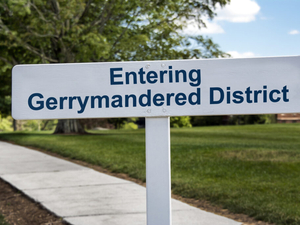
In the midst of that pandemic, the legislative gerrymandering, er, redistricting, committee came to Salina for a hearing. Wilborn, then a state senator, was its chairman. Everywhere you looked, signs said that masks were required. Most wore them.
Except Wilborn. Both at the lectern and circulating with the general public, his barefaced opposition was a clear statement. The rules did not apply to him. Nor, by example, should they apply to us. This stuff was not a threat, and public health be damned.
We could label this attitude the “Wilborn effect,” but I don’t mean to pick on him specifically. He was elected and reelected multiple times. Many Kansas voters have shown faith in him. Merely by virtue of his years of service, he deserves respect and thanks.
The threat of such attitudes, however, extends far beyond any one Kansas legislator. They exist far and wide, on the street, in businesses, in private homes. Without even mentioning Fox News (oops!), we must ask ourselves how we got here.
How can we begin to reverse the damage done daily by failing to examine our leaders, our institutions, and ourselves?
Although we might wryly note that an Athenian court convicted Socrates of impiety and corrupting the youth, his statement still applies today: “The unexamined life is not worth living.”
David Norlin is a retired Cloud County Community College teacher, where he was department chairman of communications/English, specializing in media. Through its opinion section, the Kansas Reflector works to amplify the voices of people who are affected by public policies or excluded from public debate. Find information, including how to submit your own commentary, here.

Topeka, KS