DeSantis gets bill making it harder for citizen groups to advance state constitutional amendments
Oct 17, 2021 | 3:13 pm ET
Description
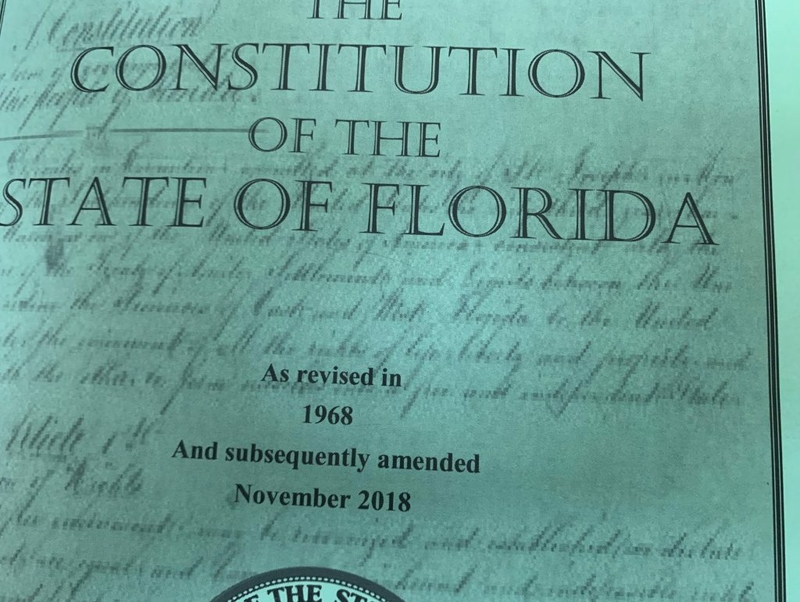
The Constitution of the State of Florida.
Credit: Florida Phoenix
UPDATE: Gov. Ron DeSantis signed seven bills into law on Wednesday, including a measure that creates new requirements for citizen groups collecting voter signatures in order to put constitutional amendments on the ballot.
Here’s the prior story:
Florida lawmakers have broken a drought by sending Gov. Ron DeSantis a bill imposing costly and more complicated barriers for groups seeking to amend the Florida Constitution on issues such as the expansion of Medicaid or allowing recreational cannabis.
The Republican governor will have 15 days to act on the bill (SB 1794), which he is expected to sign.
The item, sent Wednesday, was among the first seven bills the Legislature has sent the governor in a month, as DeSantis has been working practically full-time on the state’s response to COVID-19.
Still awaiting transmission are major bills including the state budget for the fiscal year beginning on July 1.
“We are coordinating with the governor’s office to send the bills over as they are ready to receive them, understanding that the first priority at this point is the governor’s role in leading our state’s response to and continuing to prepare for impacts from the virus. The governor’s office requested the bills that were sent this morning,” Katie Betta, spokeswoman for Senate President Bill Galvano, told the Florida Phoenix via email.
The measure, which Democratic lawmakers opposed, will make it harder for citizen groups to trigger a Florida Supreme Court review of the ballot measures by increasing the required number of voter signatures from 10 percent of the total voters in the last presidential election to 25 percent. Court approval is a critical step in placing an amendment on the ballot.
Other changes include requiring citizen initiatives to collect signatures in more congressional districts to trigger the court review. It would increase from at least a quarter of the 27 congressional districts to at least half, which would mean 14 districts.
The bill also prohibits citizen groups from applying voter signatures gathered in one election toward a later election. Currently, the signatures are valid for two years following collection.
The bill would allow local supervisors of elections to charge the “actual cost” of verifying the voter signatures submitted for review.
Here is an earlier Florida Phoenix story on the issue.
Tallahassee, FL