Democrats won on Tuesday. Now comes the hard work of solving Oregon’s challenges.
Nov 04, 2026 | 6:44 pm ET
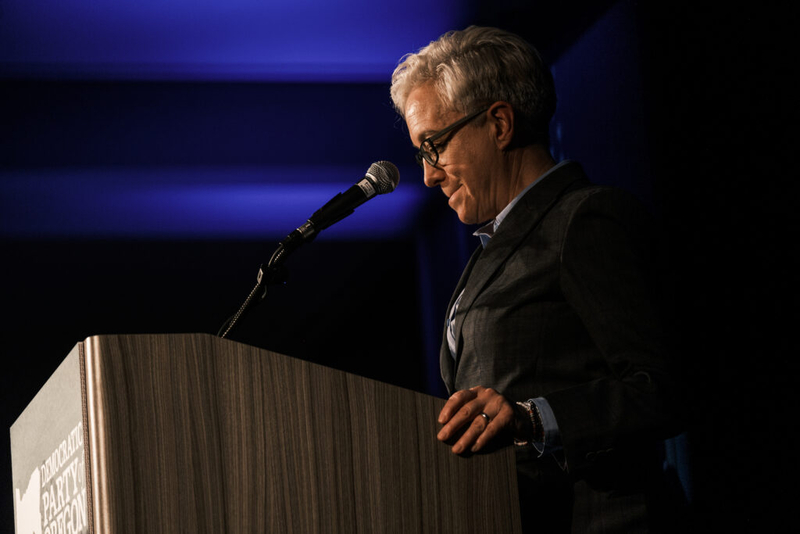
Description
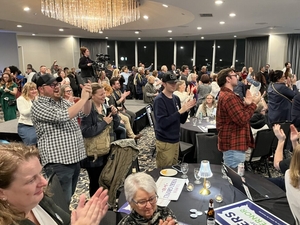
Oregon Gov. Tina Kotek speaks at the Oregon Democratic Party's election night watch party in Portland, Oregon, on Tuesday, Nov. 3, 2026. (Photo by Jordan Gale/Oregon Capital Chronicle)
Tuesday’s elections across the United States were historic. The political landscape of the nation changed in a single evening.
The political landscape in Salem did not.
We have the same governor, Tina Kotek. Democrats again have commanding majorities in both the House and Senate. It seems likely they’ve actually expanded those majorities.
Although not all races have been called, the Democrats are on track to claim 19 of 30 seats in the Senate and a record-setting 39 of 60 seats in the House.
If we have the same governor and more or less the same Legislature, we also have the same problems. The September economic forecast added $55 million to Oregon’s coffers. The state’s piggy bank is $538 million heavier than anticipated for the current two-year budget. That’s good news.
Unfortunately, HR1, President Trump’s so-called One Big Beautiful Bill, will result in steep Medicaid cuts in Oregon. That likely will mean a cut of $421 million in the 2027-29 biennium and $838 million in 2029-31 unless the new Congress takes action to alter HR 1 (which is unlikely).
There’s also the rising cost of fighting Oregon’s costly and expanding wildfires and our aging transportation infrastructure.
We’ll see the next revenue forecast on Nov. 18.
Voters in May nixed an increase in the state’s gas tax. The money would have gone to repairing Oregon’s aging roads, bridges and tunnels. Republicans were gleeful about the defeat but, by the time that vote came in May, Democrats weren’t fans of it either.
After the United States and Israel began the war in Iran, gasoline and diesel prices skyrocketed in Oregon. AAA reports that a gallon of gas in Oregon hovered around $3.40 in January. Today, it’s at $4.75 per gallon. Throwing a 6-cent Oregon gas tax on that felt like adding insult to injury. That gas tax became an orphan nobody wanted.
So how should the Democrats, who control the governorship and have super-majorities in both chambers, respond to these funding challenges?
I covered state government for many years at newspapers throughout the Willamette Valley, including a stint as the Capitol Bureau chief for the Salem Statesman Journal. For me, one of the brightest spots was the process by which legislators created a transportation funding package in 2017.
It was truly bipartisan.
It began in 2016 with real outreach by lawmakers of both parties on Oregon’s eastside, down south, along the coast, and in metro areas. Republican lawmakers including then-Rep. Cliff Bentz — now in Congress — told me that this wasn’t just another dog-and-pony show. The lawmakers who showed up actually showed up. They listened. They asked thoughtful questions. They talked to city and county elected officials, and government staffers, and business owners. They talked to voters in red counties, then said the same things to voters in blue counties.
That transportation package passed both chambers and became the law of the land because Democratic majorities were serious about their outreach.
I didn’t cover the 2024 road shows for the new transportation funding package, but I’ve talked to lawmakers who felt they were a sham. The Democrats in the majority already knew what they wanted, I’ve been told.
The 2025 legislative session was acrimonious. The Legislature had to go into a special session to pass the package. And opponents, working at the speed of light, gathered enough signatures to get it repealed in near record time.
So that’s the lesson for the 2027 Legislature and for second-term Gov. Tina Kotek. We need statewide solutions to the Medicaid cuts thrust upon Oregon by the president and Congress. We need to fix our aging transportation system. We need to address the growing threat of wildfires. I’m sure all 90 lawmakers in Salem could add five huge, gaping priorities to my meager list of three.
The Democrats, in total control of state government, should look back to 2016. They should take their pie charts and their stats, and they should go to all 36 counties in the state and ask: “How would you solve this?”
They should listen. They should say the same things in Prineville as in Portland. The outreach should have two co-chairs, and one of them should be a rural Republican.
Would such outreach find solutions to Oregon’s staggering problems? I don’t know. I know that a lack of outreach won’t do it.
Kotek cannot run for office again. Such a process, with her full-throated backing, could be her legacy.
Democrats control all the levers of power in Oregon save for one: The confidence of Oregonians.
Win that back, and who knows what this governor and the 2027 Legislature could accomplish?
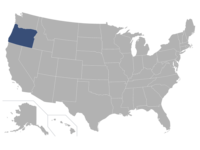
Salem, OR