Democrats, experts call for revocation of school voucher program under adoption by states
Sep 22, 2026 | 6:02 pm ET
Description
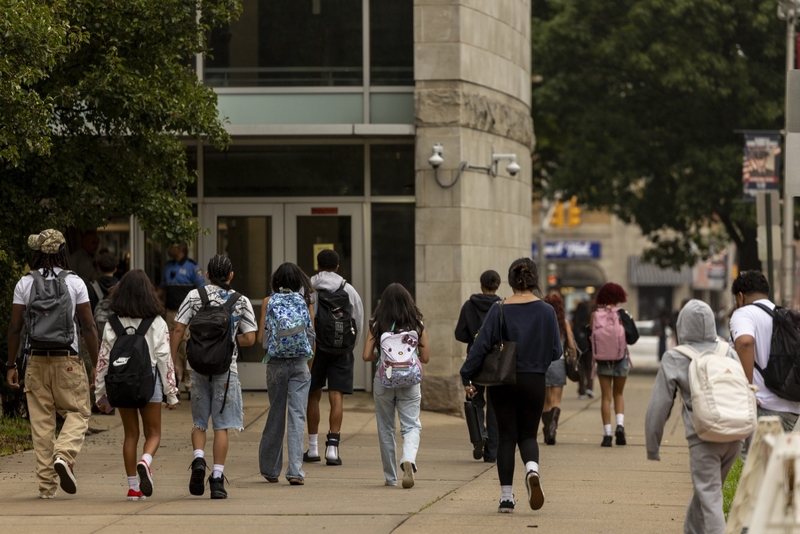
The first day of school at Bloomfield High School in Bloomfield, New Jersey, on Sept. 2, 2026. (Photo by Anne-Marie Caruso/New Jersey Monitor)
WASHINGTON — Education experts and advocates on Tuesday urged Congress to repeal an incoming national school voucher program over concerns that it will divert critical funds away from public schools to private institutions.
U.S. Sen. Mazie Hirono convened a Democratic-led panel to sound the alarm on the sweeping program, which marks a key pillar of President Donald Trump’s and congressional Republicans’ efforts surrounding school choice.
The Hawaii Democrat blasted the federal initiative, set to launch in early 2027, as a “tax break for wealthy families whose children are already enrolled in private schools, disguised as support for education.”
At least 30 states have already opted in to the program, which allocates up to $1,700 in federal tax credits for people donating to organizations that provide K-12 scholarships for education-related services at private or public schools.
The program is baked into the GOP’s “big, beautiful” bill that Trump signed into law in 2025. The U.S. Treasury Department is slated to release proposed regulations by the end of this month.
Repeal attempts
Hirono and Arizona Democratic U.S. Sen. Mark Kelly, joined by more than two dozen of their colleagues, introduced legislation in April to repeal the program.
Wisconsin Democratic U.S. Rep. Gwen Moore introduced a companion bill in June with Reps. Suzanne Bonamici of Oregon, Maxwell Frost of Florida, Adelita Grijalva of Arizona, Mark Pocan of Wisconsin and dozens more original cosponsors.
But any measure to roll back the program faces a dismal path in the GOP-controlled House and Senate.
The umbrella term “school choice” centers on alternative programs to a student’s assigned public school. Opponents say these efforts drain critical funds and resources from school districts, while advocates argue the initiatives are necessary for parents who are dissatisfied with their local public schools.
Augustus Mays, vice president of partnerships and engagement at the nonprofit policy and advocacy group EdTrust, said “our conclusion is clear: This is not free money or a targeted investment in students with the greatest needs.”
“It is an uncapped federal tax subsidy that steers public resources toward private education with few safeguards,” he added.
Mays pointed out that “a voucher does not guarantee access or quality,” noting that private schools are not bound by the same civil rights protections and obligations extended under the Individuals with Disabilities Education Act, or IDEA.
Diverting funds?
The Education and Treasury departments have said that the credit “does not divert money from local or state taxes, which make up the large majority of school funding,” according to a fact sheet.
The agencies have also pointed to examples of education expenses the scholarships can be used for, such as “tuition for students to attend private schools of choice, tutoring at public schools, and support services for students with disabilities.”
But Jessica Levin, litigation director at the advocacy group Education Law Center, said it’s a “major misconception” that “this is free money without cost to public schools” or that “currently underfunded public schools will benefit from the voucher program.”
“Tax credit voucher programs are funded with public dollars because the money sent to scholarship granting organizations is money that would otherwise have been paid in state or federal taxes and gone into the state or federal treasury,” Levin said.
Trump administration defends tax credit
Meanwhile, Savannah Newhouse, a spokesperson for the Education Department, defended the tax credit, saying opponents of the program are “resorting to fearmongering by falsely labeling it a voucher because the phrase ‘we don’t want families to have more options to succeed in education’ isn’t a winning message,” in a statement shared with States Newsroom.
“The truth is that this provision does not take a single dollar away from public schools because it is funded by the generosity of private donors that supplement — not supplant — existing education dollars,” she added.
“A word of advice: resisting change to the failed status quo in education makes you part of the problem, not the solution.”
All States Newsroom content is free to republish. Read our republishing policy for more information.