Democratic U.S. Senate nominee Everett Wess campaigns against long odds
Sep 25, 2026 | 5:59 am ET
Description
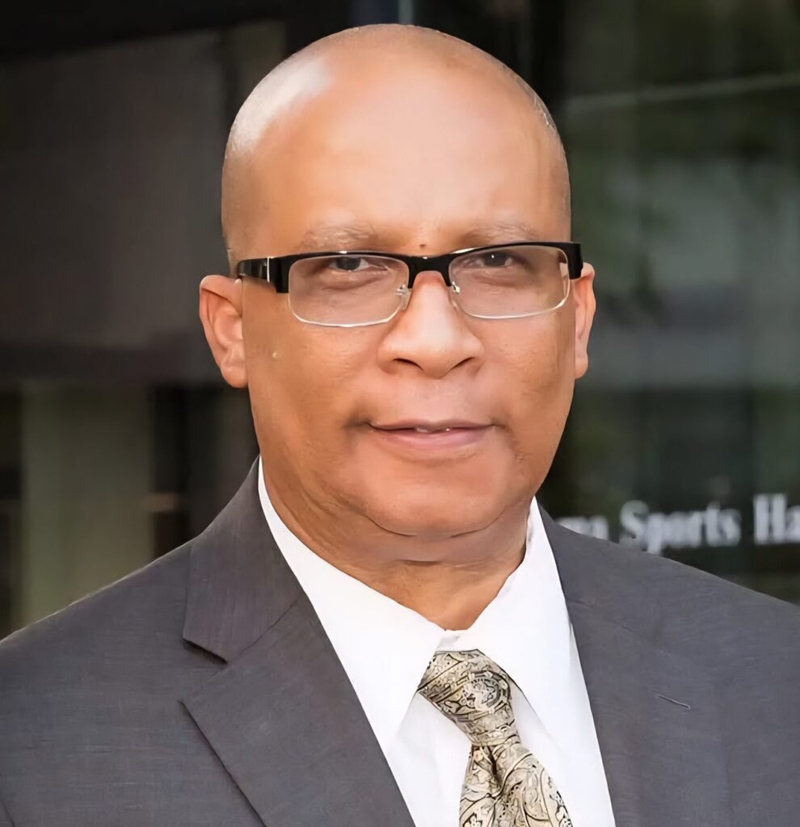
Attorney Everett Wess, the Democratic nominee for U.S. Senate, is in an uphill battle against Republican nominee Barry Moore.(Photo courtesy of candidate).
Everett Wess has a very difficult road to being Alabama’s next U.S. senator.
The Democratic nominee is trying to become the first person in his party to be elected to the Senate from Alabama in a general election since 1992. Republican nominee Barry Moore, a congressman from Enterprise, has name recognition and a solid warchest. Through the end of June, Wess raised slightly less than $4,000 in campaign funds compared to Moore, who has received almost $2.5 million in donations, according to the Federal Election Commission website.
Both the Cook Political Report and Sabato Crystal Ball rate the seat as “Solid Republican” and “Safe Republican” respectively with about a month and a half until the election.
“It is a tough state to start out with,” said J. Miles Coleman, associate editor for Sabato Crystal Ball at the University of Virginia, of the Democrats’ chances for winning the contest. “(President Donald) Trump carried it by 30 points in 2024. None of the main national parties really seem very invested in it.”
Despite that, Wess continues to attend events to meet with voters to discuss the issues he believes are important for Alabama residents.
“I am the type of individual where all I can do is work on winning this election for the people of Alabama,” he said in a recent interview. “That is what I am doing, meeting with the citizens of Alabama, speaking with the citizens of Alabama, listening to the citizens of Alabama, and in the end, they will make their decisions as to who they think is the best candidate to represent the state of Alabama.”
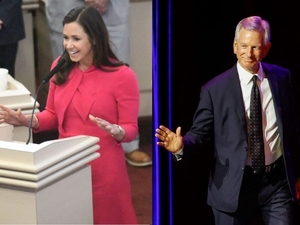
The contest will determine the successor to U.S. Sen. Tommy Tuberville, who is the Republican nominee for Alabama governor. A message was sent to the Moore campaign on Tuesday seeking comment.
Despite the structural disadvantages, Wess said he will continue to discuss the priorities he laid out for this campaign. He chose to be a candidate after he sensed that voters are dissatisfied with Trump’s performance.
“It looks like hope is lost,” Wess said. “People are uncertain about what is going to happen next. There is confusion with the current administration, uncertainty with the current administration.”
Wess hopes to seize on many of the same issues that other Democratic nominees have made their priorities, particularly the economy and inflation.
“That has been happening since Trump took office,” he said. “Prices have really not come down, and especially with the start of the (Iran) war. Gas prices are high, groceries are higher, prescription drugs are also high.”
Democrats nationally have a favorable environment. But in Alabama, party advantage favors Moore. Alabama does not require voters to register with a political party to be eligible to vote, so membership numbers among the different parties are not publicly available. However, the Independent Voter Project, a nonprofit organization that promotes election reform, estimated almost 2 million people in Alabama, roughly 55% of the electorate, favor the Republican Party while about 1.2 million people in the state, about 36% tend to favor Democrats.
“You have a bunch of strongly Republican exurbs and rural areas in Alabama,” Coleman said. “Yes, you have some Democratic beach heads in Jefferson County and Mobile, the area around Huntsville is slowly getting a little less red, but not enough to offset some of these really Republican parts of the state even in a year that is probably going to be good for the Democratic Party.”
Republicans also outvoted Democrats during the primary election for this race in May, with about 340,000 voters casting a ballot for one of the Democratic candidates for senator. More than 480,000 people cast a vote for a Republican candidate to be the next U.S. Senator.
Democrats have overcome the Republican party advantage in the past. Doug Jones, currently the Democratic nominee for Alabama governor, bested former Alabama Supreme Court Justice Roy Moore for a special election in 2017. But the contest was the only one on that ballot, and Moore, who had already alienated many Republicans, faced allegations of sexual abuse and misconduct during the campaign, which he denied.
“If you are extraordinarily, personally noxious to people, you can neutralize your party’s advantage, and really importantly, if you face a credible opponent,” said David Niven, an associate professor of political science at the University of Cincinnati.
Despite the long odds, Wess believes he has a path to victory.
“I am on the ground working, listening to the people and listening to the needs and desires of the people, and I think that is going to make a difference in race,” Wess said.
Wess currently works as an attorney for the Wess Law Firm in Birmingham. He has also served on the executive committee of the Jefferson County Democratic Party, taught classes at Faulkner University and served on the board of Legacy Works, an organization mentoring at-risk youth.
Wess says he would prioritize healthcare, public safety and education as the issues he will prioritize should he be elected. He said he wants to bring federal dollars to the rural parts of the state to invest in rural hospitals and strengthen their emergency departments. He wants to recruit additional physicians and medical staff to the area and help make prescription drugs and healthcare more affordable.
Wess has seized on many of the same campaign issues as other Democrats with respect to the economy.
“I was talking to a lady just yesterday who said she was buying bread at the beginning of this year, and now it is a dollar more,” Wess said.
He also spoke of problems with the budget reconciliation bill that Congress and that Trump signed into law. The bill substantially shifts the cost of the Supplemental Nutrition Assistance Program to states and could reduce the number of people who are able to receive food assistance. The bill also did not extend the tax credits allowed by former President Joe Biden that people could use to reduce the premiums they pay for health insurance with the Affordable Care Act.
“I thought I could do a good job,” Wess said. “I thought I could put the Alabama citizens first before the wants and the needs of the administration.”
Montgomery