Delaware police oversight board plans Flock camera guardrails
Oct 14, 2026 | 6:00 am ET
Description
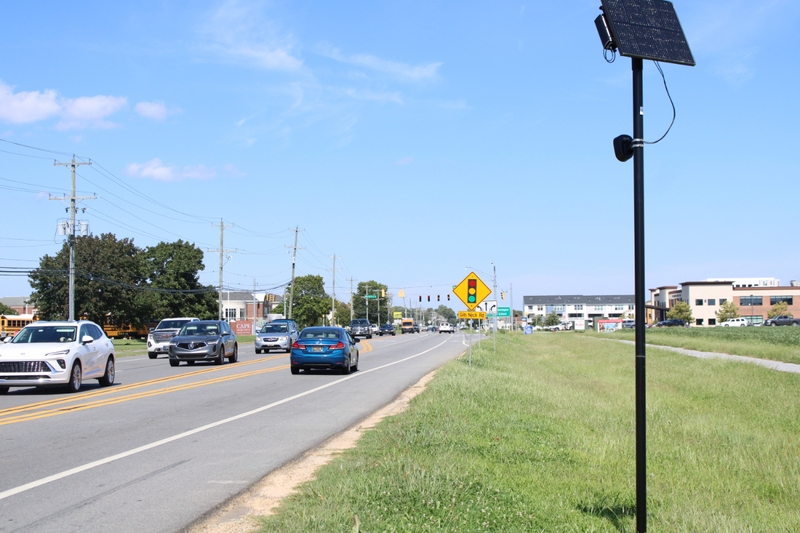
Photo courtesy of Spotlight Delaware
Why Should Delaware Care?
Delaware police departments have been using Flock cameras — modern, artificial intelligence-backed automatic license plate readers — to fight crime. But the public has raised privacy concerns over the technology. Now, state police regulators are planning to implement statewide standards for how law enforcement agencies can use the cameras.
Delaware police leaders took steps toward creating statewide regulations for the use of controversial Flock cameras this week, though no policies have formally been put in place.
While license plate reading technology has been used in law enforcement for more than 20 years, newer Flock cameras — a name referencing the largest company producing the cheap and easy-to-deploy technology — have come under fire in recent months.
The public outcry largely comes from fears of government surveillance, Flock’s use of advanced artificial intelligence to track vehicles and the overall lack of regulations surrounding the cameras’ implementation.
One of the biggest draws of the technology is an owner’s ability to tap into a federal data sharing network that tracks detailed vehicle information as well as arrest warrants and other criminal information about a vehicle’s owner.
But without standards in place, police departments across Delaware have discretion over how long they can retain their Flock cameras’ data for, and with whom they share that data with.
This means, for example, while the Georgetown Police Department has chosen to open a transparency portal to let the public know which other police jurisdictions the Sussex County seat shares its Flock data with, other police departments in the state are not required to do so.
To address these discrepancies, the Delaware Police Accreditation Commission (DPAC), an oversight body responsible for setting law enforcement standards, appointed its new administrator Kelli Burns to draft regulations for police departments across the state during its quarterly meeting on Tuesday.
Those draft regulations will address hot-button issues such as how long license plate reader data is retained by law enforcement agencies and rules surrounding out-of-state data sharing.
The commission is next set to meet on Jan. 12, 2027, when members will discuss Burns’ draft regulations. It is unclear when those regulations would be fully implemented.
Addressing data privacy concerns
DPAC Vice Chairman Richard McCabe cited concerns over the data-sharing agreements police departments have with out-of-state agencies as one of the main areas of focus for the draft regulations.
McCabe, who also serves as chief of the New Castle County Police Department, suggested assigning a system administrator within each police department to oversee Delaware officers who wish to make out-of-state searches as a possible remedy.
McCabe also suggested creating a regional data sharing agreement with New Jersey, Maryland and Pennsylvania. If sharing is needed beyond those states, Robert Wallace with the Delaware State Police suggested the Delaware Information and Analysis Center, a joint intelligence agency operated by local and state law enforcement alongside the Department of Homeland Security, would oversee those requests.
Data-retention times also were debated during the meeting. The maximum retention time in Delaware is currently five years, but leaders agreed it was too long.
Dover Police Chief Thomas Johnson asked for regulations that would allow law enforcement agencies to retain Flock data for 30 days. This timeframe could impact the success likelihood of more sensitive cases, like sexual assault, that typically are not reported day-of, he said.
“We’re manpower-restricted, we’re resource-dependent, and sometimes when you finally shake a fact loose that you can run with to try to bring justice back, I would hate to miss a deadline,” Johnson said.
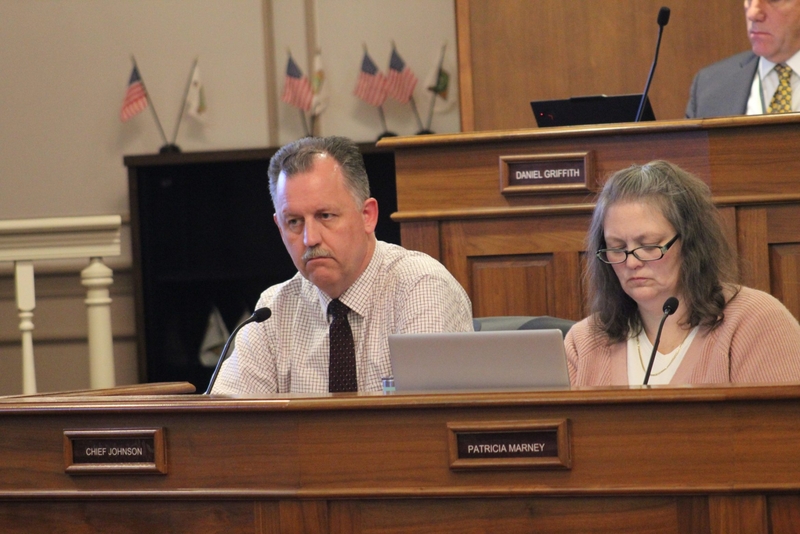
Commissioners agreed that 60 days of data retention would be optimal for balancing investigatory needs and privacy concerns.
Questions remained after Tuesday’s meeting about how often audits would be conducted to identify any misuse of the Flock network as well as exact protocols for data retention.
Those questions, said DPAC Chairman and Delaware Public Safety and Homeland Security Secretary Joshua Bushweller, will be addressed in Burns’ draft regulations.
How will Delaware decide on guardrails?
The DPAC will mainly rely on regulations set by the national version of their organization, the Commission on Accreditation for Law Enforcement Agencies, McCabe said.
He also said the Newark Police Department is being looked at as a model policy.
The department has developed a training presentation for its officers on how to use Flock network data responsibly, and it also has recently decided to not automatically share its data with out-of-state agencies.
If Newark police decide to share data with another state, that decision must go through a documentation process.
DPAC is set to meet next on Jan. 12, 2027, where Burns will present her draft regulations to the group.
Dover