For Delaware immigrants, the path toward citizenship can take years
Oct 20, 2026 | 6:00 am ET

Description
Photo courtesy of Spotlight Delaware
Why should Delaware care?
Delaware is home to around 120,000 immigrants, and about half have been able to obtain U.S. citizenship. The process usually takes years, and experts say obtaining the permanent legal status in the U.S. is getting harder and harder.
When the first Dutch colonists settled in Lewes, there were no immigration laws governing their arrival — America itself would not even declare independence and become a country for another 145 years.
But in the centuries since, federal immigration policies built over generations have come to define what it means to become an American citizen for those not born in the U.S. The process is not straightforward or easy, experts said, and it often involves many years, fees and hurdles.
“I will say that generally under this administration, we are seeing less naturalization applications being processed, or at least they’re taking longer as well,” said Adriel Orozco, senior policy counsel with the American Immigration Council.
Spotlight Delaware spoke with several attorneys and experts to better understand the various pathways to citizenship, and why only about half of Delaware’s 120,000 immigrants have been able to obtain it.
In the U.S., states have no authority to make immigration laws. Congress establishes the country’s policies, and those policies are then enforced by U.S. Citizenship and Immigration Services (USCIS), a federal agency.
The most difficult step in the citizenship process, experts said, is becoming a lawful permanent resident, most commonly known as obtaining a “green card.” This allows immigrants to lawfully live and work in the country without the risk of deportation.
Green card holders must then usually wait three to five years before filing their citizenship applications.
Because citizenship pathways are reserved for those who enter the country legally, there is no direct pathway for undocumented immigrants — many who have been here for decades.
What does it take to obtain a green card?
The first step toward becoming a U.S. citizen is determining green card eligibility.
Over the past decade, nearly half the green cards given to immigrants were for those petitioning to reunite with a close family member. Employment-based sponsorships along with asylum and refugee petitions made up the majority of the remaining green card designations.
A less common pathway is entering the “diversity lottery,” which was recently restored by the courts after the Trump administration delayed the program. These green cards are capped at 55,000 people annually and targeted at countries with low immigration rates to the U.S., like Algeria and Afghanistan.
Family-based green card petitions
If a person’s family member, such as a spouse or a child older than 21 years old, is a U.S. citizen, they typically qualify for a family-based green card application.
The 12-page application asks for an immigrant’s personal information, such as job history. The filing also must include evidence of a familial relationship, such as a birth or marriage certificate, depending on the case.
Applicants pay a little more than $600, not including attorney fees or the cost of obtaining biometric scans like fingerprints and facial recognition. Total costs with an attorney can reach thousands of dollars.
Decision times to obtain a green card vary widely depending on a person’s relationship to the U.S. citizen who is petitioning for their legal status.
The longest wait time is for sibling relationships, which is currently 25 years, said Kaley Miller-Schaeffer, an immigration attorney who specializes in humanitarian and family-based petitions. This is because green cards for siblings are capped annually at around 65,000.
The shortest wait time tends to be for spouses or parents, which can take up to five years, according to current USCIS processing times.
Employment-based petitions
Those attempting to enter the U.S. under the sponsorship from an employer must have a job offer lined up from a company willing to file the necessary paperwork and pay the legal fees.
Many times, a temporary work visa is much more common than the permanent employment-based citizenship petition.
The U.S. gives out at least 140,000 visas a year to these immigrants and their family dependents.
These visas can turn into green cards if an employer is willing to commit to permanently hiring the employee. But the employee must show “extraordinary” or “outstanding” ability, usually referencing top-tier researchers or company executives and those with advanced degrees who hold multiple years of experience.
Filing an employment-based green card application costs a bit more than family-based petitions — around $700. Similar to family-based applications, this does not include attorney or biometric scanning fees, which could cost more than a couple thousand dollars.
Employers must also prove no other U.S. citizen can fill the job the immigrant petitioner is seeking.
Decision times vary drastically but are much shorter than family-based petitions. Employment-based petitioners usually wait anywhere from three months to more than two years, according to USCIS.
Humanitarian-based petitions
Immigrants seeking permanent stay in the U.S. due to fears of persecution relating to their race, religion, nationality, political opinion, and/or membership in a particular social group, are usually categorized as an asylum-seeker or refugee.
But there is a difference between the two.
Refugees must have applied outside the U.S. and have been vetted by resettlement agencies such as the UN High Commissioner for Refugees. They are required to apply for a green card one year after being in the country.
The current annual refugee cap is 17,500, the lowest in history. Two have settled here in Delaware.
Processing wait times for refugee applications sit at around 8 months.
Asylum-seekers can file once they have already entered the U.S., and there is no cap on how many immigrants can seek it. Individuals have one year to compile evidence and file their application. They can then receive their green card one year after being granted asylee status.
The wait period for a green card decision for asylees is a little less than two years.
There is no filing fee for either refugees or asylees.
This pathway for asylum-seekers is the hardest case to win, said Miller-Schaeffer, because the burden of proof lies solely on the applicant, and the criteria does not account for those escaping gang violence.
“Even if you prove, you know, all but one [requirement], it’s not going to cut it,” she said.
After a green card, what comes next?
After a couple of years, depending on the type of petition made, green card holders can apply for citizenship, which Miller-Schaeffer said is the most straightforward part of becoming a citizen.
It’s usually a five-year wait, but those who received a green card through their spouse only have to wait for three years.
The citizenship application process involves the collection of personal data, multiple tests, interviews, hefty costs and waiting periods.
While individuals can self-apply, Miller-Schaeffer recommended applicants obtain an immigration attorney, especially if the case is complicated. These lawyers help conduct mock interviews, compile any necessary documents and become an advocate when obstacles arise.
The process begins with the submission of a 14-page application requesting a historical record of addresses, jobs held and schools attended.
Then, applicants study for the citizenship tests: 20 questions pulled from a list of nearly 130. Those who correctly answer at least 12 of the 20 questions asked orally will pass.
A decision is made much quicker than for green card determinations, and the average processing time is around seven months.
What makes the process lengthy and challenging?
Orozco, with the American Immigration Council, said the main obstacle to obtaining citizenship is that no pathways exist for certain groups of people, like those with no family connection, or those who cannot receive employment sponsorship.
Today’s paths to citizenship are also based on laws enacted decades ago, in 1965 and 1990, hence why some lawmakers are trying to advocate for a reform to the country’s immigration system.
Gov. Matt Meyer sits as the co-chair of a bipartisan task force with the goal of proposing more modern immigration policies to congress. The governor has not yet officially announced what these proposals would look like but said there is a big focus on protecting the immigrant workforce.
There also has been an uptick in proposals of higher employment-based visa fees, stricter vetting processes like reinforcing neighborhood visits, and systemic backlogs.
Both Orozco and Miller-Schaefer said stricter immigration enforcement has also affected the process.
“Before, I used to be able to confidently tell clients, ‘Unless you are doing something wrong, you’re probably not going to get picked up,’” Miller-Schaefer said. “And now I can’t say that anymore.”
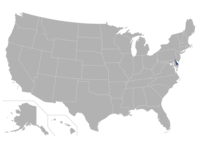
Dover