Delaware hospital leaders question implementation of new charity care rules
Oct 07, 2026 | 6:00 am ET

Description
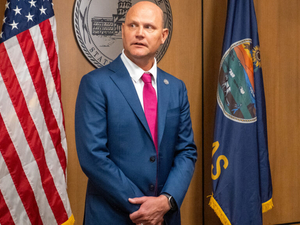
Photo courtesy of Spotlight Delaware
Why Should Delaware Care?
Hospitals outspend other sectors of the healthcare industry by wide margins. In recent years, Delaware lawmakers have passed legislation meant to lower their costs on the state and on patients. One of those new laws targets how hospitals administer what is called “charity care,” and who is eligible.
Financial leaders from Delaware’s hospital systems flooded a small government meeting room on Monday to voice concerns with new state regulations meant to increase patients’ ability to receive free or discounted care.
Monday’s meeting was the first step in what will be a monthslong process to draft and implement regulations guiding how hospitals give away that free or discounted care, sometimes called “charity care.”
Regulators within the Diamond State Hospital Cost Review Board, an oversight body tasked with lowering hospital spending in Delaware, hope to finalize the regulations by February.
They are also being crafted with input from the state’s hospital lobbying group, the Delaware Healthcare Association, which expressed support for the legislation but asked state leaders to target other healthcare sectors that also burden patients financially, like insurers and pharmaceutical companies.
Delaware’s pursuit of these regulations comes months after lawmakers passed Senate Bill 13, a bill that greatly expanded the pool of patients able to receive charity care in the state.
At the meeting on Monday, regulators discussed a variety of topics like how hospitals will screen patients for eligibility, what documents will be required of them to qualify for financial assistance, and how the state will enforce residency requirements for free and discounted procedures.
What happened during the meeting?
Monday’s meeting was a workshop for hospital financial leaders to discuss pending regulations that will guide how health systems administer their charity care policies in the coming years.
One of the main discussion topics included how hospitals will make eligibility determinations and what documents and screening they will be required to do prior to billing a patient for a procedure.
Hospital leaders requested state regulators increase or specify the types of documents they are allowed to request from patients to determine their eligibility for financial assistance. The leaders said they feared patients may try to game the charity care rules to receive free or discounted care when they otherwise may not be eligible.
Those leaders also said some hospitals do not have the ability to automatically screen patients for eligibility, meaning most of those determinations are made by employees. An influx of screening requirements would slow down operations and revenue, they said.
David Tam, the CEO of Beebe Healthcare in Lewes, pushed for clearer regulations around the types of documents patients could submit to determine their eligibility, as well as more authority for hospitals to require those documents.
“I’m still struggling to figure out that balance point of what material we need to get from people and how far we push to get that information,” Tam said. “Knowing that the majority of people are probably not out to screw us, they just may not know what to do.”
A consultant hired by the board also showed how well Delaware’s hospital systems currently align with the new regulations, which set standard income levels for which the hospitals must offer charity care.
Many of them fall below the new state law requiring hospitals to offer free care at 300% of the federal poverty line. Hospitals have until Jan. 1, 2027, to update their income thresholds.
Additionally, the consults consolidated information from all the hospitals’ tax returns to determine at what level and what ratio the nonprofit hospitals had administered charity care.
Between 2020 and 2024, Delaware’s hospital systems on average spent $39 million each year on charity care, which only represents 1% of their annual expenses, the presentation said.
The presentation underscores previous reporting by Spotlight Delaware that examined charity care spending by Delaware’s largest hospital, ChristianaCare.
In order to qualify for their tax-exempt nonprofit status, hospitals must offer a “community benefit,” according to the IRS. Historically, that benefit has been charity care.
But changes in recent decades to federal and state guidelines have allowed nonprofit hospitals to set charity care policies at their own discretion, removing any requirement of providing it to patients in order to receive a tax break.
According to the IRS, a community benefit could mean providing charity care, using surplus funds to improve facilities or spending money to increase access to medical training.
The presentation on Monday qualified the low charity care spending with some data about how much in total hospitals spent on community benefits in 2024, which consultants said ranged between 5.6% to 11.8%.
What is Senate Bill 13?
The impending charity care regulations were spurred by Senate Bill 13, which was signed into law earlier this summer. The new state law greatly expands the pool of Delaware patients eligible to seek financial relief on their medical bills.
It also follows a separate effort last summer in which the state paid off medical debts for thousands of Delawareans, despite hospital charity care policies that could have made that treatment free.
Under the new law, all of the state’s nonprofit hospitals would be required to provide free care to patients living below 300% of the Federal Poverty Line, with large discounts for patients in higher percentage brackets.
- Below 300% of the FPL (currently $47,880 a year) – Full discount
- 300-350% of the FPL (currently $47,880 to $55,860 a year) – 75% discount
- 350-400% of the FPL (currently $55,860 to $63,840 a year) – 50% discount
Separately, the legislation allows people living at 500% of the Federal Poverty Line — currently $79,800 a year — to seek out a 50% discount if the billed expenses are greater than 10% of their income.
The legislation also charged the Diamond State Hospital Cost Review Board to implement and hold hospitals accountable to the new regulations. The law said regulators were required to draft regulations “with input” from the state’s hospital lobby.
At the end of the meeting, the hospital lobby’s CEO, Brian Frazee, said hospitals have had to contend with a rapid series of regulatory changes in recent years. He pointed to the formation of the board, which was established to rein in the growing cost of hospital spending on the state’s budget.
He also said changes at the federal level like reductions to Medicaid and Medicare would add strain on hospitals. Still, he said his group and the state’s hospitals were glad to be a part of attempts to bring down the cost of care in the state.
“I think it’s important to understand just how much change is happening at one time,” Frazee said. “That being said, we are more than happy, and we’re proud, frankly, to be leaders in terms of that.”
Get involved
The Diamond State Hospital Cost Review Board is set to next meet at 10 a.m. on Tuesday, Oct. 20, at the Herman M. Holloway Sr. Campus – DHSS Chapel, located at 1901 North Dupont Highway in New Castle. More information, including about virtual attendance, can be found here.

Dover