In The War On Mosquitos, Bird Advocates Shift Their Game Plan
Nov 06, 2026 | 5:01 am ET
Description
Photo courtesy of Honolulu Civil Beat
A multi-agency effort to save Hawaiʻi's native forest birds from extinction by providing "mosquito birth control," as advocates described it, ushered in a rare era of optimism when it launched in 2023 after a decade in development.
Three years later, the path forward is less clear. And the need for an effective solution is only more dire.
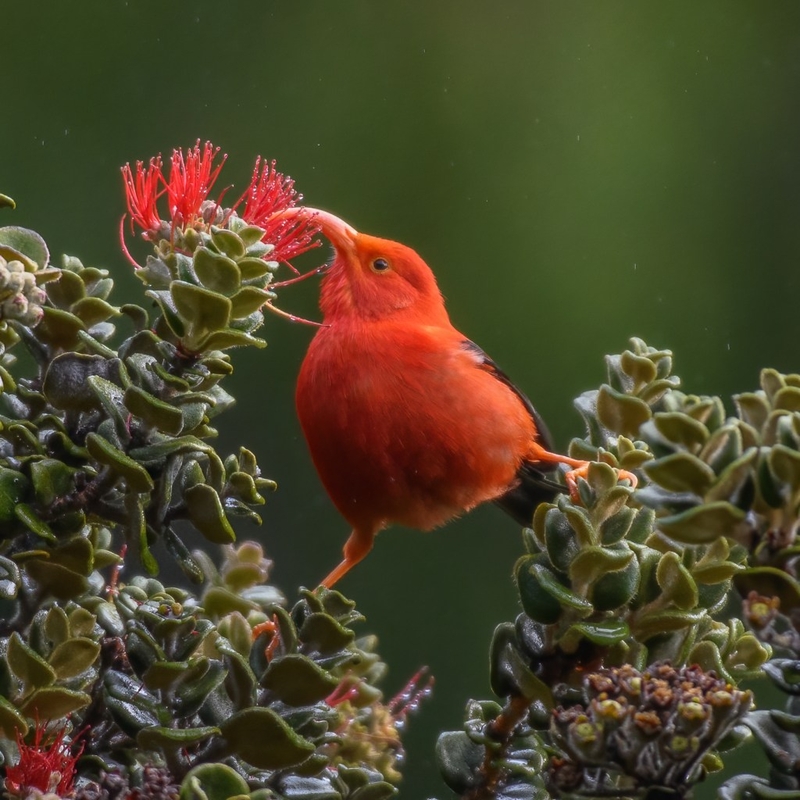
Hawaiʻi’s native honeycreepers — small forest birds that drink the nectar of 'ōhi'a lehua and other native flowers — are extremely vulnerable to avian malaria and avian pox, two diseases spread by mosquitos. There were once between 50 and 60 species of honeycreeper across the islands; now only 17 remain. And climate change is driving the birds father up the mountains in search of safe habitat, as warmer temperatures expand the mosquitos' territory.
The Birds Not Mosquitos coalition brought together the Hawaiʻi Department of Land and Natural Resources, U.S. Fish and Wildlife Service, U.S. Department of the Interior, University of Hawaiʻi and the National Park Service as well as local and national nonprofit organizations. Together these entities made a sizable investment in the so-called incompatible insect technique, which involves releasing male mosquitos infected with a form of bacteria that prevents the females who mate with them from producing viable eggs.
The coalition received more than $49 million in federal funding and $2.4 million from the state.
It was “a big swing” in response to a challenge that has at times felt nearly impossible to solve, said Chris Farmer, Hawai‘i program director at the American Bird Conservancy, a key partner organization.
“Mosquitos are one of the deadliest, if not the most deadly animals," he said. "So trying to break that cycle in Hawai‘i was never going to be easy. We recognized that going in, but we had to try.”
Saving the birds from extinction is a tall order, said Hanna Mounce, program manager at the Maui Forest Bird Recovery Project, the nonprofit engaging with the pilot program on Maui. It requires getting the mosquitos on the island “down to almost nothing” or 95% less than normal levels.
Despite the hope the conservation community had put into the program, by late 2025, the data made it clear that the incompatible insect technique wasn’t meeting that moment. After Mounce and other researchers and technicians on the ground tried tweaking the process multiple times for efficacy, they found that it wasn’t preventing malaria at the rates needed to stave off extinction.
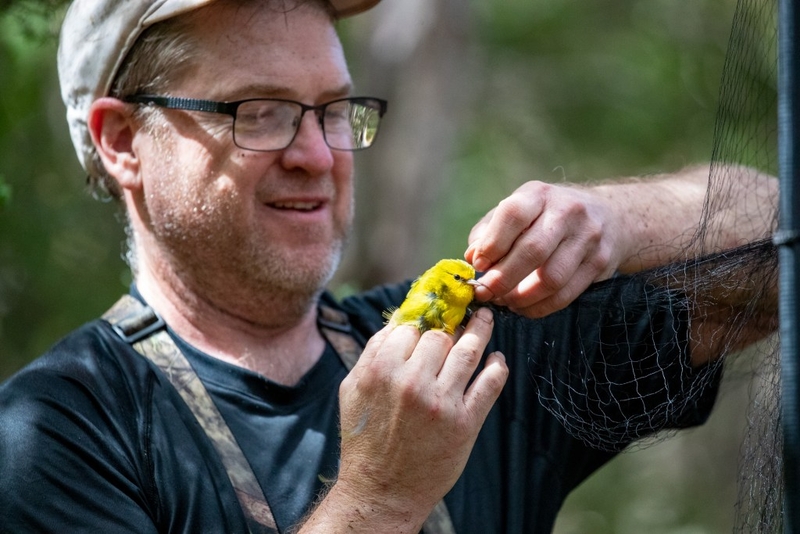
But that wasn’t all. On Kauaʻi last winter an unprecedented number of mosquitos appeared on the Alakaʻi Plateau, the one sliver of the island where native forest birds were still hanging on. The consequences were dramatic: Populations of native bird species plummeted.
In March, the Birds Not Mosquitos coalition decided to quietly hit the pause button on the incompatible insect technique, and consider other options.
“It was an incredibly hard call,” said Justin Hite, mosquito project coordinator for the state Division of Forestry and Wildlife and former field supervisor for the Kauaʻi Forest Bird Recovery Project. But turning the ship around allowed the coalition to save the remaining funding and regroup.
Over the summer, the Birds Not Mosquitos coalition shifted its focus to a less-expensive, well-known product called bacillus thuringiensis serovar israelensis or BTI. It’s the same larvicide used in a common product called Mosquito Dunks, and it’s safe enough to be used on organic farms.
Now, the plan is to deploy BTI on a landscape-level — first on Maui beginning this month and then on the rest of the islands if the funding to do so materializes. But funding is the operative question, even on Maui, where the coalition’s budget only covers the project through 2027.
David Smith, the former administrator of the Department of Land and Natural Resources’ Division of Forestry and Wildlife spoke with Civil Beat days before he retired in August, and was candid in his concern. BTI is more cost-effective, but whatever tool the coalition uses would need to be scaled up by orders of magnitude, he said.
“That may not be something that’s economically feasible,” Smith said.
A Strategic Collaboration
The mosquito that spreads avian malaria is the southern house mosquito, or Culex quinquefasciatus, a different species than the one that typically bites humans. A University of Hawai‘i study published in February found that the disease is present almost everywhere mosquitoes are found across the islands.
Birds Not Mosquitos had its work cut out for it, in other words.
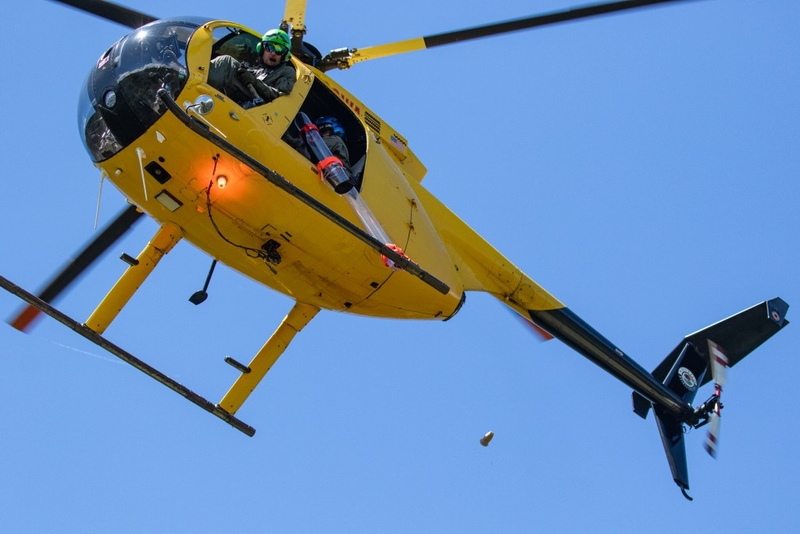
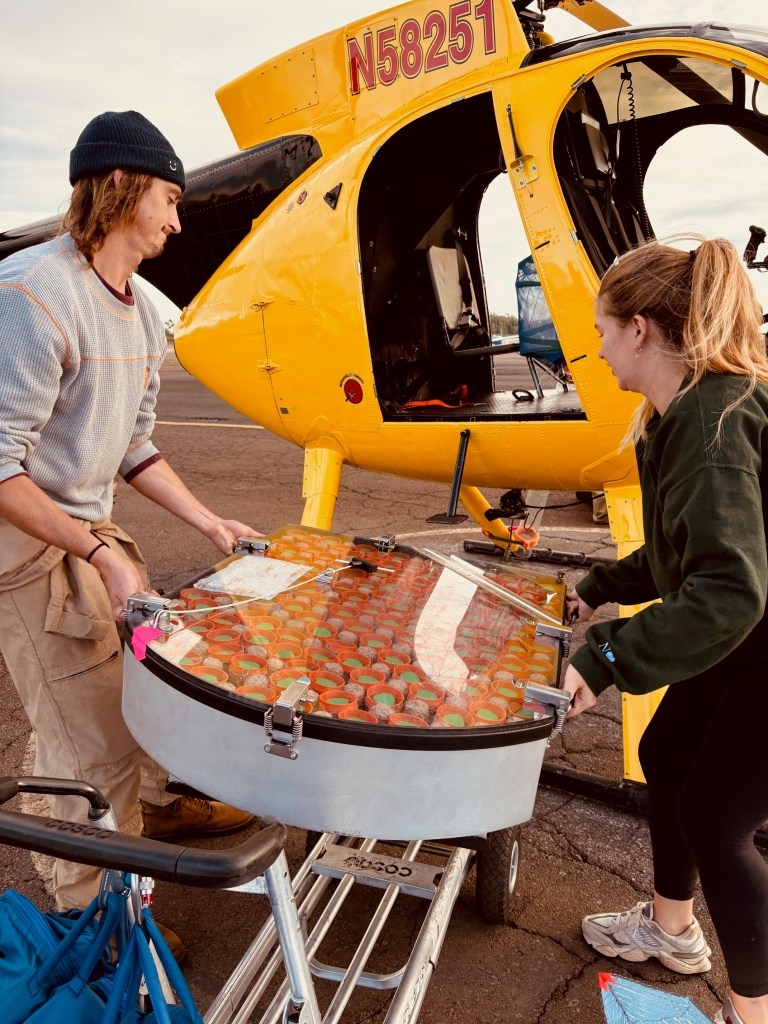
The coalition was born of a nearly decade of planning that began with a working group. It went through multiple iterations and received pushback from a faction of the public concerned that the mosquitos would be transgenically engineered. After one attempted lawsuit to thwart it, however, the initiative moved forward with two pilot projects that released 63 million incompatible male mosquitoes on Maui between November 2023 and March 2026, and another 18 million on Kauaʻi between February and September 2025.
The effort was also an economic engine. Since January 2025 alone, the Research Corporation of the University of Hawai‘i and the American Bird Conservancy received $4.5 million to fund more than 30 new seasonal and full-time positions. Those roles were dedicated to applying the incompatible insect technique to the landscape, and flying helicopters and drones over both islands’ native forests, as well as various forms of community and cultural outreach, including everything from community-science to in-school presentations.
“These jobs created opportunities for local youths and adults to get a start in, and to work in conservation,” said Andrew Laurence, DLNR spokesperson.
But the incompatible mosquitos had to be bred in a laboratory in California and transported to Hawaiʻi, and that part of the work was costly. So when the data came in suggesting the technique wasn’t controlling the population as hoped, the coalition had to take a step back.
A Mosquito Storm On Kauaʻi
Kauaʻi’s honeycreepers are particularly vulnerable due to the island’s elevation. Its tallest mountains are only 5,200-feet high compared to Maui’s tallest, at 10,000 feet and the Big Island’s, at 13,000 feet.
That was evident last winter, when the mosquito population in the forest exploded unexpectedly.
“Things were going badly but in what felt like a normal way, and it felt like we had time to address things,” Hite said on the Forest Talk podcast in September. “Then this past winter things just changed.”
DOFAW traps mosquitos at four sites across the island, and for most of 2025, they had been catching one to four mosquitos per trap per night. He said avian malaria had taken a serious toll on bird populations. The ‘akikiki — also known as the Kauaʻi creeper — was already moving toward being declared extinct in the wild after conservationists watched Pakele, the last known ‘akikiki living in the wild, spend her last two years alone before disappearing in August 2025. (Hite co-published a research article on the decline of the ʻakikiki on Thursday.)
Then mosquito populations grew 100-fold beginning last October. Although the numbers declined again last spring, the impacts have been lasting.
Based on some initial estimates and field observations from the Kauaʻi Forest Bird Recovery Project, Hite said on the podcast the i‘iwi had gone from 3,000 birds down to as few as 50 this year. The numbers of both ʻanianiau — the smallest Hawaiian honeycreeper — and the Kauaʻi ʻamakihi are down to fewer than 500 in the wild.
“I've been asked how bad Lowell was for the forest birds, and I'm sure it was really, really bad. But the real storm came the winter before with the mosquitos,” Hite told Civil Beat. He likened Hurricane Lowell to an atomic bomb exploding in a place where a plague has already killed the inhabitants.
The birds on the islands with higher elevation fared much better, but the shift has broader implications for the entire island chain. “The mosquito line used to be held at 4,000 feet, and now Kaua‘i is completely overtopped,” Smith said. “We have people out there who have worked with these birds for years, since they were chicks. Watching them just literally fall out of the sky in front of them was just excruciating.”
Could this huge drop in population have been prevented if the state had started the incompatible insect technique on Kauaʻi sooner? Hite doesn’t think so. “What we were able to conclude was that it was not … working to the level we need it to work, and it's expensive.”
It’s too soon to say whether Kauaʻi will see similar mosquito numbers this winter. But conservationists have been sending some of the remaining birds on the island into captive breeding programs, and there are plans in the works to send several ʻanianiau to the Big Island in the coming months.
All Eyes On Maui
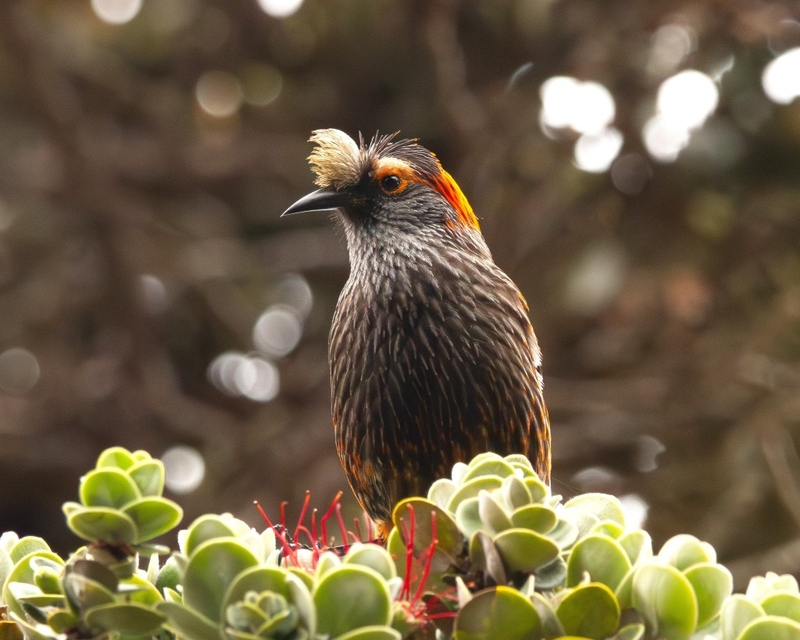
On Maui, where the ʻākohekohe, or crested honeycreeper, and kiwikiu, or Maui parrotbill, are listed as critically endangered, the population of forest birds is small but holding steady, Mounce said.
“But mosquitoes have been increasing on all the islands every single year,” she said. “And things changed very quickly on Kaua‘i, so we obviously don't want to be sitting back and relaxing.”
As a taller island, it could take years before the birds start running out of ground on Maui. However, Smith said, “not all of Maui's elevation is suitable for forest birds. A lot of it is alpine habitat.”
The coalition has trialed BTI for mosquito control on about 900 acres of the island so far. That will expand to 1,500 acres beginning in November, and Mounce said the ultimate goal is to spread it across 8,000 acres. BTI has to be added to water, which will make it harder to deploy than the mosquitos, which were much lighter.
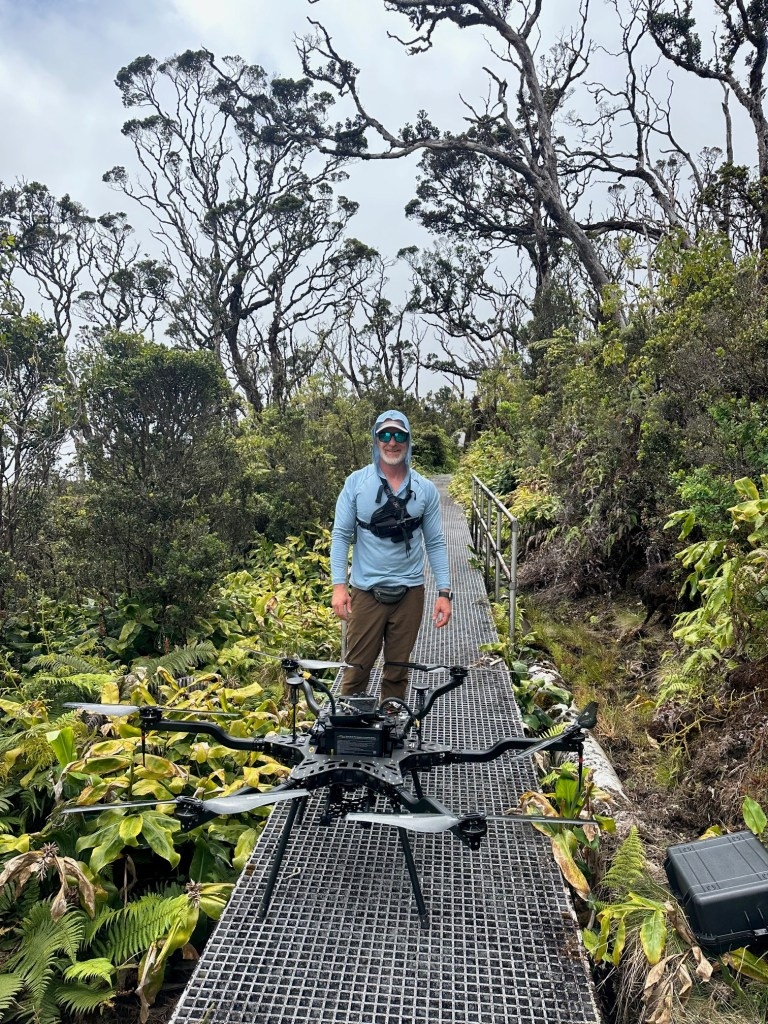
“It's a much heavier payload,” said American Bird Conservancy’s Farmer. That means initially it has to be distributed via helicopter. Farmer said the coalition is working with the Federal Aviation Administration on permits that would allow heavier duty drones that can carry larger quantities of liquid, but it could take months before that will be possible.
“It's still not going to be cheap,” he said. “The reason why we went with IIT initially is when you're releasing the male mosquitoes, they should find the females and be very effective at covering an acreage. With BTI, it has to be in all the pools where the larvae are. And so you have to have pretty good-sized coverage.”
To achieve that kind of coverage will require regular applications, which means more human labor.
“I went from having my staff at the office at 4 a.m. one day every two weeks to now asking, ‘Can we do that five days a week, every single week of the year?’” she said, adding that she’s relieved that there was another effective product to pivot to when the releases ended — even if it’s a little anticlimactic to switch from a high-tech solution to the one people all over the state already use in their backyards.
The coalition has applied for several grants to expand the BTI work to Kauaʻi and continue all the mosquito abatement work beyond 2027. It requested a total of $12 million in state Green Fee funds for native bird restoration projects in 2026, but received only $1.6 million. And it’s yet to be seen whether the Legislature will increase that number next year.
Conservationists say a much larger investment is needed if the state wants to do more than hold forest birds back from the brink of extinction. And mosquitos are just one factor. Keeping invasive plants and predators out of native forests is also key to reestablishing bird populations.
“People often misinterpret what we’re doing as actually recovering the species,” Mounce said.
In fact, keeping these birds alive and breeding a little longer is mainly about buying time in hopes that a day will come when a healthy population of birds fill the forests with song again.
That, she said, is still “many steps away.”
Honolulu, HI