DACA recipients did everything right, yet 14 years later they are more vulnerable than ever
Jul 25, 2026 | 5:56 am ET
Description
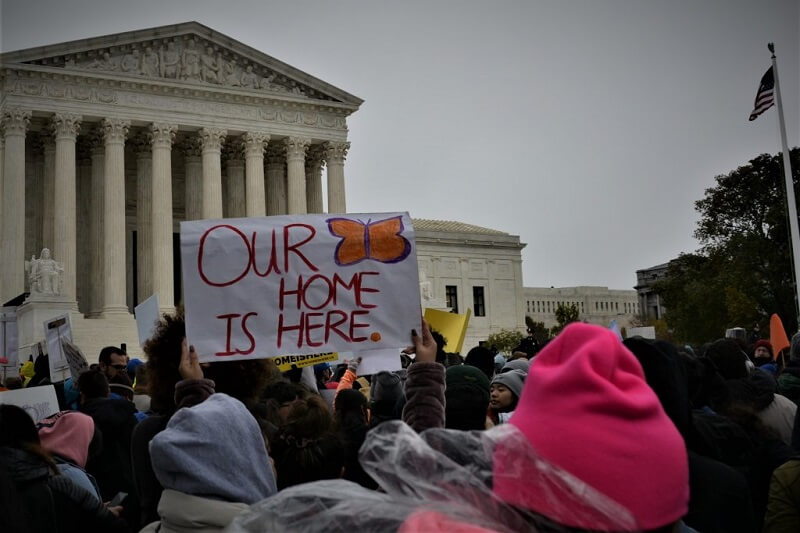
Supporters of the DACA program rally outside the U.S. Supreme Court in 2020. (Photo by Robin Bravender/States Newsroom)
As the 14th anniversary of the Deferred Action for Childhood Arrivals (DACA) program passes, recipients’ futures are deeply uncertain. Once lauded by scholars as “the most successful policy of immigrant integration,” many recipients are now abruptly losing gains they experienced with DACA, raising alarm about the possibility of downward mobility.
Giani is a public health professional who, with the benefit of DACA, earned degrees from prestigious Ivy League universities and worked as a health analyst, contributed to COVID-19 response efforts, and supported community health initiatives in the D.C. metropolitan region.
“I [Giani] was enrolled in a doctorate program when I submitted my DACA renewal to U.S. Citizenship and Immigration Services within the recommended four- to five-month window prior to my work permit’s expiration. Like many other recipients, I did everything right: I had carefully followed every renewal requirement since getting DACA in 2013 and never experienced a significant delay–not even during the pandemic.
“However, this time, I waited anxiously for several months, checking every day to see if my renewal was approved, before my work authorization expired in March. Instead, I received an email notifying me that my university position was being terminated effective immediately since my work authorization expired.
“As a result, I became unemployed and uninsured, and faced tuition bills, uncertainty regarding my academic future, and the potential loss of opportunities for which I had worked for years. The most challenging aspect of this experience was that it did not result from any failure to comply with requirements, but from delays beyond my control.”
Giani is unfortunately not alone—thousands of the 500,000+ DACA recipients nationwide are experiencing similar renewal delays after more than a decade of increased stability with DACA.
DACA was created by executive order in 2012 as a stop-gap measure to address the legal situation of undocumented immigrant youth. Recipients are employed across all sectors of the U.S. economy, though DACA protections only last for two years, requiring regular renewal. Since President Donald Trump’s initial attempt to terminate DACA in 2017, recipients have experienced ongoing legal uncertainty, described as “a non-stop roller coaster,” as courts assess the program’s legality and future.
Fourteen years later, recipients are well into adulthood — they are an average age of 31 — and focused on building careers and families. This reality raises the stakes of these renewal delays. Health care professionals like physicians and nurses can no longer care for patients while educators worry about the impact of their abrupt departure on students. Recipients are losing homes that required years of effort to purchase and many are exhausting savings accounts, facing mounting debt, and defaulting on loans.
Additionally, they encounter difficulties renewing driver’s licenses, depending on state requirements, restricting their ability to drive legally and safely. Many are also canceling travel plans out of fear. This livelihood disruption is also cascading to their mixed-status families since about 240,000 U.S. citizen children have at least one recipient parent. These delays are also taking a major emotional toll on recipients.
Simultaneously, recipients’ protection from deportation has diminished. By mid-2025, Trump administration officials asserted that recipients were not automatically protected from deportation and urged them to self-deport. By the end of 2025, 174 DACA recipients had indeed been deported. In April 2026, the Justice Department published a new precedent decision further weakening recipients’ deportation protections. Meanwhile, in April, a new father in Texas was detained while delivering milk to his daughter in the NICU and in May, an Arizona resident was aggressively removed from her home without justification.
Yet the United States continues to benefit substantially from recipients, who have contributed tens of billions to the economy and paid a cumulative $40 billion in taxes. Terminating DACA would result in the loss of an estimated 440,000 employees from the workforce, upending industries and pushing families into poverty. The total economic loss could reach up to $1 trillion. Beyond economic contributions, recipients bolster the wellbeing of family members and make important everyday contributions to their communities.
These threats to recipients’ livelihoods are not incidental, but rather demonstrate how the Trump administration is actively “chipping away” at DACA. Yet the majority of Americans have long supported providing recipients with a pathway to citizenship. As May’s Senate Spotlight Forum underscored, there is new urgency in passing the bipartisan DREAM Act.
As the limitations of temporary measures like DACA become clearer with every passing day of the second Trump administration, it is beyond time for Congress to give recipients like Giani the permanent solution they have earned.
Annapolis, MD