Controversial NJ judge now overseeing immigration cases in Elizabeth
Jul 06, 2026 | 7:00 am ET
Description
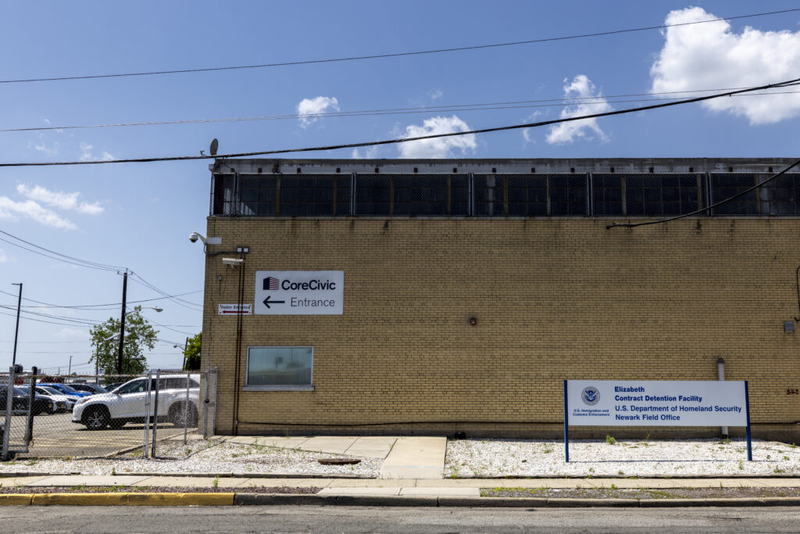
Elizabeth Immigration Court is at the migrant jail where the federal government holds people agents have rounded up under the Trump administration's mass deportation effort. (Photo by Anne-Marie Caruso/New Jersey Monitor)
A New Jersey judge recently criticized for his unsympathetic comments to a woman who claimed she had been raped is now deciding immigration cases for migrants held in detention, including victims of domestic violence and sexual assault.
The news has attorneys for some migrants facing deportation concerned that the judge, Thomas Shusted, could exacerbate what they say is already a dire situation for their clients, who are regularly denied bond in New Jersey immigration courts.
“I would be very concerned about how he would treat my client and whether or not he would really take his or her fears and concerns seriously,” said Lauren Anselowitz, an immigration attorney who often argues cases in Elizabeth and Newark immigration courts.
Adriana Mitchell, a Philadelphia-based immigration attorney who appeared before Shusted in one of his first days overseeing immigration court, said she plans to file motions asking Shusted to recuse himself in any asylum case where her client is a survivor of domestic violence or those who sought a kind of visa limited to victims of human trafficking.
“I don’t feel he should be allowed to be there,” Mitchell said.
The Trump administration last month named Shusted, who served as a Superior Court judge in Camden County for more than a decade, as an immigration judge for Elizabeth Immigration Court, where he decides whether detained immigrants or can be released on bond during deportation proceedings.
Shusted’s appointment came about two weeks after he was taken to task by a three-judge New Jersey appellate panel over his comments to a woman who sought a restraining order against a man she accused of rape. Shusted disregarded the interests of the women in the case and made “troubling” remarks to the man, the panel said.
A spokesperson for the U.S. Department of Justice’s immigration review office did not respond to a request for comment.
Shusted was appointed to the Camden County Superior Court by then-Gov. Chris Christie in 2013, where Shusted served as the presiding judge of the Special Civil Part in Camden County and was assigned on a statewide basis to oversee the Sexually Violent Predatory Docket. Prior to that, he was in private practice. The Department of Justice’s biography of Shusted does not mention his retirement before taking the bench as an immigration judge.
Mitchell said she appeared before Shusted during one of his first days at Elizabeth Immigration Court. She said the judge denied bond in every case on the docket that day, including for her own client, a man from the Dominican Republic with no criminal history who is married to a U.S. citizen and has a pending green card application. Her client came to the United States three years ago seeking asylum after he was shot by the Dominican police.
Shusted sided with a prosecutor for the U.S. Department of Homeland Security who argued the man’s ties to the community are “very limited” and that he posed a flight risk because he was an “illegal entrant into the United States not very long ago,” according to a transcript of the June 11 hearing.
Mitchell pressed Shusted on his reasoning, pointing to her client’s pending green card application, but he cut her off.
“Ma’am, that’s enough. If you disagree with the decision, I’m giving the appeal date is July 6th,” Shusted said.
“I just want to make the record clear, Your Honor,” Mitchell said, as the two began talking over each other again.
“Ma’am, pardon me for interrupting, all right? Stop talking,” he said.
Mitchell said she had felt hopeful for her client when she learned he’d be in front of a judge with a background in criminal cases. But now she plans to file a formal complaint against him with the Office of the Chief Immigration Judge within the Department of Justice.
“I don’t give a f— as long as he’s off the bench, he shouldn’t be there. I’m not afraid, I’ll say anything,” said Mitchell, who immigrated from Romania 20 years ago. “What’s the worst they can do, revoke my citizenship? Good luck with that, I still have a ton of law school loans.”
Mitchell said she’s particularly concerned about how Shusted will handle cases brought by victims of domestic violence and human trafficking. She said those are the types of victims the appellate court accused Shusted of failing to protect.
The restraining order case that earned Shusted the appellate court’s criticism came before him in May 2025.
A college student sought a protective order against a man she said she went on three dates with before he raped her, choking her several times during the act. Court records do not identify either party in the case.
Shusted said he found the woman “inherently believable” and “more credible” than the man, who said no rape occurred, but the judge denied her bid for a restraining order because he said there was no history of domestic violence between the two.
The appellate court last month reversed that decision, and chided Shusted for his comments to the man in the case.
“Do you understand the break you got today?” the judge told the man, in the presence of the woman who alleged he raped her.
“That comment is troubling if for no other reason than it might lead plaintiff to believe that the court’s decision was based on defendant’s best interests, rather than hers,” the appellate ruling says, adding that Shusted’s remark “falls short of treating a sexual assault victim with fairness, compassion and respect.”
Because of the appellate ruling, Anselowitz said, she shares Mitchell’s reservations about how Shusted will handle cases brought by migrants who said they are seeking asylum because they are victims of domestic violence and human trafficking.
Anselowitz noted that because the appellate decision came out about two weeks before Shusted’s appointment was announced, the U.S. Department of Justice likely did not know about his comments in the restraining order case as they were hiring him.
Typically, newly hired immigration judges serve a two-year probationary period. But Anselowitz said that under the Trump administration, she wouldn’t be surprised if it’s not being enforced as it should be.
“Even if it is, and someone brought the article to their attention and made a complaint during this time, is anyone going to act on it? I don’t know,” she said.
Individual judges like Shusted are not reflective of all judges in immigration court, she added. And while his comments “turns my stomach,” it may not be reflective of his entire career and who he is as a person, she said.

Trenton, NJ