‘Consumers aren’t going to be happy’: South Dakota executives warn of coming price increases
Sep 24, 2026 | 4:59 pm ET
Description
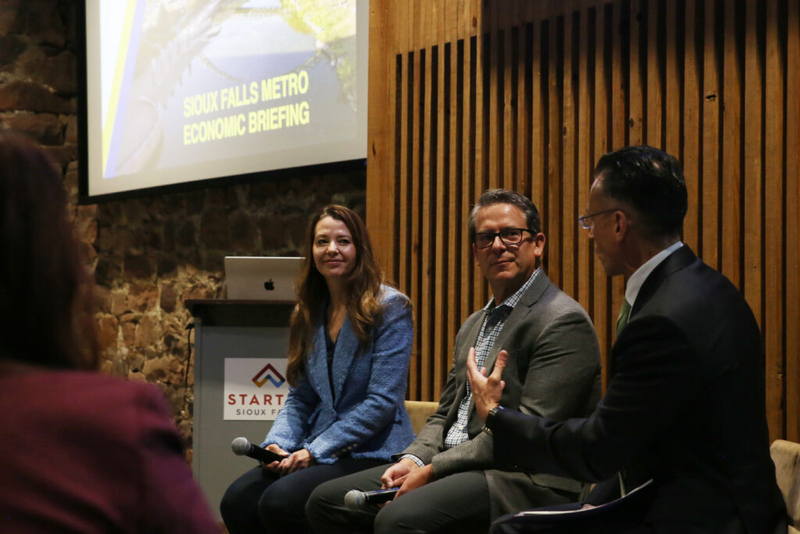
From left, Crystal Lail, chief financial officer of NorthWestern Energy, and Brian Gramm, CEO of Journey Group, participate in a panel with moderator and South Dakota State University economics professor Joe Santos at the Sioux Falls Metro Economic Briefing in downtown Sioux Falls on Sept. 24, 2026. (Photo by Makenzie Huber/South Dakota Searchlight)
SIOUX FALLS — Inflation is affecting South Dakota businesses before it reaches consumers, and two executives say tariffs, artificial intelligence demand, high interest rates and a tight labor market are among the culprits.
Tariffs — taxes the federal government charges on imported goods — implemented by the Trump administration have driven up costs for materials such as metal and wood, particularly as a trade dispute with Canada continues to affect materials flowing into South Dakota.
Brian Gramm, CEO of construction company Journey Group, and Crystal Lail, chief financial officer of NorthWestern Energy, spoke Thursday at the Sioux Falls Metro Economic Briefing, fielding questions from South Dakota State University economics professor Joe Santos.
State to help fund Rapid City office building for defense contractor Northrop Grumman
Santos said he wanted the conversation to be direct.
“I think it’s important, if we’re going to be really productive with our time, to focus on constraints to growth for the region,” Santos told South Dakota Searchlight. “That’s not pessimism. It’s just reality that we have to understand what’s limiting our potential.”
Both executives said tariff impacts are showing up in their input costs. Their companies are absorbing the difference for now, which Santos calls “pipeline inflation”: cost increases working their way through the system and eventually reaching consumers.
Metal prices for commercial construction jumped because of tariffs and have stayed high, Gramm said. On multi-year projects, when costs increase between contract signing and project completion, the difference eats into the contractor’s margin.
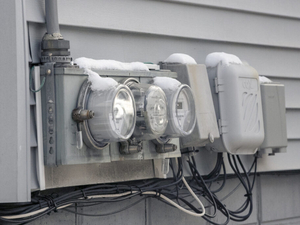
The costs of transformers — which adjust the voltage of electricity so it can be delivered to homes and businesses — are up more than 400% since 2020, Lail said.
“We will take anything we can get,” Lail said, since the grid has to keep running. “It’s kind of a compounding issue of tariffs, trade, all of that policy and the fact that we’ve woken up a bit to how we don’t produce things here, and that’s very difficult for us.”
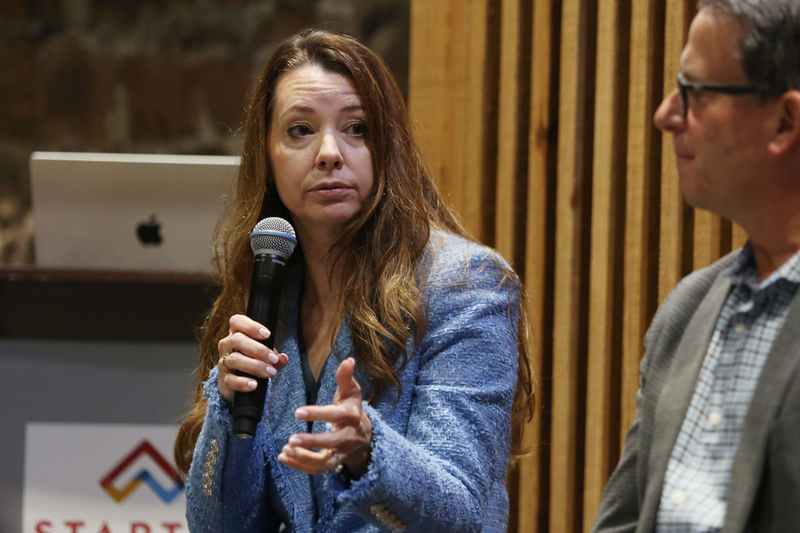
Interest rates are also higher, and one driver is artificial intelligence, the panelists said. AI runs on physical infrastructure — data centers that must be built and powered — and the companies building them are borrowing enormous amounts of money to do it. When large borrowers compete for the same pool of money, it drives up the cost of borrowing for others. The Federal Reserve also raised its benchmark interest rate earlier this month for the first time in three years.
“If the U.S. Treasury’s rate goes up, then the mortgage rates, the car loan rates, everything else goes up like rungs on a ladder,” Santos told Searchlight.
For NorthWestern customers, Lail said, the elevated costs could mean an increase in rates.
“There are so many price increases that have not actually flowed through to consumers today,” Lail said. “Consumers aren’t going to be happy about that. I see that continuing to snowball.”
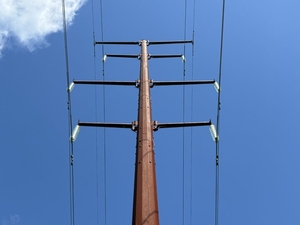
160 miles of transmission lines planned for eastern SD, costing upward of $2 billion
Growing through mergers or “scaling” is one way companies try to contain those pressures. NorthWestern is pursuing a merger with Black Hills Energy to gain scale, Lail said. Larger utilities can get better pricing on transformers and other equipment. The same is true for Journey Group — without scale, national firms with bigger balance sheets and deeper labor benches win the work, Gramm said.
But scaling requires people — and South Dakota has a 2% unemployment rate and a declining labor force participation rate, which means a shrinking percentage of working-age people are looking for jobs. Gramm said Journey has also had to cut its immigrant visa workforce because of federal immigration policy changes.
The result is a compounding squeeze: companies try to absorb rising costs by growing but can’t find enough workers to do so, and the costs eventually flow to consumers who are also paying more to borrow.
“All of this is to say that the price pressures we see in the form of inflation are probably longer lasting than any of us would like them to be,” Santos said.

Pierre, SD