Consumer advocates urge state board to reconsider Xcel’s hefty increase
Aug 24, 2026 | 7:00 am ET
Description
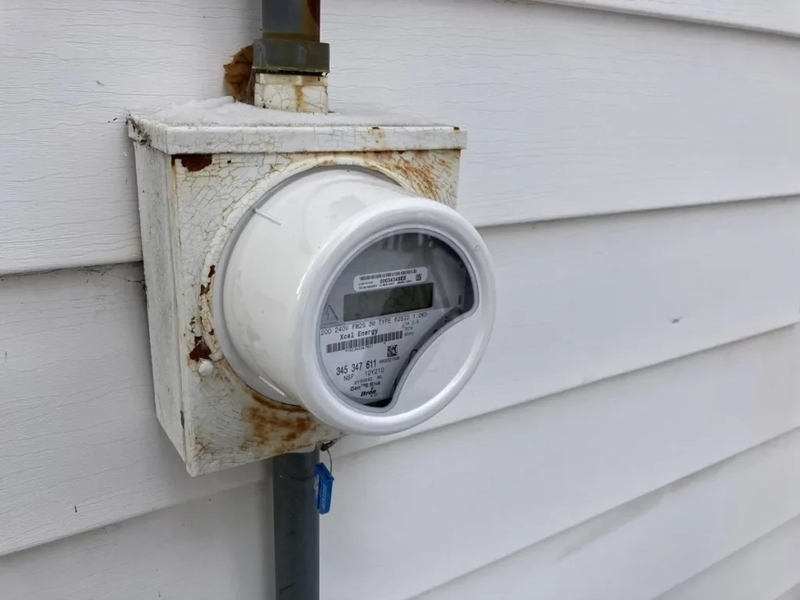
Your rates are going up, but consumer advocates are trying to intervene. (Photo by Ken Paulman/Energy News Network)
Two utility ratepayer advocates urged state regulators to reconsider a June order allowing Xcel Energy to raise its Minnesota electric customers’ rates by about $210 million over the next two years. The average residential customer would see their bill increase by about $5.60 per month.
Attorney General Keith Ellison and the Citizens Utility Board of Minnesota filed separate petitions saying, in effect, that the Minnesota Public Utilities Commission improperly increased Xcel’s authorized return on equity this summer following a rate case proceeding that began in November 2024. Return on equity, or ROE, is a measure of shareholder profit that utility regulators use to set customer rates charged by investor-owned utilities.
“CUB believes the decision to increase Xcel’s return was neither in the public interest nor supported by record evidence in the case,” CUB Minnesota Executive Director Annie Levenson-Falk said in a Thursday blog post explaining the petitions.
Xcel filed its own petition on Thursday asking the PUC to clarify parts of its order, including new oversight requirements for employee pay and pension asset tracking, but as of Friday morning had not responded to the consumer advocates’ reconsideration request.
Karlee Weinmann, research and communications director for the Energy and Policy Institute, said parties don’t often try to reopen rate cases following a final order.
“It’s uncommon for Minnesota consumer advocates to file petitions challenging authorized utility profits, which underscores serious concerns with the commission’s decision-making process,” Weinmann told the Reformer in an email.
Consumer advocates and utility watchdog groups like Weinmann’s have long criticized investor-owned utilities like Xcel for earning what they say are excessive profits at ratepayers’ expense.
In March, the Energy and Policy Institute released an analysis of 110 publicly listed utilities’ profit margins. Xcel was among the 40 most profitable in 2024 and 2025, earning an average of about 16 cents on the dollar. Xcel earned about $2 billion last year and at least $1 billion annually going back to 2015, Weinmann wrote earlier this month.
Xcel’s rates have risen at about twice the rate of inflation since 2005, a lawyer for the Department of Commerce said at the PUC’s June 18 decision hearing.
“Utility companies and their shareholders are entitled to the opportunity to earn a reasonable return on their investments, but not an excessive return. Xcel is producing a healthy profit and does not need Minnesota ratepayers to fund additional returns,” Levenson-Falk said in a statement Thursday.
Xcel went into its most recent electric rate case with an authorized ROE of 9.25%. It initially asked the PUC to boost its return to 10.3%, saying a significant increase was warranted to support billions of dollars in planned system investments and maintain reliable service. The PUC said the request, if granted, would have added nearly $500 million to Minnesota customers’ bills over two years.
Customer advocates pushed back in the months that followed, urging the PUC to reduce Xcel’s ROE or at least keep it as-is. CUB Minnesota and Xcel Large Industrials, which represents some of the utility’s biggest power customers, said an ROE of 9% or lower would be appropriate. A Department of Commerce witness argued for keeping the ROE at 9.25%.
Joseph Meyer, an administrative law judge acting as the proceeding’s neutral overseer, issued a long-awaited report in April recommending the PUC raise Xcel’s ROE to 9.8%. Meyer’s recommendation effectively split the difference between the company’s initial ask and the advocates’ leaner requests.
There was to be one final twist. In June, days before the PUC was set to rule, Xcel revised its ROE request lower, to 9.6%. The Energy CENTS Coalition, a St. Paul-based energy affordability nonprofit, followed up with its own filing arguing for 9.6% and $6 million in annual funding for a new program proposed by Xcel to help customers behind on their utility bills.
Ellison’s office blasted what it called the nonprofit’s attempt to trade a 9.6% ROE for Xcel’s agreement to provide a relatively small amount of temporary help for struggling consumers. The arrangement, it said, would give Xcel about $35 million more per year in exchange for $6 million in support for strapped ratepayers.
“That is the equivalent of buying a $250 Vikings ticket to get a ‘free’ magnetic schedule as a stadium giveaway,” Assistant Attorney General Richard Dornfeld said in a June 16 filing.
The PUC’s ruling did include some additional consumer protections in addition to the new arrearage program, including a cap on how much of its top executives’ pay Xcel can recover from ratepayers; reduced late payment charges with full waivers for its lowest-income customers; automatic enrollment in Xcel’s PowerOn bill assistance program; and an expanded energy usage credit for low-income ratepayers.
Xcel, the petitioners and members of the public have 10 days to respond to the rehearing petitions or submit public comments about them through the PUC’s online comment form.
By law, the PUC must respond to a request for reconsideration within 60 days of the filing date. The deadline in this case is Oct. 19, PUC spokesperson CoriAhna Rude-Young said in an email.
Absent a court appeal of the PUC’s ultimate decision, Xcel electric customers could see their rates increase later this year, CUB Minnesota said.

Saint Paul, MN