Federal funds for local police enforcement accelerated Trump immigration crackdown
Oct 02, 2026 | 12:31 pm ET
Description
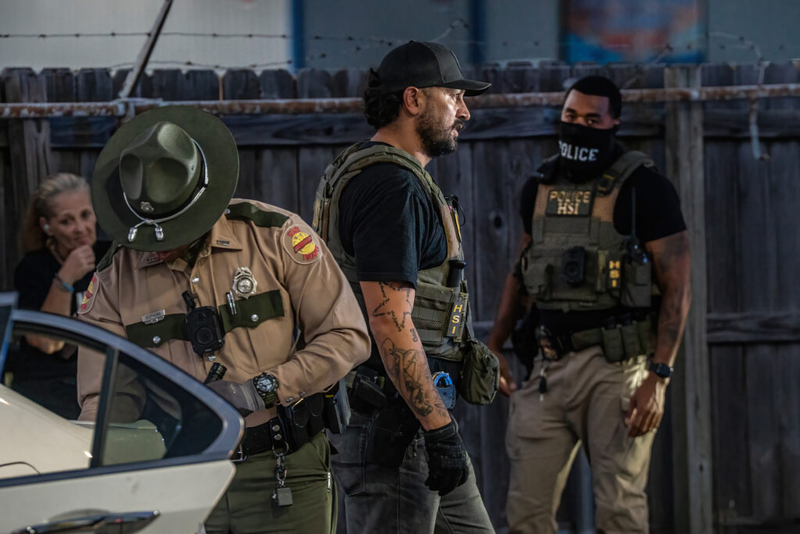
Officers from the Tennessee Highway Patrol and the U.S. Department of Homeland Security at a traffic stop in Memphis in October, 2025. (Photo by John Partipilo/Tennessee Lookout)
WASHINGTON — This summer, arrests of immigrants in the United States soared to the highest levels since President Donald Trump returned to office.
An unprecedented increase in cooperation between local and state law enforcement and federal immigration officers through collaborations known as 287(g) agreements helped drive numbers up.
The agreements allow state and local law enforcement agencies to enforce parts of federal immigration law and have become an arm of Trump’s mass deportation campaign. Republicans in Congress have provided billions in federal funding for local departments that accept the agreements, creating a deluge of new partners.
Theresa Cardinal Brown, a senior Department of Homeland Security official during the George W. Bush and Barack Obama administrations, said the billions in new funding has helped the program grow.
“Mostly, 287(g) agreements were voluntary, and the costs were borne by the state and local government to train their own people,” she said. “Now, the federal government has money to pay them, and so that's encouraging more states and localities to do it because it's a budget plus-up.”
In June, U.S. Immigration and Customs Enforcement recorded roughly 43,000 immigration arrests, followed by 49,000 in July and nearly 51,000 in August. ICE does not distinguish between arrests initially made by local law enforcement or federal officials.
Those three months also saw the most new 287(g) agreements signed since Trump took office, according to a States Newsroom analysis of government data.
“ICE has increased efforts with state and local law enforcement to assist federal immigration officers in our efforts to make America safe again,” a Department of Homeland Security spokesperson said in a statement to States Newsroom.
But those efforts have generated protests in some of the communities where they’ve appeared.
Democrats in Maryland and Maine passed laws restricting cooperation between local police and ICE. The Maryland measure’s supporters said it would reduce distrust of police.
Skyrocketing growth
The president's signature 2025 domestic policy bill, the “One, Big Beautiful” Act, set aside about $4 billion for state and local governments to conduct immigration enforcement, including 287(g) programs. The Secure America Act passed in June allocated more than $31 billion to implement those agreements as well.
Both packages were passed by Republicans through a legislative maneuver known as reconciliation that did not need Democratic votes.
The funds incentivized massive growth.
Before Trump took office in January 2025, the federal government had agreements with 135 state and local police departments. As of Oct. 1, those agreements skyrocketed to 2,608, according to DHS data.
Local departments or state agencies in 38 states have 287(g) agreements, with the highest numbers in Texas and Florida, where there are state laws requiring local law enforcement to partake in the program.
The Wall Street Journal reported Thursday the Florida Highway Patrol was eligible for $26 million in reimbursements from the federal government for arrests from April through June.
“My educated guess would be that a large number of the arrests and detentions that we've seen increasing in recent months in the summer were because there was an increase in 287(g) agreements in Texas and Florida, but other parts of the country as well,” said Ariel G. Ruiz Soto, a senior policy analyst at the Migration Policy Institute, a think tank that studies global migration.
ICE does not always specify when an immigration arrest is made through the partnership program, but the Deportation Data Project, a project of the University of California schools in Berkeley and Los Angeles that analyzes government immigration enforcement data, has attributed at least 6,150 arrests in July, about 12.5% of all arrests for that month.
Only 12 states have no such agreements. They are California, Connecticut, Delaware, Hawaii, Illinois, Maine, Maryland, New Jersey, Oregon, Rhode Island, Vermont and Washington state.
Three models
The partnership program was created in a 1996 law, but not actively used until the 9/11 terrorist attacks. It first received federal appropriations in 2006.
Three types of partnerships operate within the program.
The loosest type of agreement is the jail enforcement model, where deputized officers can inquire about the immigration status of people arrested on state or local charges, as well as hold a noncitizen for ICE to pick up for up to 48 hours.
In another model, the warrants service officer model, ICE trains, certifies and allows state and local law enforcement to issue administrative warrants, which are not signed by a judge, but by an ICE official requesting the arrest of a noncitizen. Local law enforcement officers under this model do not inquire about immigration status.
The task force model, which involves the greatest immigration enforcement by local officers, allows for immigration officials to deputize local officers to partake in immigration duties such as asking about immigration status or even detaining people and transferring them to ICE.
As part of its immigration crackdown, the second Trump administration revived the task force model after the Obama administration discontinued it in 2012 over concerns of racial profiling.
It has seen the largest increase under Trump, Ruiz Soto said.
More than 71% of 287(g) agreements now use the task force model, according to Titus Consulting, a firm that tracks the agreements. About 7% use the jail enforcement model and more than 21% use the warrant model.
The task force model is “hands down,” the most effective method in arresting noncitizens, said Todd Bensmen, a senior research fellow for the Border Security and Immigration Center at The Heritage Foundation, a conservative think tank.
“If they're not deputized under that, they just come into contact with people that are fully … deportable, and then just leave them be,” he said of local law enforcement. “They can just arrest them on the spot and call ICE, and that way you have a really dramatic force multiplier and ICE doesn't have to do anything but come and pick them up.”
Program changes
In 2006, the Bush administration took an interest in exploring 287(g) programs, specifically the jail enforcement model because it was easy for ICE to identify people who are subject to an immigration arrest, said Brown.
“If your job is to find people, wow, that's the easiest thing to do,” she said of the jail model.
Brown said that spurred the idea for the Secure Communities program. Under the program, the FBI automatically sent fingerprints of a person booked in custody to DHS to check against its immigration database. If the person was a noncitizen who was unauthorized in the U.S., then ICE was notified.
The program was voluntary, but there was pushback from immigration advocates during the Obama administration, Brown said.
“There was a concern that this was mixing criminal enforcement and immigration enforcement in ways they weren't meant to, (and) it was creating fear among immigration communities of reporting crimes for fear that they would be arrested,” she said.
The Obama administration pulled back and redirected the Secure Communities program to a federal government model.
“They turned it from like a community-by-community rollout to just a federal-to-federal information sharing agreement that remains in place today,” she said.
Brown said the difference now is that some communities have decided when ICE is notified, if at all, and whether or not to honor detainers, which are requests from ICE to hold an immigrant until federal immigration officers arrive.
Local governments that have not wanted to participate in federal immigration enforcement have been dubbed sanctuary cities.
The Trump administration has threatened to pull federal funding from those cities that don’t want to aid in immigration enforcement and has offered an influx of cash to states and local governments that have agreed to participate.
The Republican Congress has funded the program for the next three years, Ruiz Soto noted.
“It would then come to … what a future administration or a future Congress would do to continue expanding this or not fulfill them anymore,” he said. “But clearly right now ICE has significant funding to last for 287(g) and much more other enforcement in the near future.”
All States Newsroom content is free to republish. Read our republishing policy for more information.