Construction Of Military Data Center On Maui Alarms Residents
Oct 27, 2026 | 6:01 am ET
Description
Photo courtesy of Honolulu Civil Beat
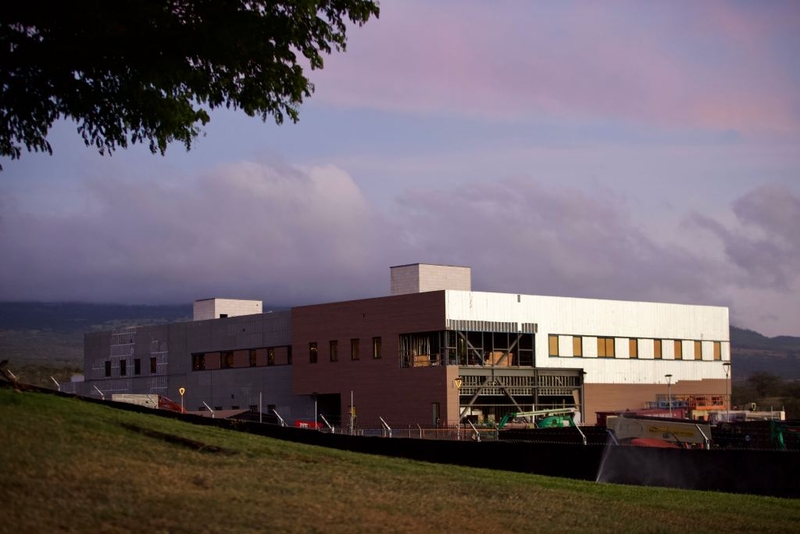
The controversial telescopes that the military is seeking to build in a state conservation district atop Haleakalā would be remotely operated from a two-story, 56,000-square-foot laboratory and data center that is currently under construction in Kīhei.
Federal officials from the U.S. Air Force and U.S. Space Force finalized plans to build the nearly $100 million facility at the Maui Research and Technology Park around the same time that they proposed adding up to seven telescopes to the military’s existing space surveillance complex on the volcano’s summit. But while the telescopes have drawn intense public backlash, the Kīhei project flew under the public's radar for several years.
Environmentalists, Native Hawaiian advocates and other Maui residents have in recent weeks called attention to the planned South Maui facility and criticized the military for failing to more explicitly disclose its connection to the new telescopes planned for Haleakalā’s 10,000-foot summit.
By introducing the two projects separately, federal officials were able to circumvent questions about their relationship and cumulative environmental impact, according to Hina Kneubuhl, an organizer with Protect Haleakalā, a collective of Hawaiian cultural practitioners, environmentalists, community leaders and others working to protect culturally significant landscapes.
“They segment these projects, and it’s so deceptive. All of us who don’t have time to do this, were trying to catch them while we’re catching all of these balls flying in the air,” Kneubuhl said during an Office of Hawaiian Affairs community listening session on Maui earlier this month.
Because the telescopes would be built on state land that has been set aside for the federal government, the project cannot move forward until military officials have completed an extensive environmental impact statement and review process that requires opportunities for public feedback.

The Kīhei facility — called the Secure Integration Support Laboratory, or SISL — is being built on private property that the federal government purchased in 2023, so officials were only required to complete an environmental assessment, a less rigorous process than required for an environmental impact statement. According to the 2022 draft assessment, Air Force officials concluded that no significant adverse effects would result from building the facility.
“Where is the transparency regarding its water and electricity demands?" Lisa Yamada said during the OHA meeting last week. "Our families, farmers and communities are already struggling for these precious resources. Our ʻāina and wai should not be sacrificed for military expansion.”
“Our younger generations are rising to protect our kūpuna, our culture and our ʻāina.”
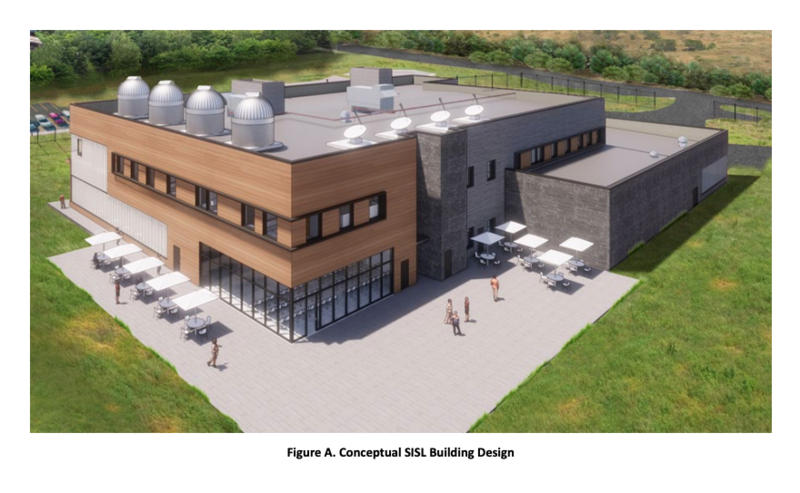
Construction of the South Maui facility began in late 2024 and is expected to be completed early next year, according to the government contract awarded to Hensel Phelps. The project was designed to consolidate all of the U.S. Space Force 15th Space Surveillance Squadron’s operations across Maui from four facilities into one. It will include a high-performance data center, laboratories, a remote telescope operations center, offices, a conference center, warehouse space and associated infrastructure, according to an April 2023 design document.
The draft environmental assessment did not include detailed information about the project's water consumption, but it projected that consolidating the military's operations would result in reduced water and energy consumption by the Air Force on Maui over the life of the facility. There would be additional "short-term minor adverse effects on potable water use," during the early stages of the project, according to the document.
Water for the facility would be supplied from an existing Maui County reservoir at the eastern end of Lipoa Road, and the draft environmental assessment proposed adding a new half-million gallon storage tank to increase capacity.
It would also include an emergency 2,500-kilowatt generator, as well as a 12,000-gallon tank and three 20,000-gallon tanks to store a two-week supply of diesel fuel capable of powering the entire building in the event of an electricity outage. Some residents have raised concerns about storing such large amounts of fuel in the wildfire-prone area, especially because federal officials have not yet finished cleaning up a 720-gallon diesel fuel spill caused by a lightning strike at the Maui Space Surveillance Complex on Haleakalā in January 2023. There are also heightened public concerns about military fuel storage tanks after the Navy's underground oil storage facility at Red Hill on Oʻahu leaked in 2021, poisoning tap water for thousands of residents and service members in the area.
Like existing military operations in South Maui, the new facility would be connected to and receive data from the Maui Space Surveillance Complex on the Haleakalā summit via fiber optic cable, according to the draft environmental impact statement for the planned telescopes.
Despite years of pushback from residents, federal officials have maintained that the military needs to build new telescopes and improve its space surveillance capabilities on Maui to track and identify threats among satellites and other objects orbiting the Earth above the Pacific.
In addition to concerns about the potential negative impact on cultural and environmental resources, many community members have expressed worry that the military could use new facilities on Maui for war-fighting efforts and that the island could soon become a target for foreign adversaries.
These fears were compounded last month when federal officials confirmed at a conference in Maryland that the U.S. Air Force has already deployed weapons into Earth's orbit, and that they are seeking to double the size of the U.S. Space Force over the next five years as space becomes an increasingly important war-fighting domain. The U.S. Space Command also published a document stating that fixed infrastructure could soon be targets for adversaries who could attack "through cyber intrusion, directed energy, precision fires or sabotage."
Data Center Panic
The military data center currently under construction in South Maui is part of a larger facility, and it wouldn't be the first on Maui, or even at the Maui Resource and Technology Park. There is already a data center at the Maui High Performance Computing Center, according to the draft assessment.
But public resistance to data centers has grown, fueled by concerns about the environmental and community impacts of the hyperscale data centers rapidly being built across the country to power an artificial intelligence boom. Hawaiʻi County recently joined hundreds of other U.S. communities that have introduced regulations or enacted moratoriums on data center construction.
There are different types of data centers, and not all of them rely on the massive amounts of power and water that hyperscale and artificial intelligence data centers do. Public records indicate that the Kīhei facility will likely include infrastructure that uses water for cooling hardware that generates heat during operation, but it was not immediately clear what the projected water usage would be.
The 437-page environmental assessment does not say how much water the facility would use, and the county Department of Water Supply could not be reached for comment Monday. Public records show that communication between federal and county officials related to the project occurred during Mayor Michael Victorino's administration. Military officials did not respond to questions seeking that information on Monday.
Honolulu, HI