Conservation groups say proposed mining along New Mexico-Arizona border threatens wildlife crossing
Nov 06, 2026 | 12:00 pm ET
Description
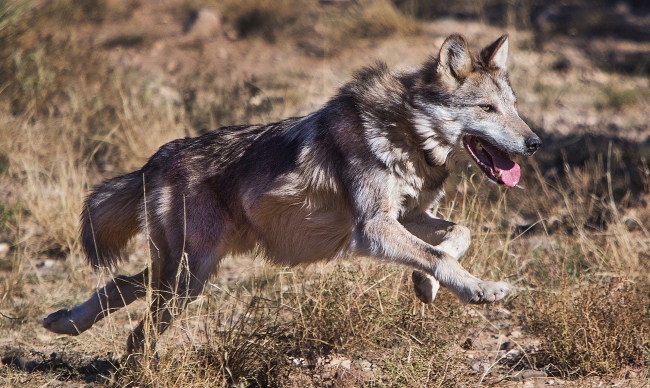
A coalition of conservation groups said a proposed copper mining operation along the New Mexico-Arizona state line could imperil an important wildlife crossing for Mexican gray wolves (pictured), black bears and desert bighorn sheep. (Photo courtesy U.S. Fish and Wildlife Service)
A coalition of conservation groups is asking the Bureau of Land Management to scrutinize a proposed copper mining operation along the New Mexico-Arizona state line that they say would threaten an important wildlife crossing.
Curiosity Exploration LLC earlier this year filed a permit application with the New Mexico Energy, Minerals and Natural Resources Department and sent a notice of intent to begin exploratory mining to the BLM.
The proposed site is near the Peloncillo Mountains, which run along the New Mexico-Arizona state line in Hidalgo County, New Mexico, and Cochise County, Arizona. The area is home to mountains known as “sky islands,” due to their rich, biodiverse ecosystems that tower above the region’s predominantly parched desert landscape.
A group of conservation groups — including New Mexico Wild, the Chiricahua Regional Council and the Sky Island Alliance — last week co-signed a letter to BLM officials, asking them to require an extensive environmental review of the proposal under the National Environmental Policy Act.
The Bureau of Land Management did not immediately respond to a request for comment.
The conservation groups contend that the area is among the most important wildlife corridors in the Southwest. New Mexico’s Wildlife Corridors Action Plan identifies the region as particularly important to desert bighorn sheep, which are “especially vulnerable” to habitat disruptions caused by nearby highways such as Interstate 10. The plan calls for building highway overpasses and underpasses for desert bighorn sheep, black bears and Mexican gray wolves to safely traverse the area.
“Other impacts to the Peloncillos, like the border wall and I-10, can be mitigated one day and might not be as permanent,” New Mexico Wild community organizer Luke Koenig said in a statement. “But once you turn a portion of one of the West’s most important wildlife corridors into a giant hole in the ground, you’ll never get it back.”
Dirk Sigler, president of the resident’s watchdog group Chiricahua Regional Council, in a statement said that the corridor is “a stepping stone along an ancient pathway that’s been used by wildlife for millennia.”
“What would you rather see at your doorstep — a desert bighorn sheep or an open pit mine?” he asked.
Santa Fe, NM