Confirmed death toll rises to 2 from chemical tank disaster in southwest Washington
May 27, 2026 | 3:55 pm ET
Description
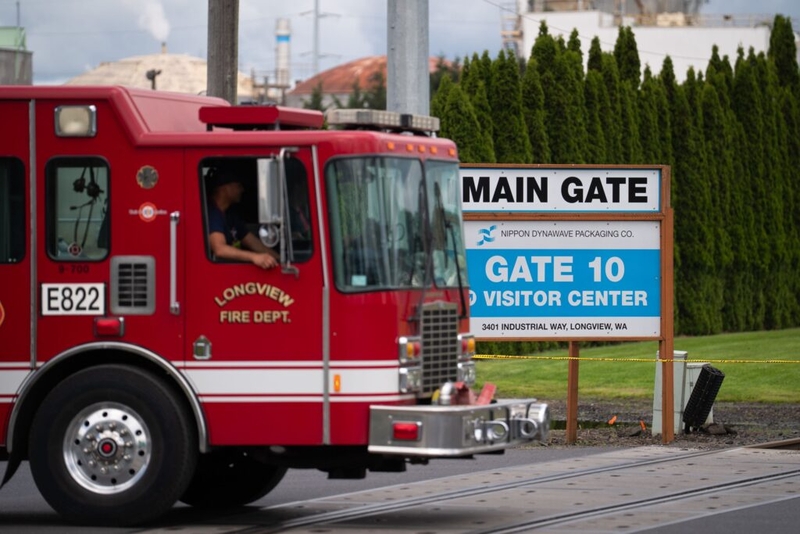
Longview Fire emergency responders drive out of Nippon Dynawave Packing Company after a chemical implosion early in the morning at the Longview, Wash., facility on May 26, 2026. (Photo by Eli Imadali / OPB)
The death toll from Tuesday’s chemical tank rupture at a mill in southwest Washington has climbed to at least two people, while nine others remain “unrecovered,” according to authorities.
Longview’s Fire Department said in an update posted online late Wednesday morning that a person who was transported from the scene after the tank burst had died from their injuries. Authorities confirmed the first fatality Tuesday.
Seven other employees at the mill and one firefighter were also injured.
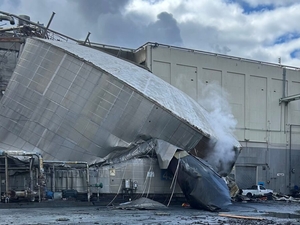
A tank holding about 900,000 gallons of a corrosive substance known as white liquor failed Tuesday morning at the Nippon Dynawave Packaging plant. White liquor is used in paper manufacturing. It can cause severe burns upon contact with skin.
First responders paused their response Tuesday due to concerns that the tank remained unstable and still contained thousands of gallons of the chemical.
Cowlitz 2 Fire and Rescue Chief Scott Goldstein said Tuesday night that there was “no belief of rescues that still need to be made.”
The Longview Fire Department said this morning that recovery efforts would begin today.
“As individuals are recovered, they will undergo decontamination before being transported to the Cowlitz County Coroner’s Office for identification and family notification,” the Longview Fire Department said in its Wednesday statement.
State and local officials have said there are no threats to air quality around the site or to the local drinking water system. They are asking people to stay away from ditches and dikes around Longview until water testing is completed.
Also on Wednesday, the U.S. Chemical Safety and Hazard Investigation Board announced it would open an investigation into the tank failure. The federal agency said a team of its investigators would arrive in Longview on Wednesday.
“The CSB is opening an investigation into this tragic incident to determine how it happened and what can be done to prevent something like this from happening again,” said Steve Owens, chair of the board.
The board is responsible for investigating incidents involving the catastrophic release of extremely hazardous substances. It works to identify root causes and issue recommendations, but does not issue citations or fines.
This is a developing story and will be updated.
Olympia, WA