Committee backs bills to support manufactured, industrialized housing
Mar 20, 2026 | 3:48 pm ET
Description
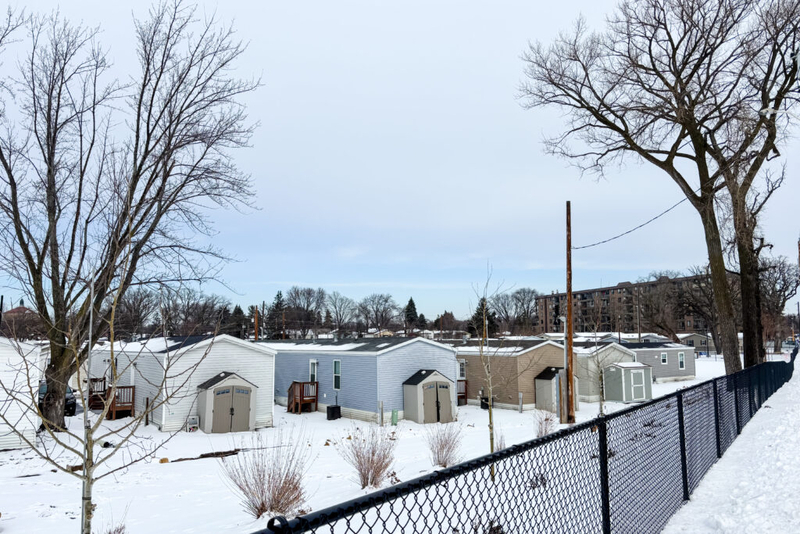
Urban Grove, a manufactured home community in Saint Anthony, Minnesota,, Tuesday, Feb. 24, 2026. (Photo by Nicole Neri/Minnesota Reformer)
Lawmakers looking to increase the supply of affordable housing in Maine are backing proposals that would make industrialized housing construction and manufactured home ownership more streamlined and accessible.
Two bills designed to support Maine’s industrialized housing industry, and make manufactured homes and tiny homes more affordable, are headed to the full Legislature after they won the support of the Committee on Housing and Economic Development this week.
Both bills follow recommendations from housing working groups, and aim to address several challenges facing homeowners and the industry.
Currently, if a manufactured home or tiny home is located on rented property — like a mobile home park — that house is not considered real estate. Instead, under Maine law, it’s considered personal property, like a vehicle.
During the public hearing earlier this month, Rep. Tracy Gere (D-Kennebunkport), who sponsored LD 2231 and co-chairs the housing committee, explained that this classification “can limit homeowners’ ability to finance the purchase at interest rates available to real estate purchasers.”
This means that homeowners can’t access the mortgage market, which has more consumer protections, longer loan terms and generally lower interest rates.
“This often results in a higher cost and shorter loan terms and fewer consumer protection for homeowners,” said Jennifer Corbett, with Norway Savings Bank. “In contrast, recording the manufactured home similar to real estate, will create a more stable and transparent ownership structure.”
LD 2231 would create a path for those homeowners to convert the house to real property, and open access to better financing options.
“There’s just so many reasons why this is a good thing,” said Greg Payne, senior advisor on housing at the Governor’s Office of Policy Innovation and the Future, “and it’s one of the few instances where I think nobody loses — this is all people gaining.”
Payne said the change would be particularly impactful because most manufactured homeowners are low- and middle-income households.
“In a world where I think we’re all sort of focused on affordability issues — and especially for those who don’t have a lot of wiggle room in their budgets — this is one of the most impactful proposals that I have seen in this space,” he said.
If passed by the full Legislature, the bill would also ensure that when homeowners in a mobile home or manufactured home park request mediation with the park owner, the owner cannot require nondisclosure agreements as part of the mediation process.
On Thursday, the legislation was backed by the majority of the committee, with Sen. Rick Bennett, an independent from Oxford County, joining Democrats in support.
During the work session ahead of the vote, Rep. Amanda Collamore (R-Pittsfield) said that she felt the bill needed more time, and could have unintended consequences.
“As we continue to discuss it, more problems or questions come up,” Collamore said. “I have a lot more questions than answers.”
But Collamore and other Republicans agreed the ban on nondisclosure agreements was an important change. They backed a version of the bill that struck the entire text except for that portion.
The committee voted Tuesday to recommend passage of LD 2230, which would help bolster industrialized housing — when the structure is assembled off-site and then moved to a property — to the Maine House of Representatives and Senate. That legislation would create an incentive program to offer grants for housing units, and establish a construction extension partnership program, to support training for the industry and provide technical support.
Phoenix McLaughlin, director of strategy implementation at the Department of Economic and Community Development, outlined the benefits of this sort of approach.
“Industrialized construction methods — meaning greater use of factory built components, modules and homes — can reduce construction costs in the right conditions,” he said. “One of those conditions is adequate scale to unlock the efficiencies of manufacturing. Incentivizing the use of industrialized construction in Maine can help reach that needed scale.”
A 2023 study found that Maine needs an additional 38,500 housing units of varying price points and sizes to meet the current demand, and at least 84,000 homes by 2030.
The MaineHousing Housing Outlook Report, released in January, found that affordability remains a central and worsening issue in the state, and despite strong affordable housing production, the overall housing supply is still constrained.
The bill would also direct the Department of Economic and Community Development to create a pilot program for the efficient construction of multifamily housing units.
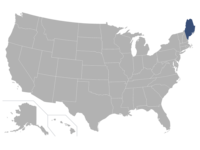
Augusta, ME