‘Come fund our government’ isn’t likely to succeed as a tourism slogan
Jul 05, 2026 | 2:58 pm ET
Description
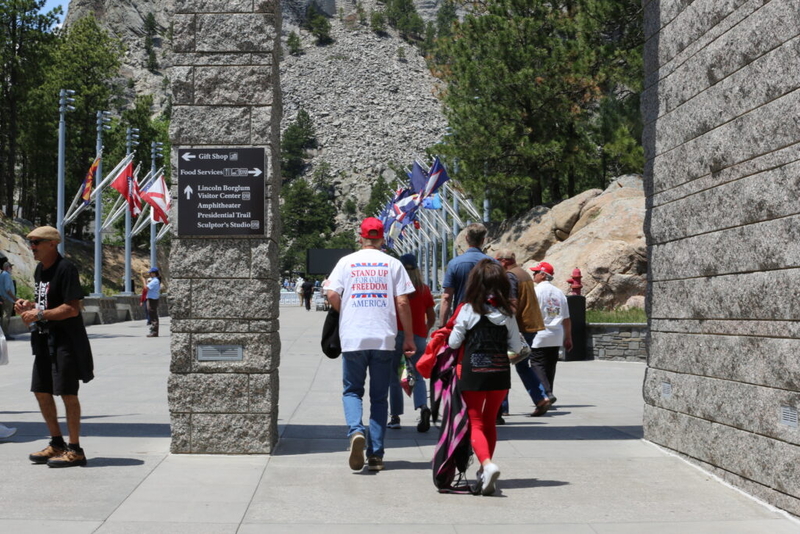
Attendees walk toward the amphitheater to get their seats for South Dakota’s Freedom 250 Mount Rushmore Fireworks Celebration on July 3, 2026. Mount Rushmore attracts about 2 million visitors annually. (Photo by Meghan O'Brien/South Dakota Searchlight)
Some states treat visitors like guests. Others treat them like customers.
A proposal before South Dakota would create a third category: visitors as government revenue.
The theory is simple: If property taxes are unpopular, perhaps someone else can pay the bill. Preferably someone who doesn’t vote here.
That is the theory underlying Republican gubernatorial candidate Toby Doeden’s proposal to eliminate property taxes and replace them with what he has described as a tourism tax and other external revenue paid primarily by people who don’t live in the state.
It’s an attractive idea. Nobody likes paying property taxes, and everybody likes the idea of somebody else paying them instead. It’s the fiscal version of hoping the neighbor who admired your lawn will also mow it.
Ep. 15: How governor candidate Toby Doeden says he’ll phase out property taxes
Last year, visitors spent $5.16 billion in South Dakota. They filled hotel rooms, packed restaurants, booked pheasant hunts, fished the state’s waters, shopped on Main Streets and kept thousands of small businesses alive.
They supported nearly 60,000 jobs, generated more than $406 million in state and local taxes, produced 16.5% of all state sales tax collections and reduced the average South Dakota household’s tax burden by an estimated $1,121.
That isn’t a side business. It’s one of South Dakota’s economic engines. And it’s enticing to think we could pull even more revenue from it to replace property taxes.
But South Dakota’s tourism economy wasn’t built by maximizing taxes. It was built by maximizing value.
Wall Drug became a roadside empire by offering free ice water and giving travelers a reason to stop. The Black Hills built destinations. Communities invested in parks, campgrounds, trails, boat ramps and attractions. Sportsmen’s groups invested millions in habitat. Travel South Dakota markets experiences, hospitality and adventure.
No tourism campaign has ever succeeded by saying, “Come fund our government.” Nobody plans a vacation around subsidizing the construction of roads, schools and jails.
The real formula for success has always been simple: Create enough interest that people want to visit, and enough value that they want to come back.
South Dakota doesn’t compete in a vacuum. Every vacation dollar is also being courted by Wyoming, Montana, North Dakota, Minnesota and dozens of other destinations that understand visitors always have another option.
Tourism is a discretionary purchase. Families can shorten a trip, delay it, or choose somewhere else.
Which is why the idea of squeezing substantially more revenue from the same visitors feels less like innovation and more like testing how far you can lean on a fence post before it snaps.
Doeden argues South Dakota is leaving between $2 billion and $3 billion in potential tourism revenue on the table. Perhaps. But potential revenue is not actual revenue.
The question isn’t whether visitors help pay for South Dakota. They already do. The existing $406 million of revenue is already an enormous contribution.
Nobody likes paying property taxes, and everybody likes the idea of somebody else paying them instead. It’s the fiscal version of hoping the neighbor who admired your lawn will also mow it.
The question is whether they can realistically replace $1.9 billion in property taxes that fund schools, counties and other local governments.
If tourism is expected to replace property taxes, South Dakotans deserve to know exactly how.
What gets taxed? Hotels? Restaurants? Campgrounds? Retail purchases? Guided hunts? Fishing trips? At what rate? What happens if visitor spending declines?
When a proposal would fundamentally change how South Dakota finances schools, counties and local government, it deserves careful scrutiny.
Maybe visitors will gladly pay substantially more while continuing to choose South Dakota over every competing destination. That seems like an odd wager for a state whose most famous tourism success story began with free ice water.
Wall Drug is an example of the way South Dakota built its tourism economy on a simple idea: Make visitors feel like guests, and they’ll come back.
That’s a business model. Treating those same visitors like revenue is a different business model entirely.

Pierre, SD