Climate change impacts in Alaska reach across borders, challenging Indigenous groups
Jun 16, 2022 | 8:00 am ET
Description
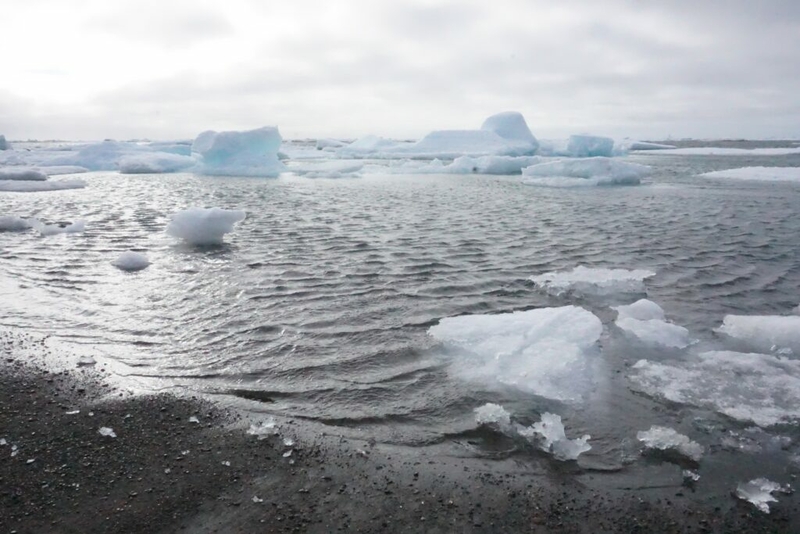
Remnants of sea ice float off the beach in Utqiagvik on July 19, 2018. Sea ice loss is one of the most obvious climate change impacts affecting people across international borders. (Photo by Yereth Rosen/Alaska Beacon)
Marine mammals, fish, birds and sea ice know no political boundaries, and nor do the impacts to them of climate change.
That leaves the Indigenous people of Alaska and their relatives and neighbors on opposite sides of national borders with some extra challenges when they try to respond to the rapid changes in their environment, said organization leaders attending the National Congress of American Indians midyear conference in Anchorage.
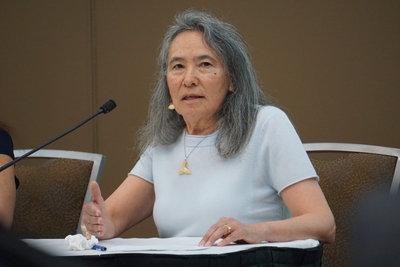
To Alaska’s west is Russia, where the Indigenous people of the Chukotka region are Inuit, Though they are thousands of miles to the east of the fighting, Russia’s invasion of Ukraine has created problems for the Chukotka people, Dalee Sambo Dorough, the international chair of the Inuit Circumpolar Council, said in a conference session on Tuesday.
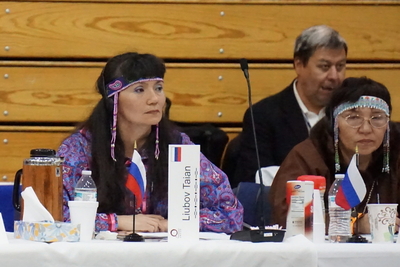
The council has been able to continue communicating with its Russian branch, mostly by email and with the help of interpreters, Dorough said. The leader of the Russian delegation, Liubov Taian, is still participating actively, taking part in Zoom meetings and other communications, Dorough said.
The event will be held online this year.
More broadly, Dorough said, the Inuit Circumpolar Council, with members in four nations, is challenged by those national governments’ “uneven treatment” of its Indigenous citizens. That ranges from the worst situations for Indigenous rights, which are in Russia, to the best, which are in Greenland, where the Inuit have an “extraordinary level of control over everything about them in their day-to-day lives,” she said.
Dorough cited broad impacts of climate change that affect Northern people across borders. The most frequently mentioned, she said, is loss of sea ice, “and there is absolutely no question that that is a major impact,” she said.
But there are many other impacts, she said, listing as examples coastal and river erosion, rising water temperatures that affect anadromous fish like salmon, loss of biodiversity, ocean acidification and permafrost thaw. And climate change affects human behavior in the Inuit homelands that, in turn affects the people living in the Arctic, she said. More vessel traffic in increasingly ice-free waters means more risks of emergencies and accidents, she said. History has shown that when there is a marine emergency in the Arctic, “the first people to respond, more often than not, are Inuit because of the conditions.”
To Alaska’s east is Canada, where Indigenous people on that side of the border are coping with poor returns of salmon up the 2,000-mile Yukon River, which scientists say is the product of changing conditions in that river and in the Bering Sea beyond it.
The loss of salmon is highly disruptive in the Yukon territory, said Kluane Adamek, Yukon regional chief for the Assembly of First Nations.
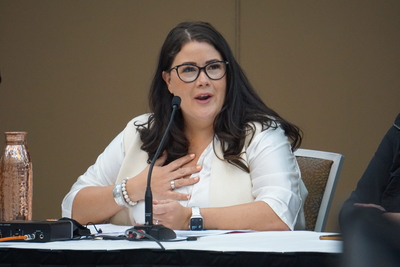
Yukoners are supposed to have a regular supply of salmon in the river through a special agreement that went into effect in 2002 as part of the U.S.-Canada Pacific Salmon Treaty. But those obligations for salmon escapement into the Canadian part of the Yukon River have not been met for several years, Adamek noted.
“The Pacific Salmon agreement, while it’s an agreement that is legally binding, it’s not being implemented,” she said. That is an echo of past broken treaties, she said.
That means that Indigenous people on both sides of the Alaska-Canada border might be able to figure out a better way to ensure that enough salmon swim up the Yukon River, she said. That could mean a new agreement is needed among Indigenous organizations, she said.
“Maybe it’s time for us to just make our own,” she said. “It’s really important that we find a path to make our own when what government has decided is clearly not working.”
Juneau