Catching Our Eye News Roundup, March 16, 2026
Mar 16, 2026 | 9:19 am ET

Description
The Ohio burgee. (Getty images file photo.)
Every morning in the Ohio Capital Journal’s free newsletter, The Eye-Opener, we round up the news and commentary from across Ohio and around the country and world that is catching our attention. We call this feature Catching Our Eye, republished here.
Please subscribe to our free daily newsletter to get all the Ohio news you need to know right to your inbox every weekday morning.
If you already subscribe, please share with your family and friends so they know about the Ohio Capital Journal too: https://ohiocapitaljournal.com/subscribe/
Catching Our Eye
Data centers and your electric bill. The Columbus Dispatch’s Anna Lynn Winfrey reports, “Ohio data centers could increase bills by $70 monthly, report finds.”
Data centers receive over $140 million per year of subsidies around the Buckeye State, according to a report from Innovation Ohio released March 11. Despite some upgrades to the electrical grid, higher demand pushes up costs on residents.
The report said that the average Ohio family could be paying $70 more per month by 2028.
Supporting the data center tax break. The Statehouse News Bureau’s Sarah Donaldson reports, “Big tech, unions ask Ohio leader to leave data center tax break alone.”
In a letter addressed to Huffman, cosigners including Google, Microsoft, Amazon Web Services and Meta urged him to refrain from bringing the override before the House…
Other cosigners included the Ohio Chamber of Commerce and Business Roundtable as well as the Ohio State Building and Construction Trade Council and the regional International Brotherhood of Electrical Workers.
No big deal The Hill reports, “Ohio’s Jim Jordan on gas prices spiking amid Iran conflict: ‘We can live with that.'”
Rep. Jim Jordan (R-Ohio) on Thursday said Americans “can live with” higher gas prices, a surge that’s a result of the joint U.S.-Israeli military operation in Iran.
Economy. The Associated Press reports, “US economy expanded at sluggish 0.7% in fourth quarter, government says, downgrading first estimate.”
The U.S. economy, hobbled by last fall’s 43-day government shutdown, advanced at an unexpectedly sluggish 0.7% annual rate from October through December, the Commerce Department reported Friday in a big downgrade of its initial estimate.
Doh-ge. The Washington Post reports, “Whistleblower claims ex-DOGE member says he took Social Security data to new job.”
The Social Security Administration’s internal watchdog is investigating a complaint that alleges a former U.S. DOGE Service employee claimed he had access to two highly sensitive agency databases and planned to share the information with his private employer — a claim that, if true, would constitute an unprecedented breach of security protocols at an agency that serves more than 70 million Americans.
Russia and oil. The New York Times reports, “Oil Prices Rise Despite Trump’s Decision to Lift Russia Sanctions.”
Russia and profits. The Guardian reports, “Russia earned 6 billion from fossil fuel exports since start of Iran war, data suggests.”
Russia feeling good. The Washington Post reports, “How Trump suspending sanctions on Russian oil helps Putin’s war effort.”
Russia is reveling in the Trump administration’s decision to lift U.S. sanctions on Russian oil at sea, a move Moscow hopes will lead to further relief from penalties that had only recently begun to bite deep.
Americans rationing medicine. NBC News reports, “Americans ration medicine and postpone retirement to afford health care, polls find.”
About 1 in 3 U.S. adults say they’ve made trade-offs to afford health care in the past year, including rationing or skipping medications or borrowing money, according to a poll from West Health-Gallup.
A second survey from the group found nearly 1 in 10 adults say they’ve postponed retirement because of health care costs. Others reported delaying job changes, buying homes or having children.
Crash. Air and Space Forces Magazine reports, “KC-135 Crashes In Iraq While Supporting Iran Ops.”
A U.S. Air Force KC-135 Stratotanker supporting Operation Epic Fury against Iran crashed in western Iraq after a refueling incident involving two aircraft March 12, U.S. Central Command announced.
“The incident occurred in friendly airspace during Operation Epic Fury, and rescue efforts are ongoing,” CENTCOM said in a statement. “Two aircraft were involved in the incident. One of the aircraft went down in western Iraq, and the second landed safely. This was not due to hostile fire or friendly fire.”
Gunman. NBC News reports, “Gunman in fatal Old Dominion University shooting ID’d as convicted ISIS supporter, officials say.”
Authorities are investigating a shooting at a Virginia college Thursday that left one victim dead and two injured as an act of terrorism, FBI Director Kash Patel said.
A deal no better than the one Trump tore up? The Economist reports, “There are no good options for Iran’s nuclear programme.”
America has three options. One, backed by some in Israel, is to send in special forces to seize it. As we describe, that would take a huge, days-long occupation, involving a specialist assault force protected by over 1,000 troops and constant air support. This is feasible, though demanding and risky, but America has lost the element of surprise and intelligence suggests that the 400kg is in two or even three places, possibly putting some of it out of reach. Furthermore, although Iran would have to restart enrichment from scratch, it would retain its know-how.
That leads to a second option, which is to bomb Iran every time it poses a threat. This war has shown how costly that would be. Iran has learned that even its low-tech drones and missiles can roil world energy markets and disrupt the Gulf states, which sell themselves to investors and expats as oases of calm. American voters would surely reject going to war if each engagement only reset the clock for the next one. American strategists would not want to be stuck in the Middle East when their focus is China.
That leaves a deal with the regime to end its nuclear threat. This is a tough option: Mr Khamenei may reject an agreement. The regime may accept and then go on to cheat. And yet it is still the best option. Iran is exhausted after the bombing. To rebuild its economy it needs sanctions to be lifted. In exchange, it may be willing to strike a permanent deal as part of a ceasefire, whereby the regime agrees to the end of enrichment, monitoring of its nuclear programme and the dilution or removal of the highly enriched uranium.
It would be an odious compromise. In 2015 Barack Obama negotiated a similar—temporary—deal, but Donald Trump abrogated it in 2018. What an indictment of his Iran policy that, eight years and two wars later, he has no better options.
In his bone spurs? The Wall Street Jourmal reports, “Trump: Will “Feel It in My Bones” When Iran War Should End.”
When asked about when the war will be over, President Trump said in an interview that aired Friday, “When I feel it—feel it in my bones.”
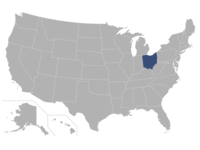
Columbus, OH