Arkansas corrections department abandons restrictions on physical books, newspapers
Sep 21, 2026 | 7:56 pm ET
Description
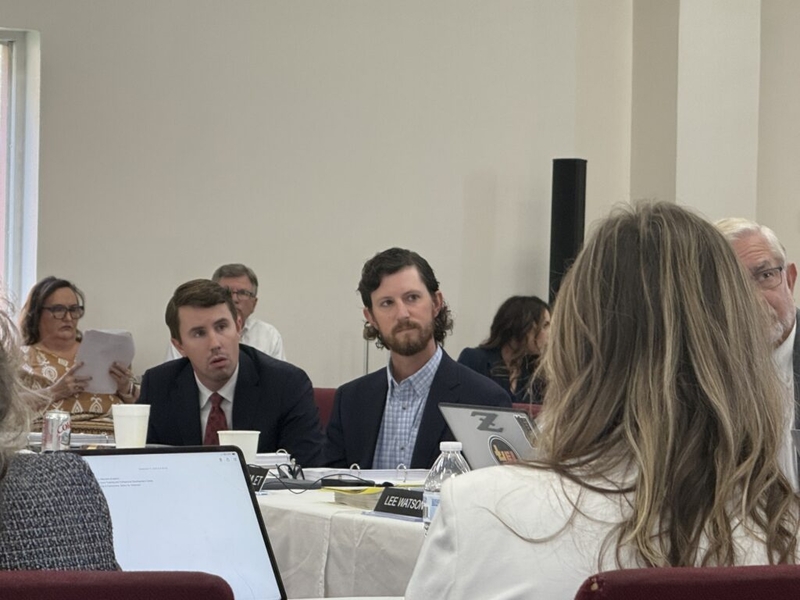
Board of Corrections Chairman Jamie Barker (center) and board member Nathan Lee (left) listen to department staff during a Sept. 21, 2026 board meeting. (Photo by Ainsley Platt/Arkansas Advocate)
The Arkansas Department of Corrections will shift its focus away from creating a policy restricting access to physical books in an effort to prevent illegal drugs from entering prisons, officials told the state corrections board Monday.
Officials instead plans to tighten the language of a 2022 policy and give the department more authority to ban “misbehaving” third-parties selling publications laced with drugs to incarcerated people, said Tawnie Hughes, the department’s chief legal officer.
The ability to purchase physical newspapers, books and other publications will not be taken away, based on the draft policy obtained by the Advocate.
Arkansas inmates restricted from receiving physical books, other media directly under new policy
“Please do not print a headline that says we’re banning books, because we’re not,” said corrections board chairman Jamie Barker during Monday’s meeting.
The department first proposed banning incarcerated people from receiving physical books last year in order to tamp down on drugs making their way into prisons. Physical books in state prison libraries were not affected under that proposal, but books that incarcerated people purchased from businesses like Amazon or Barnes & Noble were.
The proposal faced pushback from civil liberties and prison reform groups, and the families of incarcerated people.
Officials paused implementation of the proposal earlier this year so it could go through the formal rulemaking process.
Critics of such restrictions have said they severely limit access for people in prison to reading materials because offerings in prison libraries and on prison-issued tablets can be limited or outdated. But prison officials said they were needed to combat a surge of illegal drugs.
Rowell said the Baxter County sheriff tried implementing a policy similar to the one proposed by the corrections department, but it was blocked in federal court.
“You really have to be demonstrative that you’ve taken all of the steps before moving to something that’s that extreme,” Rowell said.
Corrections Secretary Linsday Wallace said the changes to the initial proposal that were discussed with the board Monday were made for several reasons, including that digital reading options for incarcerated people did not meet the standards necessary to enable a ban on physical books.
“If we could get some library options that were bolstered and they had more opportunities to get what they wanted, I don’t have a problem with that,” Wallace said. “But also, not everybody gets tablets.”
Prison-issued tablets often do not bridge the gap when access to physical books is curtailed, according to the Prison Policy Initiative, a nonpartisan, nonprofit advocacy group.
Wallace said department officials would see if the new proposal discussed Monday made a difference before attempting more restrictive policies.
The conversation about the book policy came during a broader discussion about overdose deaths within state prisons. Incarcerated people have been overdosing on drugs that don’t respond to naloxone, an opioid-overdose antidote, department staff told board members, and the ever-evolving nature of the illicit drugs that make their way into the prisons means there’s no single test for identifying them.
“This is not an Arkansas-unique problem,” Wallace said. “It’s happening everywhere. Everybody is dealing with these drugs coming in and their deaths.”
Little Rock