Cartel catch: Mexican drug gangs fuel illegal red snapper harvests in Gulf of Mexico
Mar 31, 2026 | 4:00 am ET
Description
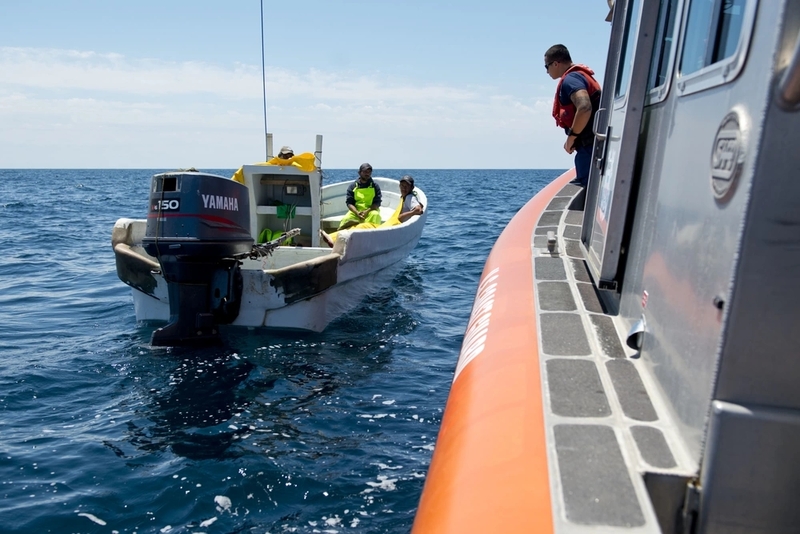
U.S. Coast Guard members from Station South Padre Island, Texas, stop Mexican nationals aboard a lancha after crews in Coast Guard aircraft spotted them fishing in U.S. territorial waters May 1, 2015. (U.S. Coast Guard photo by Petty Officer 1st Class Andrew Kendrick)
The call often comes in the middle of the night to the U.S. Coast Guard station at South Padre Island, Texas, rousing service members from their bunks.
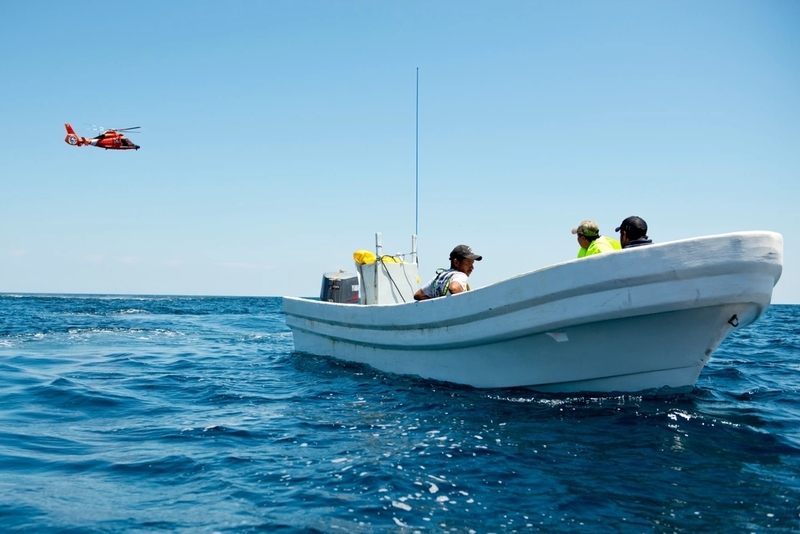
A lancha, typically a slim, 20- to 30-foot boat with an outboard motor, is spotted, overflowing with red snapper, 9 miles off the coast in federal waters.
Best known for its emergency response efforts at sea, the Coast Guard also polices the take of marine species from U.S. waters. In the Gulf of Mexico, its crews board their trademark white-and-orange cutter vessels to catch lanchas suspected of illegally fishing for species such as red snapper and sharks.
“It’s a common problem and it’s been a problem that the Coast Guard has been tackling for decades,” said Lt. Phillip VanderWeit, commanding officer with the Coast Guard’s Gulf Regional Fisheries Training Center, where service members, along with state and local law enforcement, are trained to enforce fisheries regulations and conservation laws.
Lanchas can cast off quickly from the Mexican Gulf coast, with crews of up to six fishermen, known as lancheros. They often travel at night in an attempt to hide from U.S. enforcement agencies, targeting out-of-season or undersized fish with types of gear banned under American law. Their catch often exceeds legal limits, officials said. Other species are also inadvertently caught in their nets.
The lancheros aren’t simply choosing to skirt the law on their own. Officials and researchers who track their activity say they’re often forced into illegal fishing by Mexican drug cartels. Cártel del Golfo (the Gulf Cartel) is considered the primary culprit, according to the U.S. Treasury. Most of its lanchas are based out of Playa Bagdad in Tamaulipas, the Mexican state just across the border from South Padre Island.
“Fish are just as profitable as drugs,” said Kesley Banks, a fisheries research scientist at Texas A&M Corpus Christi and vice chair of the Gulf Council, a federal regulatory and advisory body for fisheries in the Gulf of Mexico. Red snapper in particular can be an extremely lucrative source of income for cartels, she said.
Perhaps most surprisingly, the cartel’s illegal catch finds its way to wholesalers and restaurants in the United States on the black market. Red snapper can go for up to $30 a pound, an incentive for lancheros to ignore laws protecting the fishery. Once they return to Mexico, they tag their catch for export to the United States, either with counterfeit tags or by lying to Mexican government officials about where they caught the fish.
“The lanchas are not discriminating on … ‘This is a mama fish, this is a baby fish,’” Banks said. “They’re just taking whatever they get on their line.”
Banks said illegal fishing happens all around U.S. waters, from Russian vessels poaching salmon in Alaska to Chinese vessels in the Pacific. But in the Gulf of Mexico, organized crime syndicates exploit resources to make money and traffic drugs — and have been for a long time.
The exact amount of red snapper the lancheros take from U.S. waters isn’t known, which creates a problem for preservationists trying to maintain the fishery. Without an accurate count , they can’t land on a solid number of fish legitimate anglers can harvest without causing ecosystem damage.
Banks said she broadly estimates that around 780,000 pounds of red snapper are leaving U.S. waters from illegal, unregulated and unreported fishing. With further research, she hopes to get a more accurate number but predicts that it will show “huge ecological impact.”
“None of these fish leaving the back door are actually accounted for in our stock assessment,” Banks said. “We actually have no idea how big this problem is.”
Red snapper are among the most highly regulated fisheries in the Gulf, and conservationists say it’s the reason why the species is available today for sport fishermen to pursue.
In Louisiana waters, permitted recreational anglers are limited to catching four per day that must be at least 16 inches in length. Louisiana’s season starts May 1 and lasts until fishermen, who must report their catch, reach a total annual weight allocation. This year the limit is 882,000 pounds, down from 894,000 last year.
Texas also has a four-fish limit with a 15-inch minimum until its quota is met, and a shorter red snapper season opens June 1 in the Gulf of Mexico’s federal waters, where the limit is two fish per day.
Scott Hickman of Galveston, a federally permitted charter boat captain for 37 years, calls red snapper “a huge success story in the Gulf.” He chairs an advisory committee with the Texas Sea Grant, which promotes the careful use and oversight of the state’s coastal resources.
Back in the 1990s, red snapper was designated as an “overfished” species with populations down to 2% of what was considered a healthy population, according to the National Oceanic and Atmospheric Administration. Hickman said he has witnessed the successful rebound of red snapper over the decades.
“That’s why there’s so much poaching of it,” he said.
Lancheros don’t typically follow specific rules like short seasons and restrictions on how gear, like gill nets, can be used. This creates a problem not only for the snapper but also for some species even more at risk.
“There’s been times where we’ve recovered miles of abandoned gill nets that are floating out at sea with sea turtles, with dolphins,” said VanderWeit, the Coast Guard officer.
Policy and prosecutions have tried to address cartel poaching in the Gulf of Mexico. Fishermen and Coast Guard officials say lanchero activity has slowed down in the past year, though it’s not known if there’s a correlation.
Congress approved the SAFE Act in 2020, which expanded federal efforts to curb illegal, unreported and unregulated fishing in U.S. waters. Former President Joe Biden issued a national security memorandum in June 2022 to address the same issue and the labor abuses often connected to it.
“Most of these fishermen are poor fishermen that are sent out, funded by the cartel, to come up and smuggle people, drugs and fish,” Banks said.
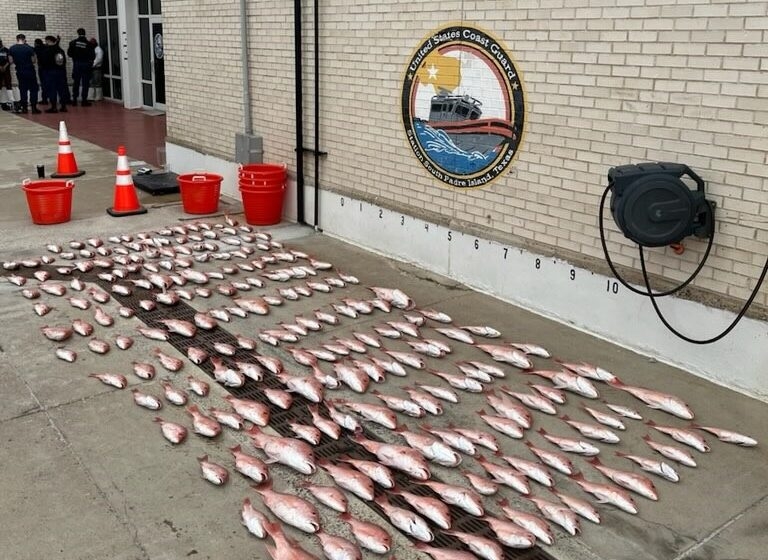
Miguel Angel Ramirez-Vidal, 32, allegedly captained a crew of three lancheros who federal authorities apprehended in April 2025 with nearly 700 pounds of red snapper on board. Ramirez had been arrested 28 times before for illegal fishing in the United States, according to the U.S. Attorney for the Southern District of Texas.
Ramirez-Vidal’s crew, who all pleaded guilty, said they took the risk to fish in U.S. waters because red snapper were depleted in Mexican waters. Federal court records show the captain was sentenced to eight months in prison, while his crew members were held only for the time they served while waiting to be sentenced. All four men were fined $100 each, but the court forgave the amount because it was unlikely the money could be collected.
U.S. Sen. Ted Cruz, R-Texas, chairs a Senate subcommittee on fisheries. He told members in June the Coast Guard seized “more than 18 tons of illegally caught fish from Mexican lanchas” in 2024, up from just under 3.5 tons in 2017.
The U.S. Department of Justice recently began prosecuting lancheros under the Lacey Act, a 126-year-old federal law originally created to protect game birds. It has been amended in the interim to include fish and other animals as well as plants and plant products such as timber and paper.
Under the Lacey Act, it is illegal to transport fish and wildlife to another country without the required permitting or with falsified permits. Convictions can carry up to five years in federal prison and tens of thousands of dollars in fines.
The Coast Guard has sent multiple cases of Lacey Act violations to federal authorities for prosecution, VanderWeit said. He added that it’s “too early” to tell whether the consequences are making a difference, but noted that just over 100 cartel-connected lanchas fishing in U.S. waters were detected in 2025, compared with 250 in 2024. The Coast Guard confirmed it catalogues lancha sightings through tracking technology in collaboration with other governmental agencies.
“These operations are slowing down,” he said.
However, the toll from decades of illegal fishing in the Gulf is still being felt, Hickman said.
“If those fish were left to reproduce over the last decade or so? That’s a lot of biomass,” he said. “Our fishery would be in way better shape.”
Baton Rouge, LA