Canceled federal grants hit teen pregnancy prevention in Baltimore, rural counties
Jul 27, 2026 | 4:26 am ET

Description
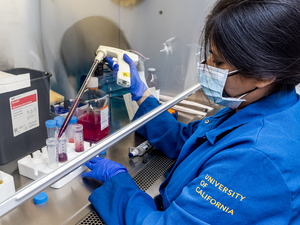
The Maryland Department of Health says that canceled federal grants will impact efforts to reduce teenage pregnancy in rural school districts. (Photo by Tony Anderson/Getty Stock image)
The federal government’s abrupt termination of teen pregnancy prevention funding last month means the loss of more than $3 million to Maryland-based programs, which are scrambling to see if they can still offer programming for young people without federal support.
The Maryland cuts were part of about $68 million in grant funding awarded under the federal Teen Pregnancy Prevention Program that was eliminated by the Trump administration, three years into the five-year program. The government claimed that 53 out of 67 programs were normalizing sexual activities for teens.
Funding affected included $1.4 million allocated for teen pregnancy prevention efforts with the Maryland Department of Health and $1.8 million for the Baltimore City Health Department.
“The Department is evaluating the potential impacts of the federal government’s decision, as well as how MDH can continue to best serve the health and well-being of Maryland teenagers,” according to a recent email from the Maryland Department of Health.
The U.S. Department of Health and Human Services did not respond to requests for comment or provide examples where Maryland’s or Baltimore’s use of those grant dollars promoted sexual activity for minors.
Some groups in Maryland welcomed the decision to terminate the funds. The Maryland Family Institute said the grant program supported a curriculum that may have been used to “introduce minors to concepts that are wholly inappropriate,” such as “anal sex, abusive pornography, abortion without parental consent, and transgender ideology.”
Federal health agency cancels most of its teen pregnancy prevention grants
“Indecent is one word to describe them; immoral is another,” said Jeffrey Trimbath, president of the Maryland Family Institute, in a written statement Monday. “These programs have shown little effectiveness and have become tools for the sexualization of Maryland’s children.”
But abortion rights groups and public health researchers say that comprehensive sex education efforts have contributed to significant reductions in teen pregnancies since the 1960s, along with other factors. When the Teen Pregnancy Prevention Program started in 2009, the teen birth rate was 39.1 births per 1,000 females aged 15-19. By 2024, the rate had fallen to 12.7 per 1,000, with preliminary data for 2025 indicating further reductions.
“Look at the data,” said Robyn Elliott, of the Women’s Law Center of Maryland. “Teen pregnancy is at the lowest rates that it has been at in many, many years…. These programs, along with other efforts to support teens in making their own healthy choices – we should continue that, not pull back.”
Maryland’s teen birth rate in 2024 was 10.9 live births per 1,000 females ages 15-19, according to the Centers for Disease Control and Prevention, below the national average. It’s the lowest teen birth rate in the state since at least 2014, when the state’s teen birth rate was 17.8 per 1,000, and has been on a downward trend since.
Last year, the U.S. Department of Health and Human Services issued new parameters around how the grant funding could be used.
“The policy reaffirms the Teen Pregnancy Prevention Program’s core mission: to reduce teen pregnancy through medically accurate and age-appropriate programming, not to promote harmful ideologies, risky sexual activity for minors, or other content outside the scope of the program,” HHS said at the time. “Program materials are expected [to] reflect the immutable biological reality of sex, not radical gender ideology, and may not promote anti-American ideologies such as discriminatory equity ideology. Programs with such unauthorized content are not eligible for federal funding.”
That effort to limit the scope of the grant program was struck down by the U.S. District Court for the District of Columbia.
The Trump administration issued a similar policy change in 2026, and terminated the 56 grant programs in the process.
Baltimore health officials and the state health department each received a notice on June 26 that their five-year grant funding would end, cutting off the funding two years early.
City health officials believed they were in “good standing” with federal officials and “maintained routine communication with federal project officers.”
“The department received no advance notice or opportunity for discussion before the termination,” the Baltimore Health Department said in a recent email. “As a result, the remaining grant funds are no longer available to the City.”
Those funds would have been used to engage 11,500 youth and 11,500 adults in comprehensive teen pregnancy prevention education, according to city health officials.
“This grant supported initiatives to improve adolescent health among Baltimore City youth through evidence-based public health strategies recommended by the federal government,” the department said. “Funding facilitated the implementation of evidence-based programs for individuals aged 15-24 across three primary settings: classrooms, clinics, and communities.”
As for the Maryland Department of Health, the remaining $1.4 million in grant funding would have continued teen pregnancy prevention and sexually transmitted infection reduction efforts in six rural counties, working with the Johns Hopkins University Center for Adolescent Health, local health departments, local education agencies, universities and clinics to do so.
“Funding would have supported the expansion of evidence-based programs and systems-level efforts,” the state health department said in a recent written statement, “including Youth Advisory Boards, as well as the provision of technical assistance and professional development, to achieve program goals.”
Maryland is one of more than two dozen states affected by the sudden termination of those grants.
A group of progressive organizations and county governments filed a lawsuit against the Trump administration this month, arguing that the new protocols for the grant funding do not align with the statutory purpose of the Teen Pregnancy Prevention Program decided by Congress back in 2009 to use “medically accurate and age appropriate programs” that have “been proven effective through rigorous evaluation.”
“The Trump-Vance administration’s repeated attempts to terminate proven evidence-based programs and spread misinformation to teens have real consequences for young people’s futures,” said Skye Perryman, president and CEO of Democracy Forward, which is leading the lawsuit.
“This is a backdoor, ideologically driven effort disguised as education, defying Congress’s clear directive that these grants support medically accurate, age-appropriate, evidence-based programs. An overwhelming majority of Americans believe young people should receive honest, inclusive sexual education,” Perryman said.
Elliott, who analyzes Maryland health policy, says that the terminated grants are another attempt to block access to reproductive healthcare services and education.
“The teen pregnancy prevention program has a lot of basic education and things like that, but it also has a component of letting teens know about birth control,” she said. “This particular program, when we combine it with all the other movements they’ve made to block birth control access … this is just one of those steps.”
Annapolis, MD