‘Blue Tsunami’ Missed Hawaiʻi’s Capitol, But Dems Nabbed 3 Seats
Nov 05, 2026 | 4:15 pm ET
Description
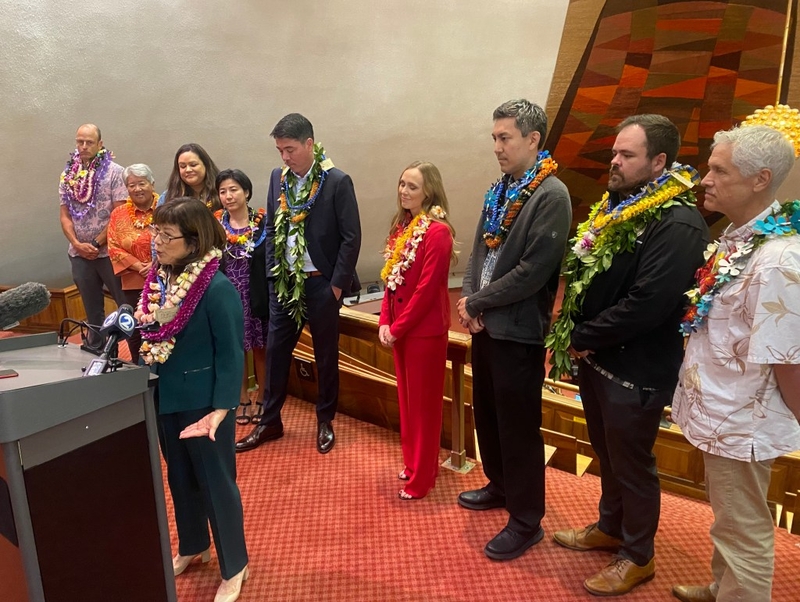
Photo courtesy of Honolulu Civil Beat
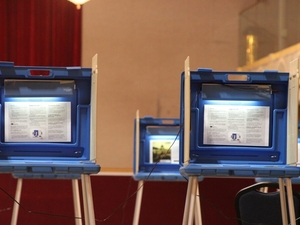
No, it was not a "blue tsunami" that rolled over Hawaiʻi's Legislature in Tuesday's election.
Yes, Democrats picked up three seats in the House, going from 41 to 44. But the state Senate remains unchanged with Democrats holding 22 out of 25 seats, and the House pickups cannot easily be attributed to the success Democrats enjoyed nationally on Tuesday.
In the House, the previous caucus of 10 Republicans will be down to just six, thanks to the loss of incumbents Joe Gedeon (District 18 in the Hawaiʻi Kai area) and Garner Shimizu (District 32 in Moanalua and Āliamanu), who both lost reelection Tuesday to, respectively, Jamie Wataru and Micah Aiu.
Another GOP rep, Elijah Pierick, ran for a Senate seat and lost to Rachele Lamosao. His would-be successor, Danny de Gracia, failed to keep the District 39 seat (Royal Kunia, Ho'opili) in Republican hands, losing to Democrat Corey Rosenlee.
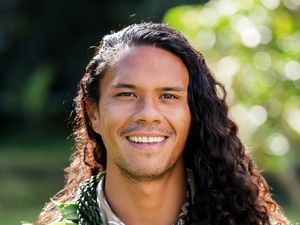
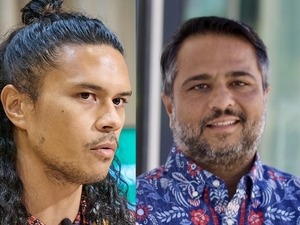
And Rep. Elle Cochran, a Republican until she switched parties in March, lost her District 14 seat in Lahaina, helping Green Party candidate Pāʻele Kiakona defeat Democrat Sne Patel for an apparent historic win.
Rep. Diamond Garcia, however, appears to have survived a close call from Democrat Makana Paris in District 42 (‘Ewa and Kapolei).
Rep. Chris Muraoka, meantime, easily won reelection in District 45 (Wai‘anae, Mākaha) over Democrat Kalehua Kaopua.
And Reps. Lauren Matsumoto, the House minority leader (District 38 in the Mililani area), and David Alcos both ran unopposed in District 41 (‘Ewa Beach, Ocean Pointe, Barbers Point).
The fourth printout of results for the state was released just before 10 p.m. Wednesday and represented election day balloting on Oʻahu. No Republican holds a legislative seat representing the neighbor islands.
In another close GOP race, Rep. Kanani Souza appears to have defeated Republican challenger Sheila Medeiros 34.5% to 33.2% in a special runoff for a primary race that tied after the Aug. 8 primary. The District 43 contest (Kapolei, Makakilo) was open to all voters, not just GOP voters. The margin of victory was just 102 votes.
One other House race was quite close, too. Rep. Julie Reyes Oda in District 40 (‘Ewa Beach, Iroquois Point) led Democrat Rose Martinez 50% to 47.4%, a difference of just 155 votes.
The loss of GOP seats is seen less as part of the "blue tsunami" that swept mainland races Tuesday and more as a matter of unique circumstances and familiar personalities.
Gedeon, for example, was appointed to his seat just this year to replace the late Gene Ward. His district had already shifted leftward, as seen with the defeat of longtime area GOP State Sen. Sam Slom to Democrat Stanley Chang in 2016.
The race between Aiu and Shimizu was their third consecutive matchup, Aiu having won in 2022 and Shimizu in 2024, both tight races. And Martinez lost reelection to Reyes Oda in 2024.
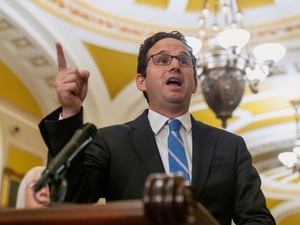
"It does not fit the blue wave pattern," House Majority Leader Sean Quinlan said. "Gene was a very singular individual and he was able to hold onto a very blue district for a long time, and one that is very hard to hold. And Elle is an anomaly because she just didn't show up for work."
Quinlan was referring to how Cochran missed, for example, 51 of 60 House floor day sessions in 2025.
John Hart, a communication professor at Hawaiʻi Pacific University who follows local politics closely, agreed that the national rejection of the status quo — President and Trump and his party — did not happen here.
"In Hawaiʻi, the status quo is Democrats, and they won," he said.
He also pointed to the Lahaina race as an anomaly -- with a Green Party candidate who could have run as a Democrat and a Republican candidate who was a former Democrat.
"Lahaina was a matter of unique exigencies," he said, referring to the deadly, destructive wildfires and the challenges in rebuilding.
Still, the loss of seats means the House will have less influence in the next session that officially begins in January. Had they been able to win 11 seats, House rules would have allowed them to force roll call votes on the House floor and stir debate.
Matsumoto said it was unfortunate that her party lost four members.
"But our caucus will continue to advocate for important legislation as bills go through, because the more discussion you have at the Legislature, the more balance you have and the better it is for the people of Hawaiʻi," she said.
Matsumoto also expressed concern about an election that once again had low voter turnout.
"Our state has passed almost every piece of legislation to increase turnout — all mail-in ballots, same-day registration — yet we have seen a decrease," she said. "There has to be a really deep look into increasing trust in government and access."
She said more voter services centers are needed, especially on populated Oʻahu.
In the Senate, Bob McDermott, a former GOP House representative, defeated incumbent Kurt Fevella after an Aug. 15 tiebreaker. On Wednesday, McDermott prevailed over Democrat Markus Owens 50.8% to 46.9% for the District 43 seat in the ʻEwa Beach and Iroquois Point area.
Tuesday is the deadline for voters to "cure" ballots that show discrepancies in signatures. Curing could impact the outcome of some races, but it is rare.
The Legislature officially begins Jan. 20, though lawmakers are already at work.
On Thursday, the Senate announced that Ron Kouchi and Lorraine Inouye would remain president and vice president, respectively. The Senate minority and House majorities and minorities are expected to select leadership and committee chair positions in the coming days.
Honolulu, HI