Bipartisan support on US House panel for examining private equity in youth sports
Jun 30, 2026 | 6:22 pm ET
Description
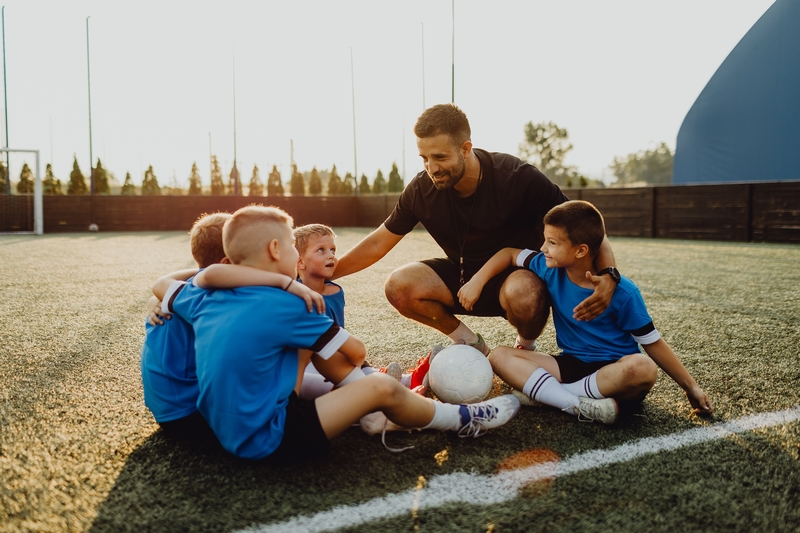
(Photo via Getty Images)
WASHINGTON — Members of a U.S. House Education and Workforce subcommittee found rare common ground scrutinizing private equity’s stake in youth sports at a Tuesday hearing.
Lawmakers from both parties on the House Subcommittee on Early Childhood, Elementary, and Secondary Education stressed the importance of making sports accessible to all kids and discussed ways to prevent large companies from buying up facilities and raising costs on families.
Financing from private companies can have benefits for youth sports, but can also make participation more expensive, they said.
“Our concern today is with particular practices that reduce competition, drive up costs and limit access for families,” subcommittee Chair Kevin Kiley, a California independent who caucuses with Republicans, said. “We should encourage models that expand opportunity while discouraging practices that leave parents with fewer choices and higher bills.”
Linda Flanagan, a New Jersey journalist, former cross-country and track coach and the author of a book on the subject, testified Tuesday. Though she mainly talked about harmful effects of commercializing youth sports, she also pointed out that private companies can “provide vital services that benefit families and expand access to children” if local funding is not accessible.
The problem, she said, is that private investment firms’ first priority is creating returns for their investors, rather than child wellbeing and development. Such firms have increasingly entered the youth sports world in recent years, she said.
“Private equity involvement is especially worrisome because it introduces sophisticated financial engineers with generally short horizons into children’s activities that are best served by a long-term approach,” Flanagan said.
A multibillion-dollar business
More than 27 million children ages 6-17 participate in organized sports, roughly 55% of the U.S. population in that age range, according to data collected by the Aspen Institute in 2023.
To pay for one kid’s participation in their primary sport, families spend an average of $1,016 annually on expenses such as equipment, uniforms, travel and tournament fees, the study found.
That money adds up, and the youth sports industry generates about $40 billion a year in revenue, the Aspen Institute estimated.
American families have begun to specialize their kids in one sport in the hopes of them earning admission into a prestigious school or scholarship money, as the cost of higher education has ballooned, Katherine Van Dyck, a senior legal fellow at the American Economic Liberties Project told the panel.
At the beginning of June, former professional quarterback Eli Manning’s private equity firm Brand Velocity Group acquired the company RCX sports, which manages licenses for youth sports programs run by the NFL, NBA, WNBA, MLS, NHL and MLB.
Matt Kakabeeke, the executive director of Kalamazoo Optimist Hockey Association in Michigan, told the story of what happened after the private company Black Bear Sports Group bought the facility that gave home to his youth hockey organization.
Initially optimistic that Black Bear Sports was going to make needed repairs to the rink, Flanagan quickly grew discouraged when the company began pushing out community-based programming and longtime neighborhood sponsors, eventually evicting his association from the facility when it refused to comply with the changes.
“As youth sports become more consolidated, long-standing community-based organizations face the prospect of losing facility access, organizational autonomy and historical identities,” he said.
Income participation gap
Van Dyck also discussed the financial and health costs to private equity influence on youth sports.
Private firms can drive up the cost of participating in child athletics programs when they own the facilities where games, tournaments and practices are hosted, making it difficult for low-income families to afford the experience, she said.
According to the Aspen Institute, 45.1% of kids from higher-income households participated in youth sports in 2024 compared to only 24.9% in low-income households. The gap has grown since 2012, when the difference in youth sports participation between income levels was only 13.6 percentage points.
Further, Van Dyck said, many parents will opt to pour money into youth sports because they are “sold on promises of scholarships, when only 2% of high school athletes actually get them.”
Today’s youth athletics culture also encourages kids to specialize in one sport with the objective of playing in college, which can increase injury risk or lead to burnout among children, she added.
To address private equity’s influence in youth sports, Van Dyck called on Congress to enact legislation that would ban vertical integration practices and unnecessary fees, hold companies liable for safety violations and require the federal government to fund local programs.
“As we celebrate our nation’s founding this week, let’s remember that it is possible in this great democracy to change course and get back to that model,” she told lawmakers. “Congress can legislate to give kids opportunities they deserve and make youth sports about fitness and joy.”
Some Democrats on the subcommittee promoted a bill sponsored by Rep. Chris DeLuzio, a Pennsylvania Democrat, and Sen. Chris Murphy, a Democrat from Connecticut, that would ban private equity from youth sports and pay families who have invested heavily in privately funded programs back.
Bipartisan support
Subcommittee members of both parties broached a range of topics, and a common theme was an interest in increasing participation in youth sports.
Republican Rep. Michael Rulli of Ohio asked Bryan Finnerty, the founder of the Michigan indoor sports facility High Velocity Sports, if he thinks small communities would be able to renovate their facilities and support athletics programs without help from private investment.
In response, Finnerty said private companies and communities have the potential to increase opportunities for kids who want to play youth sports by partnering together.
But he added, “if it’s not about those youth players in that city having a chance at access, then everything else doesn’t really matter… When they put that first, that sounds like a win to me.”
Subcommittee ranking Democrat Suzanne Bonamici of Oregon said during her closing remarks that sports can transcend politics.
“This isn’t a partisan fight,” she said. “I expect that every member of this committee has watched a child light up after scoring a goal or learning to resolve their differences and be part of a team. We should all want that experience to be in reach for every student.”
All States Newsroom content is free to republish. Read our republishing policy for more information.