Battle over utility charges headed for the Ohio Supreme Court
Sep 29, 2025 | 4:50 am ET
Description
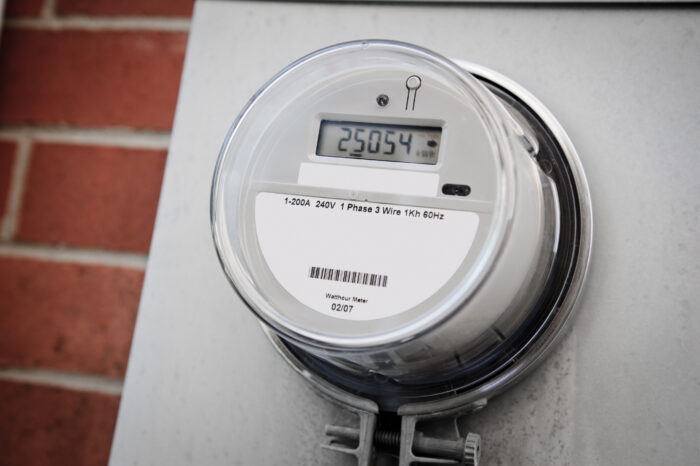
Smart energy meter. (Stock photo via Getty Images)
Ohio’s official regulator in 2023 allowed a huge increase in the fixed monthly charges Columbia Gas could collect from all residential customers.
They all have to pay the same fees, no matter how rich or poor they are, and no matter the size or density of their dwellings. The Public Utilities Commission of Ohio accepted Columbia Gas’s claims that it needed the money for infrastructure improvements even though its parent company is turning nearly $800 million in annual profit and its CEO makes $33,000 a day. But next month the question of whether those increased charges are in the public interest is headed to the Ohio Supreme Court.
The cost of utilities — what you have to pay to light and heat your home — have been exploding in Ohio.
Some of that is attributable to increased electricity demand from the AI boom. But the PUCO has also been criticized for being too quick to OK upcharges requested by electricity and natural gas providers. As of 2020, it had granted more than $1 billion in increased charges to utilities only for the Ohio Supreme Court to later declare them illegal. Even so, the utilities got to keep the money.
With 1.5 million customers, Columbia is the largest natural gas supplier in the state. Its service area includes Columbus and Cleveland.
In 2023, the PUCO allowed the utility to increase its fixed charges by 50% — to as much as $57 a month by 2027. As of July, that amount was $53 a month, according to a de-identified bill viewed by the Capital Journal.
Controversially, the charges are shouldered by all customers equally, whether you’re a millionaire living in an 8,000-square-foot mansion on a five-acre lot in New Albany, or if you’re a single mother in a 500-square-foot apartment in North Linden.
Karin Nordstrom of the Ohio Environmental Council said high, one-size-fits-all fixed charges also discourage conservation.
“High fixed charges are bad for consumers because they remove their ability to control their bill,” she said. “They can’t reduce how much they get charged every month by reducing usage. It removes an incentive to reduce usage and it puts more overall strain on the household budget.”
In their appeal to the Ohio Supreme Court, the Environmental Law and Policy Center and the Citizens Utility Board of Ohio said the PUCO ruling is not in the public interest because it allows Columbia to get 70% of its revenue from fixed charges and just 30% from the gas it actually delivers.
“The result of such a significant imbalance between fixed and variable charges is that the potential savings for customers through either energy efficiency measures or otherwise reducing usage are minimized because only thirty cents on every dollar spent on bills correlates to the actual gas they use,” the appeal said.
It also cites “the manifest unfairness in charging customers over $50 per month before they use the first therm of gas” as a reason why the charges are not in the public interest. It adds that “a low-volume consumer in a 500 square-foot house does not drive system costs in the same way as a customer in a 5,000 square-foot home.”
For its part, Columbia Gas asked the Supreme Court to dismiss the appeal. It said it hadn’t raised fixed charges since 2008.
It also said energy efficiency doesn’t figure in determinations of whether a change in rate structure is in the public interest.
“Similarly, this Court has heard, and rejected, arguments that Ohio’s energy policies require the (PUCO) to approve some arbitrary level of funding for energy efficiency programs that matches an appellant’s policy preferences,” Columbia Gas argued.
And it quoted expert testimony in an earlier proceeding saying it was actually more fair to charge everyone the same amount in fixed charges for infrastructure, regardless of how much of a burden they placed on it.
The witness said “‘fixed charges promote fairness to all customers because the customer’s bill reflects the actual average cost of providing gas delivery service(,) rather than being based on the volume of gas consumed,’” the Columbia Gas filing said.
A spokeswoman for the company was asked whether Columbia would commit to spending all the additional revenue it collects from the increased charges on service to the people who paid it. She was also asked whether the company needed the money, given that parent company NiSource collected nearly $800 million in profit last year and paid CEO Lloyd Yates $12.8 million.
“Columbia Gas does not comment on ongoing litigation,” the spokeswoman replied.
Oral arguments in the case are set for Oct. 29.
Columbus, OH