Ayotte proposes tuition assistance program for community college students
Oct 14, 2026 | 5:51 pm ET
Description
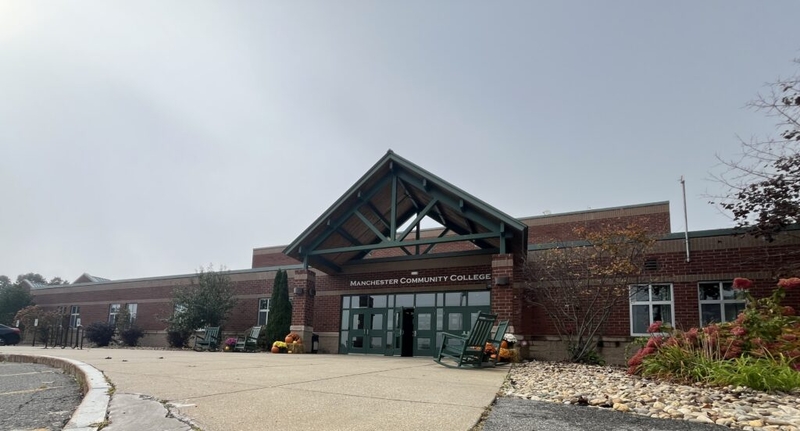
Manchester Community College, where Gov. Kelly Ayotte announced a proposal for a free community college tuition program she wants to request in the budget, Wednesday Oct 14. 2026. (Photo by Ethan DeWitt/New Hampshire Bulletin)
Gov. Kelly Ayotte called for a program Wednesday to provide free tuition for New Hampshire community college students with a total family income of up to $100,000, and said she would add such a proposal in her budget if reelected.
The announcement, made at an event at Manchester Community College, comes on the heels of a recent decision by the University System of New Hampshire to offer a similar free tuition program to New Hampshire residents starting in the 2027-2028 school year.
But unlike the university system’s program, which was approved by the board of trustees and will take effect next year, Ayotte’s program would require the approval and funding of the Legislature next year.
Ayotte called the state’s community colleges “critical to growing our economy.”
“They’re really the backbone of the training that we need for our workforce,” she said.
Ayotte’s proposal would allow New Hampshire residents with a total family income of up to $100,000 to get tuition covered by the state — provided they had already signed up for the Free Application for Federal Student Aid (FAFSA) financial aid program and any available state financial aid programs. The governor’s proposed program would provide reimbursement to those students for any remaining tuition costs not already covered by those prior programs, known as a “last-dollar” approach.
To receive the money, students would be required to maintain a 2.0 GPA and be enrolled in at least six credits per semester at a state community college, Ayotte announced Wednesday.
New Hampshire community colleges currently charge $238 per credit for New Hampshire residents; a full academic year consisting of 30 credits would cost $7,140 in tuition. But when adding in fees, housing, books, transportation and personal expenses, the full cost per year can be between $22,000 and $28,000 per year, depending on housing and transportation arrangements, CCSNH estimates.
Ayotte’s proposed program would cover only the remainder of the $7,140 of tuition — and only the remainder not already covered by other financial aid programs.
The program would be funded via the state’s General Fund; the Community College System of New Hampshire has estimated that it could cost the state about $5.5 million per year.
Should Ayotte win reelection, her community college tuition proposal would need approval in the two-year budget in 2027. Ayotte could include the program in her proposed gubernatorial budget in February, but would need to win ultimate approval in the state House and Senate.
If Ayotte were reelected, the success of a tuition program could be affected by the make-up of the state House and Senate, which Republicans currently control.
New Hampshire’s revenues have come in higher than expected since the last budget was enacted in July 2025; from July to September 2026, the first quarter of the 2027 state fiscal year, revenues were 12.5% above budget expectations. That trend, if it continues, could give the next governor and Legislature some leeway to increase spending or reverse previous cuts to programs during the 2027 budget process.
Ayotte announced the proposed community college tuition assistance program weeks after the university system launched its “New Hampshire Promise” program, which will allow first-year, full-time students who are New Hampshire residents, have a 2.7 high school GPA or higher, and whose total family income is $100,000 or less to receive free tuition, provided they have already filed for the FAFSA. The university system plans to finance that program by transferring existing financial aid programs for Pell Grant recipients.
CCSNH Chancellor Chuck Lloyd, appointed to the role in July, said the proposed program is modeled off a $3 million pilot program in 2023 targeted at New Hampshire community college students receiving Pell Grants. He called that two-year program a success for recruiting more students. “We saw a significant uptick,” he said in an interview.
The proposed tuition assistance program would cover more students; the $100,000 income limit is higher than the typical income limits for Pell Grant recipients.
Lloyd characterized tuition assistance as a tool to address the state’s workforce shortage by incentivizing more students to seek additional education.
“If we can open up the front end of the funnel, we get more folks into career paths, and then we can solve the workforce,” he said. “It’s thinking holistically about supporting students who maybe weren’t thinking about post-secondary education. Now it’s an option.”
Concord, NH