Auditors showed up unannounced at 3 independent pharmacies. This RI law was ready for them.
Feb 16, 2026 | 5:50 am ET

Description
Matt Tocco, pharmacy manager at Atwood Pharmacy in Johnston, is pictured on Feb. 13, 2026. (Photo by Alexander Castro/Rhode Island Current)
Zahan Akbar had just dropped his kids off at school one October morning when he got a call from his staff at Atwood Pharmacy in Johnston.
A half hour later, Akbar arrived to find two unexpected guests at his independent pharmacy on Atwood Avenue. They were auditors from Prime Therapeutics, a pharmacy benefit manager (PBM), otherwise known as the middlemen of prescription drug plans. And they were asking questions about the way Atwood was documenting vaccines it had dispensed.
“She was just standing there with her teammate, and I told them whatever they need, I can give it to them,” Akbar recounted of the visit on Oct. 27, 2025.
The Atwood Pharmacy was one of three independent pharmacies to get an unwelcome surprise that day. Prime auditors also visited Akbar’s Park Square Pharmacy in North Smithfield, and his brother Zaheer’s Park Ave Pharmacy in Cranston, prompting the Akbars to contact Rhode Island Attorney General Peter Neronha’s office. That led to a civil action against the PBM, relying on the recently strengthened Pharmacy Audit Act.
The updated law now caps on-site audits to one per year per insurance carrier, barring fraud or misuse investigations. It also makes explicit that the Rhode Island Attorney General has the authority to enforce the law and go after PBMs that don’t follow the rules.
The provisions took effect on June 30 last year after the General Assembly passed a bill in its 2025 legislative session sponsored by Democratic Rep. Rebecca Kislak of Providence and Sen. Linda Ujifusa of Portsmouth in their respective chambers.
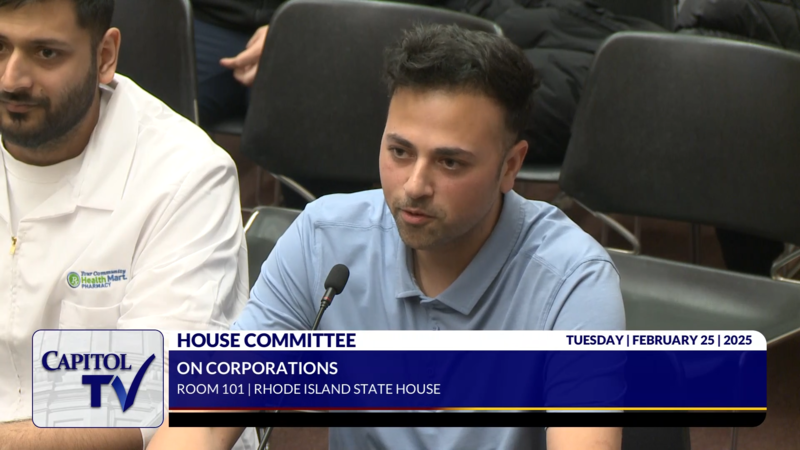
Akbar, who testified before the House Committee on Corporations in support of the 2025 legislation that amended the Audit Act, said the unannounced October visit to Atwood Pharmacy lasted about two hours and disrupted the morning’s operations.
“I took them to a private consultation room,” Akbar said. “We were in the midst of doing vaccines that morning. So, we needed to use that room too.”
Kislak said in a phone interview that the bill was drafted to address a common lament from small pharmacies: that audits were “being used in a way that seems punitive and not informative.”
“It’s really nice to see legislation used for the purpose that we intended it so quickly,” Kislak said.
The AG’s investigation concluded quickly in Providence Superior Court with a Feb. 2 consent agreement in which the PBM did not admit any violations of law but agreed to terminate any further action on the audits in question. In addition, Prime agreed to clearly document the reasons for conducting an exempt audit and update the record when it seeks to widen the audit’s scope.
Neronha said Prime Therapeutics violated the law when its auditors caused undue administrative burden and disruption to the three pharmacies “by showing up unannounced and demanding to see their books,” in his Feb. 4 announcement of the case’s conclusion.
“This kind of behavior can drive up pharmacy costs, limit care choices, and harm local businesses if left unchecked. So, we checked it,” Neronha said.
Minnesota-based Prime was founded in 1998 and is a national outfit collectively owned by multiple Blue Cross and Blue Shield (BCBS) branches, who use the company to manage prescription benefits for members. Blue Cross Blue Shield of Rhode Island joined as an equity owner of Prime in 2016. Prime had about a 3% market share of the overall PBM pie in 2024, according to a March 2025 analysis from Drug Channels Institute.
BCBSRI spokesperson Rich Salit provided a high-level overview of the insurer’s relationship with Prime, while reiterating that the AG’s action did not involve Blue Cross.
“BCBSRI works closely with Prime — and our network of medical providers — to ensure that in-network pharmacies are fully complying with requirements critical to ensuring the safe and proper administration of drugs and vaccines,” Salit wrote. “This includes our support of regular audits intended to ensure the integrity of claim payments made on behalf of our members.”
Prime spokesperson Jim Cohn said the company cooperated fully with the state’s attorney general.
The national firm “acted in good faith in conducting an investigation into a retail pharmacy in Prime’s network after learning of suspected fraud, waste and abuse,” Cohn wrote in an email.
14-day notice requirement ignored
The AG’s office makes clear its stance that Prime could exert a little more good faith in its interactions with independent pharmacies, however. The initial complaint claims Prime failed to provide the required 14 days’ written notice ahead of the audits, asked for records beyond the two-year period statutorily allowed, and did not provide the range of prescription numbers which would be inspected nor an opportunity to reschedule the in-person visit — stipulations that had been written into the audit law before Kislak and Ujifusa’s most recent edits.
A week after the unannounced visit, the AG served Prime with a notice it had violated the pharmacy audit law. Two days later, on Nov. 6, Prime asked for an exemption from the state, citing suspected fraud and abuse as the reason for the audit. The red flags Prime saw derived from an allegedly high volume of vaccine claims at Atwood, all of which came from a single provider.
Akbar said he found it “kind of ridiculous” that the auditors asked for a checklist of items to inspect, including vaccine consent forms dating back to 2024, given the pharmacy administers over 2,000 vaccines a year to customers, including COVID-19 and flu shots.

Akbar said he stacked a pile of consent forms in front of the auditor and said, “‘Okay, let’s go through it together then.’”
Typically, vaccines are dispensed via a physician’s standing order, so new prescriptions don’t need to be written for each visit. The standing order needs to be renewed every two years, and Prime claimed Atwood’s had expired. The physician’s office staff could not confirm the standing order, although the physician later emailed a confirmation, Akbar said. The AG backs up this sequence of events at the physician’s office in court documents.
The attorney general was unconcerned with the types of vaccines being administered by the pharmacies but zeroed in on the fact that Prime used a report of a large amount of vaccines being dispensed at Atwood, and possibly also Park Ave, to audit all three pharmacies.
As part of the court judgment, Prime agreed not to use common ownership as the sole justification for expanding an exempt audit from one pharmacy to other related locations.
The information Prime used to substantiate its allegations did not meet the law’s benchmark for an exemption, the state claimed, and ultimately differed from the reasons offered in person in October.
This kind of behavior can drive up pharmacy costs, limit care choices, and harm local businesses if left unchecked. So, we checked it.
Seven months before the visits, Prime said it received a tip on March 17, 2025, from a health insurer about “a monthly report for dual plan members who have medication filled early,” according to the state’s complaint. By the time Prime showed up at the pharmacies in person, the AG said, the PBM’s inquiry morphed into a demand for vaccine paperwork, specifically whether the pharmacies had proper standing orders on file to administer certain vaccines.
AG spokesperson Timothy Rondeau said Prime had its own paperwork issues when it handed over “an array of inconsistent and insufficient documentation” to support its claims.
“[O]ne document gave one reason, another pointed to another reason, and yet another communication identified a ‘totality of circumstances’ as their reason for the audit,” Rondeau wrote in a recent email. “Ultimately, they failed to identify a valid reason for conducting an exempted audit before they conducted it, which is a violation of the statute.”
Cohn declined to provide specifics as to exactly what Prime believed was improper before the Oct. 27 on-site visits, what data supported its allegation of a suspiciously high volume of vaccine claims, or whether the AG’s court-document assessment of the case was accurate.
When asked whether Prime had data on how often it launches similar investigations, Cohn replied, “Sorry, I do not.”
David and Goliath
The audit law is but one example in Ujifusa’s legislative portfolio of attempts to regulate PBMs. In a legislative press release announcing the AG’s conclusion of the case, Ujifusa likened the win to the biblical David and Goliath — a giant felled by stones from a slingshot.
“PBMs are just another middleman that does not provide actual health care,” Ujifusa said in a phone interview.
Ron Lanton, a lobbyist and government affairs director for the Northeast Pharmacy Service Corporation, a buying group and network for independent pharmacies,defends and testifies on behalf of bills which seek to level the playing field for independent pharmacists across New England. Larger pharmacy chains like CVS own their own PBMs, while bigger chains that don’t own one still have superior buying power in negotiations, Lanton said.
“Caremark would respect the buying power of a Walgreens more so than an independent pharmacy,” he said.
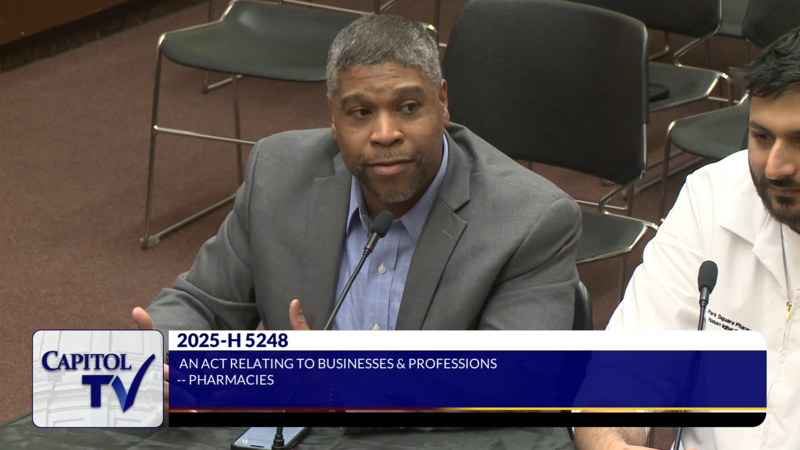
In Rhode Island, as in other states that have historically lacked strong audit laws, Lanton said that PBMs “have been using audits as a revenue generator against pharmacies for a very long time.” To Lanton, by claiming suspected fraud, Prime appeared to be testing the statute’s new boundaries.
“Instead of calling it an audit, they called this an investigation,” Lanton said. “They were living really in the gray at that point about how far they can stretch this law without really any accountability.”
The David versus Goliath narrative is accurate, Lanton agreed, but went one step further.
“I think the real story is more so the fact that these stores risked everything to testify and get a law passed that would help them better the playing field,” he said.
Did Lanton think Prime’s unannounced audits were retaliatory in nature?
“I do. I very much do,” he said, citing Akbar’s public testimony for last year’s bill. “The timing is just too coincidental.”
Prime spokesperson Cohn, however, denied any such motive, writing via email, “There is NO truth to that whatsoever…Audits were in response to suspected fraud, waste and abuse.”
Instead of calling it an audit, they called this an investigation. They were living really in the gray at that point about how far they can stretch this law without really any accountability.
Until recently, Lanton said, “each state is kind of playing Whac-A-Mole” when it comes to PBMs, without a dedicated regulatory body from the feds. President Donald Trump’s administration, however, has joined the offensive against the middlemen.
On Jan. 29, U.S. Labor Secretary Lori Chavez-DeRemer announced her department is “shining a bright light” with a proposed federal rule that would force PBMs to reveal core revenue sources to health plan fiduciaries like employers. This information would include manufacturer rebates, audit-related recoupments taken back from pharmacies, and compensation gleaned from “spread” pricing, or when PBMs pocket the difference between what an insurer pays for a drug and what a pharmacy is reimbursed.
“When middlemen are forced to operate in the sunlight, American workers and their families win,” Chavez-DeRemer wrote. “Hidden fees and distorted incentives have no place in American healthcare.”
Public comment on the proposed rule runs for 60 days after its Jan. 30 publication in the Federal Register.
Combined with additional PBM legislation at the state level, Lanton said, “If I were a PBM, I would be very worried right now.”
Kislak said she and Ujifusa are working on more PBM regulation this year, although the changes tend to be “all pretty incremental at this moment.” Still, she added, “There’s more to be done to limit the way the PBMs are selecting which drugs for which plans.”
“They are creatures of the last decade or 15 years or so,” Kislak said. “They were supposed to help insurers cut costs, and maybe they do that, but I’m not even sure, because we could take a bigger look at that, but they are definitely not patient-centered.”
Providence, RI