Attorney challenging longtime Family Court judge
Oct 06, 2026 | 7:55 am ET
Description
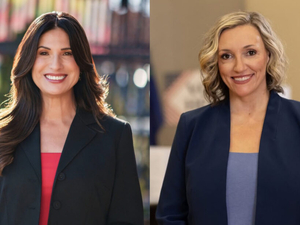
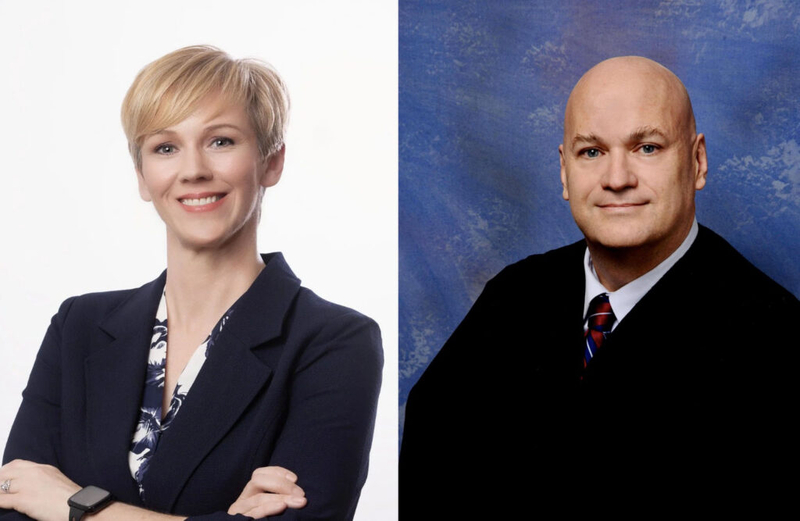
Marilyn Anne Caston, Bill Henderson. (Candidate photos)
Judge Bill Henderson, who was first elected in 2008, is seeking a fourth six-year term in Clark County Family Court Department R.
Henderson came in second of three candidates in the July primary with 35% of the vote to attorney Marilyn Caston, who had 45%.
This is Caston’s second run for the bench. She lost a 2020 primary for Family Court Dept. U with 24% of the vote.
Henderson attended Washburn University School of Law in 1984 and was admitted to the Nevada Bar in 1987.
Half of the 107 attorneys who evaluated Henderson in the Las Vegas Review-Journal’s Judging the Judges 2025 poll said he should be retained. Henderson’s highest score was for integrity while his lowest score was for legal ability.
Of 38 appeals filed on Henderson’s rulings during his three terms, the judge has been in error 50% of the time, according to Our Nevada Judges, which tracks judicial records.
Henderson did not respond to requests for an interview. His website says he’s endorsed by a variety of law enforcement associations, Veterans in Politics, the Nevada Veterans Association, the AFL-CIO of Nevada, and IATSE 720.
As of October 1, Henderson had raised $49,000 and had $12,000 on hand.
Caston has raised $20,800 as of July and had $3,100 in the bank. She is endorsed by a number of unions, including SEIU Nevada, Culinary Local 226, Southern Nevada Building Trades, Carpenters Local 1977, and Teamsters Nevada. She’s also endorsed by community organizations PLAN Action, Independent Black Voters, and the National Organization of Women (NOW).
After earning a degree in Political Science from UNLV, Caston went on to obtain her law degree from Boyd School of Law, She was admitted to practice in Nevada in 2009.
Caston says she’s running because candidates elected to Family Court in 2020 lacked “what we call general family law experience. Divorce, child custody, termination, child support – we’ve had issues in the past with judges bridging that gap from a specialized area of family law.”
She says she’d like to see a Family Court version of business court to hear financially complicated divorce cases. “We’re dealing with the same fiduciary duties, or maybe even more complicated.”
Henderson, in a video posted on his website, advises Family Court litigants not to forgo hiring an attorney, at least initially to get into court-ordered mediation.
Caston notes that’s unrealistic advice for some 70% to 80% of parties who are unrepresented.
The mediation process, which is mandatory for all litigants, generally doesn’t work when an attorney gets involved, she says.
Caston says a program spearheaded by Family Court Judge Gregory Gordon for pro se litigants is having success.
“There are no lawyers involved. Parties can opt into this program and say ‘Here’s my evidence and all my witnesses and you ust ask whatever questions you have, Your Honor, to make your decision,’” Caston says of the program. “I’ve been on the other side of pro se litigants, and if we’re doing it the real way, and you don’t have an attorney, you are at a disadvantage.”
Litigants who rely on artificial intelligence to write legal pleadings are creating a “nightmare,” she says. “My own clients send me stuff all the time that they ChatGPT. The robots want to please you, so they will make stuff up, and I can tell immediately that it’s not true.”
But parties, she says, can’t tell.
“They put it into a pleading or they say it in court. They’re just losing credibility, “ says Caston, adding “a lot of attorneys are using it, too, and getting in trouble. It hallucinates cases and will misstate things.”
Caston says that if elected, she’d make a distinction between the way she admonishes an attorney who uses AI in pleadings and an unrepresented litigant. “We’re told as attorneys that we’re always going to be held to a different standard.”
One good use of AI, she says, is for litigants to use it as a “tone monitor” by consulting it as a sounding board when they want to communicate with their ex-partner.
“It will try to tell them how to say something more politely and get their point across without being combative or mean.” A number of co-parenting apps do the same, says Caston, who recommends parents use them.
The way parents communicate can be crucial to a judge’s ruling, Caston contends.
“If you’re the one perceived to be creating the conflict, it can really tip the balance,” she says, adding the judge is looking for the party who “can overlook their own emotional response” in the interest of the children. A text message that indicates otherwise and is entered as evidence can make the difference in a custody case. “A lot of times it comes down to the judge asking ‘How do you guys talk to one another?’”
Caston says if elected, she’ll advocate for earlier start times in Family Court and for better communication with parties, who she says sometimes show up for a hearing without being notified that it’s cancelled.
Early voting begins Saturday, Oct. 17. Election Day is Tuesday, Nov. 3.
Las Vegas, NV