Arkansas opposing attorneys’ efforts to depose governor in lawsuit challenging abortion ban
Jun 08, 2026 | 5:14 pm ET
Description
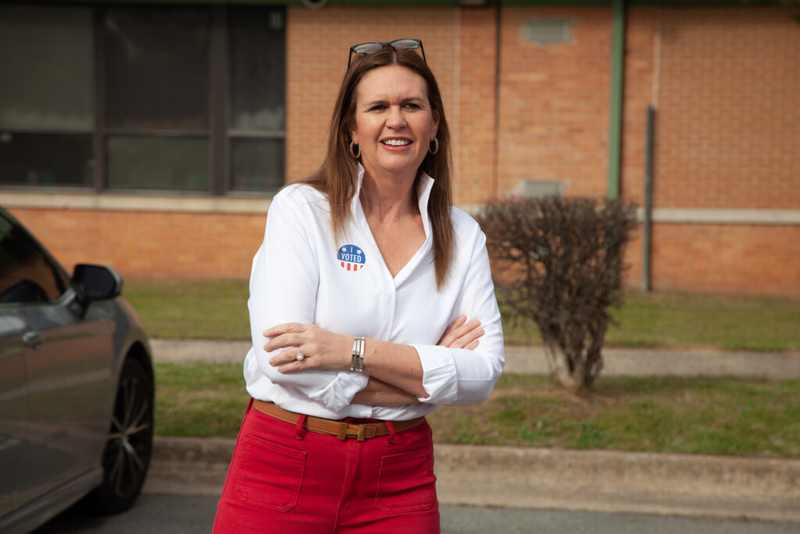
Arkansas Governor Sarah Huckabee Sanders addresses the press after casting her vote in the primary election in Little Rock, Arkansas on Tuesday, March 3, 2026. (Photo by Katie Adkins/Arkansas Advocate)
The Arkansas attorney general’s office is fighting efforts to depose Gov. Sarah Huckabee Sanders in the lawsuit challenging the state’s near-total abortion ban.
Attorneys for six women and an obstetrician-gynecologist challenging the law asked a Pulaski County judge last week for a deposition with the Republican governor starting at 9 a.m. Wednesday. The deposition would cover details of communications between Sanders’ office and friends and family of the lawsuit’s lead plaintiff, Emily Waldorf of Fayetteville.
The plaintiffs’ amended complaint filed in April seeks to have the law banning most abortions struck down as unconstitutional. Sanders, Attorney General Tim Griffin, three state prosecuting attorneys and the full Arkansas State Medical Board are defendants in the case.
In September 2024, according to the lawsuit, Waldorf’s loved ones reached out to Sanders’ office seeking clarity on the state’s abortion law, which bans the procedure with a narrow exception to save the life of a pregnant person in an emergency. Waldorf had discovered her pregnancy was nonviable, and she ultimately received an abortion via induced labor in Kansas after being denied care in Arkansas.
The five-day delay in receiving care left Waldorf hemorrhaging and at risk of infection, according to the plaintiffs’ complaint. Waldorf’s experience has brought national attention to the fact that Arkansas’ abortion ban puts decisions about treating miscarriages and nonviable pregnancies in the hands of lawyers rather than doctors.
The state has sovereign immunity, meaning it cannot be sued in its own courts, Arkansas Solicitor General Autumn Hamit Patterson wrote in Tuesday’s brief in support of the motion to block the deposition. She made the same argument in a previous motion to dismiss the case.
Arkansas judge revives lawsuit challenging state’s near-total abortion ban
“Proceeding with discovery effectively deprives Defendants of their immunity from suit and creates undue burden and expense on the parties’ and judiciary’s resources because the case should be resolved on the motion to dismiss,” Assistant Attorney General Laura Purvis wrote in Tuesday’s motion.
The motion for the deposition seeks information about communications Sanders’ office received from Waldorf’s sister and close friend about her. It also seeks communications within the governor’s office about the state’s abortion ban.
Pulaski County Circuit Judge Cara Connors dismissed the case April 30 because of a 2025 law requiring the Arkansas Court of Appeals to handle certain constitutional legal challenges. In May, Connors granted the plaintiffs’ request to revive the case since the 2025 law had been struck down by the Arkansas Supreme Court earlier on April 30.
The plaintiffs argue that the abortion ban violates the Arkansas Constitution’s provision that “enjoying and defending life and liberty [and] pursuing their own happiness” are “inherent and inalienable rights.”
Five of the six women traveled to Kansas or Illinois to obtain legal abortions. Three had nonviable pregnancies, one had been sexually assaulted and one did not want children, the complaint states. The sixth woman continued her pregnancy for seven weeks after learning it was nonviable because doctors denied her an abortion.
The plaintiffs are represented by Amplify Legal, the litigation arm of Abortion in America, an abortion-rights advocacy group co-founded by former Planned Parenthood President Cecile Richards.
The lawsuit faces an uphill battle if it eventually winds up before Arkansas’ Supreme Court, where five of the seven justices have Republican ties.
Little Rock