Arizona’s proof-of-citizenship voting law heads to the Supreme Court in December
Oct 23, 2026 | 3:55 pm ET
Description
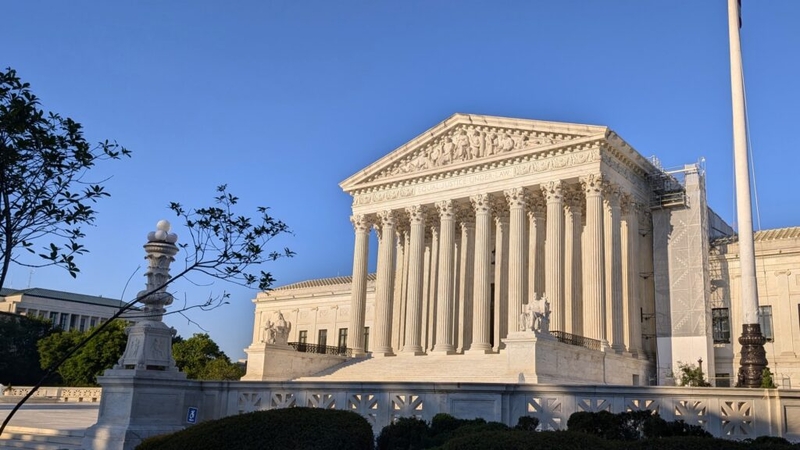
(Photo by Jim Small/Arizona Mirror)
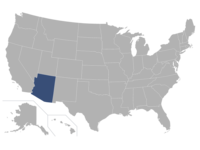
The U.S. Supreme Court scheduled oral arguments for early December in a case that could decide whether Arizona can require proof of citizenship to register to vote and if it can purge voter rolls prior to an election.
Earlier this year, the high court agreed to hear the 2022 case in which Mi Familia Vota and Living United for Change in Arizona challenged two laws signed by then-Gov. Doug Ducey that would ban new voters who don’t provide proof of citizenship and stop those currently registered from voting by mail and in presidential elections. The laws also require extensive checks of voter rolls for noncitizens and purges of voters.
The case could impact similar law in other states.
The bills were enacted and passed by the Republican-controlled Arizona legislature, which was acting in response to false claims of widespread noncitizen voting in the 2020 election. President Donald Trump and his allies have long made baseless claims of widespread fraud and noncitizen voting after his loss in 2020.
National Republicans and the U.S. Department of Justice petitioned SCOTUS to hear the case after the 9th U.S. Circuit Court of Appeals ruled in 2025, agreeing with a lower court that the laws violate the National Voter Registration Act of 1993 and the Civil Rights Act and run contrary to Supreme Court precedent.
The lower court blocked portions of the law from going into effect and the Court of Appeals upheld that decision.
Noncitizen voting has been shown to be incredibly rare with it making up approximately 0.0001% of all votes cast. And when the Bipartisan Policy Center analyzed data compiled by the Heritage Foundation, a right-wing think tank, it “found only 77 instances of noncitizens voting between 1999 and 2023” and concluded that “there is no evidence that noncitizen voting has ever been significant enough to impact an election’s outcome.”
Noncitizen voting allegations have been at the forefront of Trump’s agenda as he has had his Department of Justice and the Department of Homeland Security aggressively search for these cases, relying on a flawed federal database that has incorrectly flagged U.S. citizens to do so.
Arizona has required proof of citizenship to register to vote in state and local elections since 2004. In 2013, the U.S. Supreme Court ruled the state could not require it to vote in federal elections, which are regulated by the National Voting Rights Act.
Anyone unable to provide proof of citizenship can register in Arizona as a federal-only voter which allows them to vote in federal races if they attest they are a U.S. citizen under penalty of perjury.
The 2022 laws banned new federal-only voter registrations and says that those currently on the federal-only list cannot vote by mail or cast a ballot in a presidential contest. The laws also allow voter rolls to be purged of noncitizens within 90 days prior to an election.
The National Voting Rights Act does not allow for purging of voter rolls within that 90-day time period.
The news of oral arguments being scheduled also comes on the heels of a legal battle between Arizona’s secretary of state and attorney general against Maricopa County Recorder Justin Heap over alleged noncitizens on the voter rolls.
At the heart of the matter is the Systematic Alien Verification for Entitlements database, or SAVE, a tool that has been overhauled by the Trump administration to look for instances of non-citizens registered to vote. It has been found to falsely flag U.S. citizens as non-citizens.
Heap used the database and flagged 207 voters he said were likely noncitizens, sending those voters information to the Maricopa County Attorney’s Office earlier this year. Of those 207 flagged, 60 had cast ballots and Heap moved those voters to the “non eligible” category, according to the lawsuit.
That designation means that, unless those voters provide documented proof of citizenship before the next election, they will be unable to vote.
However, a review of those 60 voters by the Maricopa County Attorney’s Office found that only eight of them were actually noncitizens, and no more than three ever voted in the same election. The Attorney General’s Office made similar findings.
Now, 25 of those 60 who had their voter registration canceled — but whose citizenship was verified by both MCAO and the AG’s Office — are unable to vote in this year’s election, according to the lawsuit.
That case is ongoing.
Phoenix, AZ