Appeals court upholds decision to toss challenge to Ann Arbor public power initiative
Sep 08, 2026 | 2:52 pm ET
Description
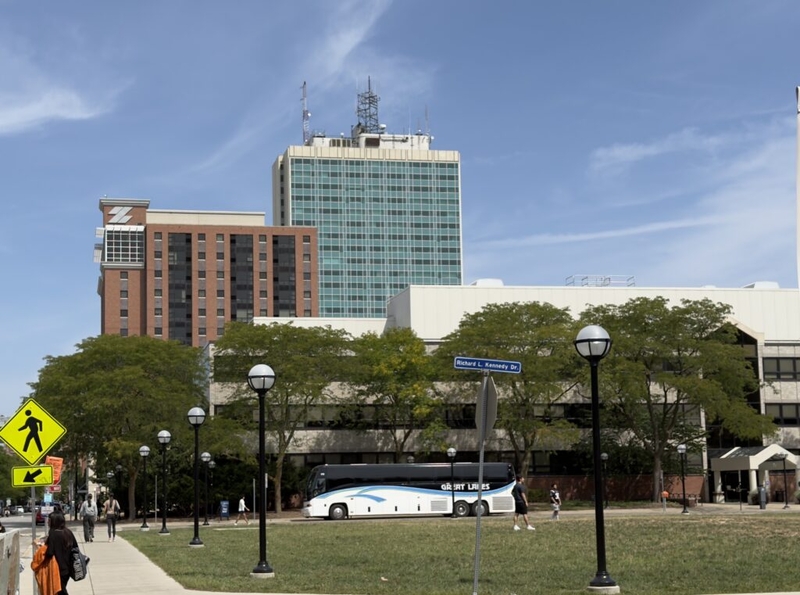
Downtown Ann Arbor (Photo by Jon King/Michigan Advance)
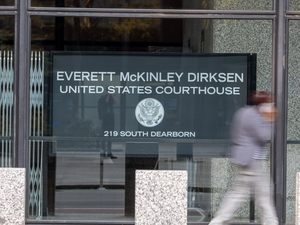
The proponents of a ballot question that aims to push Ann Arbor toward adopting a publicly-owned electrical utility are celebrating after two Michigan Court of Appeals judges concurred with a lower court’s decision to dismiss a related lawsuit filed against the city and the city clerk.
In its initial Washtenaw County Circuit Court challenge, the Ann Arbor Responsible Energy Coalition questioned a decision by Ann Arbor City Clerk Jacqueline Beaudry to certify petitions submitted for the Ann Arbor for Public Power ballot proposal.
After Judge Patrick Conlin of the Washtenaw County Circuit Court granted the city’s request for summary disposition, determining Beaudry had followed the law, the Ann Arbor Responsible Energy Coalition appealed.
Michigan Court of Appeals Judges Brock Swartzle and Anica Letica concurred with Conlin’s ruling.
“The City is pleased that the Court of Appeals upheld the Clerk’s canvass as compliant with the Home Rule City Act,” City Attorney Atleen Kaur said in a statement. “The City always strives to provide best in class services compliant with the law.”
Rudy Harper, the spokesperson for the Ann Arbor Responsible Energy Coalition, said that while the group disagrees with the ruling, they respect the court’s decision.
“The facts about this proposal have not changed. It asks voters to authorize the pursuit of a city takeover of the electric grid — an estimated $1 billion in new debt, more than three times what Ann Arbor spends on police, fire, parks, and roads combined — overseen by a nine-member board where not a single seat requires utility or engineering experience,” Harper said in a statement. “Between now and Election Day, we will make that case to every voter in Ann Arbor, and we are confident that when voters see the full price tag, they will reject it.”
Ann Arbor for Public Power applauded the ruling in a statement.
“We hope DTE is done wasting ratepayer money to try to keep people from voting this November,” said Brian Geiringer, the group’s executive director. “Ann Arborites, with their petition signatures, earned the right to choose between DTE and public power.”
If approved, the Ann Arbor city charter would be amended to establish a municipal electric utility, and create a process for selecting its governing board members.
Ann Arbor for Public Power has emphasized that the proposal is the first step in the process, and that acquiring assets from DTE Energy, which currently supplies power to the city, would require another vote after a feasibility study is completed to determine the likely cost and financing options.
DTE Energy has opposed the ballot initiative, donating more than $1.8 million to the Ann Arbor Responsible Energy Coalition through both direct financial support and in-kind contributions. The company also points to an analysis it commissioned from Charles River Associates which places the upfront cost shifting to municipal power at $1 billion.
Ann Arbor for Public Power has urged supporters to look at the report with skepticism, arguing the numbers it presents are wildly inflated.
In 2023, the city examined the costs of pursuing a municipal energy utility, determining that acquiring DTE’s existing business and distribution assets within the city could cost between between $281 million and $1.15 billion, with consultants estimating the city would need to spend an additional $114 million on new substations and transmission lines.
The Ann Arbor Responsible Energy Coalition argued in court that Beaudry should not have accepted supplementary petition sheets beyond Ann Arbor for Public Power’s initial filing. The group also contended that the referendum could not be placed on the ballot, saying it focused on more than one subject in violation of the Home Rule City Act.
Lansing, MI