Another day, another Virginia university targeted by the feds for ‘racial discrimination.’
Sep 16, 2026 | 5:25 am ET
Description
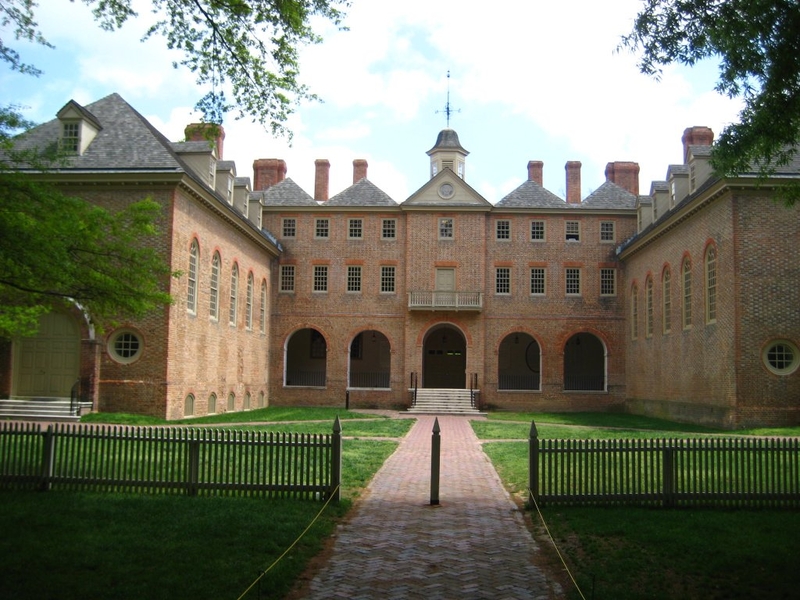
The Wren Building at the College of William and Mary in Williamsburg.(Photo courtesy of NBC12)
In 1991, Martha Muguira became the first Latina to earn a doctorate at the College of William & Mary. The degree marked the happy ending of a local hero’s success story — and the beginning of a resource to expand educational access to other Hispanic students.
After a career in community service and education, Muguira died in 2012. Her friends and family established a privately funded fellowship to help more Latino and Hispanic students go to W&M’s graduate school of education.
“Preference is given to Hispanic or Latino women who have financial need,” the William & Mary website says.
The financial award is modest: $2,950.
That, apparently, is still too much for President Donald Trump and his diversity-hating minions.
DOJ probes William & Mary over alleged race-based scholarship policies
The U.S. Department of Justice recently announced an investigation of the college, alleging it practiced illegal racial discrimination because of its efforts to use the Muguira fellowship and other scholarships to increase enrollment of underrepresented Black and Hispanic minorities.
A statement on William & Mary’s website says the school “ is committed to nondiscrimination and compliance with all state and federal laws,” and is cooperating with the investigation.
Calling it criminal for campuses to reflect America’s population betrays the Civil Rights Bill of 1964, which banned racial discrimination and which Trump now uses to justify an attack on higher education.
“It is really an insidious way of using the Civil Rights Act that grew out of (separate but equal) Jim Crow laws,” said Vania Blaiklock, a 2018 graduate of William & Mary’s law school and now a professor at Washington and Lee University School of Law.
The Williamsburg university’s current student body is 61.3% white, 11.7% Asian, 8.8% Hispanic, 6.8% multi-ethnic, 5.7% Black or African-American, 3.9% international, and 1.7% unknown, according to the website College Factual.
The Census Bureau says Black people make up 13.5% of the U.S. population, and Hispanics make up 20.5%.
In 2022, Hispanic teachers made up roughly 11% of the educational workforce, and Black teachers made up 9.4%, according to USAFacts.
Just 5% of lawyers are Black and only 5% are Hispanic, and the percentage of each has grown very slowly, the American Bar Association reported.
Though they try to hide behind the word “meritocracy,” white grievance is the hallmark of Trump and his ultra-conservative supporters’ vendetta against academia.
William & Mary is among 45 schools across the country where the administration wants to make a merit-based argument for killing off scholarships and programs that mention race. They propose to do this even though beneficiaries must academically qualify for admission.
In order to destroy minority recruitment, the president and his willing accomplices first had to destroy a legal concept called disparate impact. It provided the backbone for applying the Civil Rights Act of 1964.
Disparate impact holds that if the neutral application of a law or policy has a disparate impact on a group that can be proven, that group can claim discrimination.
The concept grew out of a Supreme Court case where the majority of justices determined that an employer’s hiring mechanism had kept Black people out of jobs. The precedent eventually extended to other sectors where minorities were underrepresented as a result of neutral application.
In April 2025, without seeking the public input required by federal regulation, Trump struck the first blow against disparate impact with an executive order that demonized it after 50 years of legal use.
“Disparate-impact liability all but requires individuals and businesses to consider race and engage in racial balancing to avoid potentially crippling legal liability,” the order said. “It not only undermines our national values, but also runs contrary to equal protection under the law and, therefore, violates our Constitution.”
In December 2025, then-Attorney General Pam Bondi administered the coup de grace by formally eliminating disparate impact liability from Department of Justice regulations for implementing Title VI of the Civil Rights Act of 1964.
It was a gambit to ensure that private employers, federal agencies, college admissions offices and others would never be allowed to consider race in doing business.
This is part of Trump’s exploitation of a Supreme Court with six conservative members, including three justices the president nominated. The conservative majority has severely limited the Voting Rights Act, opining that racial discrimination does not extensively exist in the country any longer.
Then, you read a story about a campground owner in Virginia who told a couple she would not have rented a cabin to them if she’d known one of their guests was Black. That happened in 2020 and the couple was just awarded restitution a few weeks ago.
Removing disparate impact is another way of conservatives claiming America has solved its race problems. But guess who the removal benefits? Here’s a hint: Who could never claim disparate impact in almost any neutral application of law and policy in the U.S.?
If you answered white people, take a bow.
Trump could not change the disparate impact law, Stanford University Law School professor Richard Banks told me. So, what he chose to do was not enforce it.
Banks has written extensively about disparate impact. He calls Trump’s “wholesale rejection” of the concept “overwrought and misguided.”
You might also call it hypocritical, in light of Trump’s demands that universities hire more conservative faculty simply because he commands it.
The quality of Trump’s cabinet appointments makes the president’s case for meritocracy “a huge irony,” added Banks.
“You’re fighting with someone who is not playing by any rules. That’s just the world we are living in,” he said.
As if to prove Banks’ point, the Trump administration just announced rules designed to revoke the tax-exempt status of any college or university with any race-based programs.
William & Mary can mount defenses for some of the programs under investigation, Banks and Blaiklock agreed.
For instance, a current scholarship that encourages graduates of historically Black colleges and universities (HBCUs) to apply to the W&M law school does not exclude white or Asian undergraduates from those schools. Nor does it exclude applicants from any other ethnic group, including Whites.
The Martha Muguira Fellowship website references Muguira’s desire to give financial “assistance to Latina students seeking graduate studies in education with a concentration in leadership.” It is privately funded, but anyone can apply.
A problem for William and Mary could be that Maguira was not some fabulously rich alumnae who founded a philanthropic foundation that raised millions, the experts said. Her modest effort to help other Latinas get advanced degrees relies on donations made through the College of William & Mary Foundation. This draws the college into the preference debate.
But other ways exist to attract minority students. Banks and Blaiklock pointed to programs for students who are the first in their families to attend college or have economic needs.
The college could also recruit at high schools with large minority populations, or reach out to minority graduates to act as intermediaries.
For now, William & Mary, like a few other Virginia higher education institutions, must figure out how to deal with a president willing to waste millions of taxpayers’ dollars and misuse the Justice Department to disrupt America’s best universities until they run out of money and submit to his biased personal political agenda.
It is, as Blaiklock correctly pointed out, “a strategy of intimidation.”
Richmond, VA