All that’s needed to pass budget for 2005-06 is Senate’s approval
Aug 11, 2005 | 6:42 am ET

Winston-Salem Journal
Final version avoids cuts in Medicaid, education, Garrou says
By David Rice
JOURNAL RALEIGH BUREAU
RALEIGH
Forty-two days into the budget year, legislators stand on the verge of a final vote today on a $17.2 billion budget that increases state spending by $1.3 billion and raises taxes, including the state cigarette tax, by $657 million.
Though a state lottery hasn’t been approved, the budget includes provisions to spend money from a lottery on reducing class size, pre-kindergarten, school construction and college scholarships.
After a final vote today in the Senate, it will head to the desk of Gov. Mike Easley.
Sen. Walter Dalton, D-Rutherford, noted in debate yesterday that, after several years of tight budgets, legislators entered the session in January facing projections of another billion-dollar budget shortfall.
"North Carolina, like other states, has faced some difficult times. And we have faced those difficult times and kept North Carolina moving forward," Dalton said.
Sen. Linda Garrou, D-Forsyth, a co-chairwoman of the Senate Appropriations Committee, said that the budget avoids the worst cuts that had been proposed to education – particularly teacher assistants – and to Medicaid health insurance for the poor in the House and Senate budgets. In addition, she said, the plan provides almost $80 million to respond to a judge’s orders in a lawsuit over state support for poor school districts.
To help pay for the spending, legislators agreed to extend a half-cent sales tax that raises $417 million a year, as well as an upper-income tax bracket that raises $39.8 million, for two more years.
And even in a tobacco state, they agreed to raise the cigarette tax from 5 cents a pack, the nation’s lowest, to 30 cents a pack Sept. 1 and 35 cents a pack next July 1. The move will raise $119 million this year and $189 million next year.
Though health advocates wanted legislators to raise the tax by 75 cents a pack to help keep children from smoking, "The House didn’t want to do more than we absolutely had to do," said House Speaker Jim Black. "There was not a majority to do more than we did, and some had to swallow hard to do that."
Rep. Bill Owens, D-Pasquotank, said that the 7.6 percent increase in spending is smaller than the percentage increase in 24 of the last 35 years.
But Republicans complained about the increase in taxes. "We’ve got about a billion dollars in tax and fee increases on the people of North Carolina," said Sen. Phil Berger, R-Rockingham, the minority leader.
Republicans also pointed to pages of line items for pet projects, with many singling out $400,000 for a museum in Sparta to house a Los Angeles lawyer’s teapot collection. "How do we justify $400,000 for a teapot museum?" Berger said. "We’re raising taxes on the people of this state…. By golly, we’ve got an extra $400,000 that we can spend on that teapot museum."
Rep. John Blust, R-Guilford, also pointed to the museum in Sparta.
"Seriously, folks, do we need a teapot museum at a time when I just received a request from a local school for school supplies?" he said.
But Rep. Jim Crawford, D-Granville, said that the lengthy list of projects came in response to a public backlash over millions in discretionary funds that legislative leaders doled out for members’ favorite projects last year.
"I think the whole idea of putting it in the budget is so legislative leaders wouldn’t have money in their hands to direct," Crawford said. "We hope that everything will be on the up and up and everything will be out in the open."
Black said he has seen the artistic collection of teapots himself, and he noted that Republican U.S. Sen. Richard Burr had helped secure federal money for the Sparta museum. "If that was a boondoggle and a joke, he wouldn’t be there supporting it," Black said.
Black said after the House vote that the budget includes no money to continue paying former representative Michael Decker, whose party switch in 2003 helped Black remain speaker, in a job with the Department of Cultural Resources.
"Absolutely not – nowhere in there," Black said. "Scout’s honor."
Though the Senate has yet to approve a lottery proposal that cleared the state House in April, the budget includes provisions to divide $425 million that a lottery is projected to raise for the state.
Under the plan, 50 percent would go to reduce elementary class size and pre-kindergarten, 40 percent to build new schools, and 10 percent to college scholarships.
Budget provisions also loosen restrictions on lottery advertising. They say that lottery ads cannot be used to target specific groups or economic classes or try to induce people to play the lottery.
But that puzzled Rep. Nelson Dollar, R-Wake. "I’ve never seen advertising that didn’t target somebody," he said. "I don’t know how you’re going to have lottery advertising that doesn’t induce a person. Maybe they will come on and say, ‘Don’t play the lottery.’ That will be interesting."
Other Republicans pointed to policy provisions in the budget, including one that would remove a requirement for the governor to accept the recommendations of political-party chairmen for members of the State Board of Elections.
Sen. Ham Horton, R-Forsyth, pointed out that the provision was in neither the House nor the Senate budget.
Dollar pointed to a provision that would allow out-of-state students who receive athletic and academic scholarships at University of North Carolina Schools be considered in-state students.
"This is a major policy issue that ought to be debated and not handled in a budget provision," he said.
Final approval in the House came in a 61-59 vote after the State Employees Association of North Carolina relaxed its objections to raises for state workers.
While teachers will get average raises of 2.24 percent plus the chance for ABC bonuses and $85 million in additional pay to be dispensed by the governor, state employees will get raises of 2 percent or $850, whichever is greater, plus a bonus week of vacation.
But the employees’ group wanted a raise of $1,000 for the lowest-paid workers, and managed to get members with large populations of state workers in their districts to block final House approval Tuesday night.
Dana Cope, the executive director of SEANC, emerged from negotiations in Black’s office yesterday to say that legislators will continue working toward additional help for state workers.
"State employees finally got the attention of decision makers in North Carolina. We came very, very close to shutting down the process so that we could have a meaningful conversation," he said.
Black said that although there is no agreement yet on what form it will take, "We’ll continue to try to do better by state employees as we go along and the economy improves."
The Senate gave the budget tentative approval in a 28-20 vote along party lines.
• David Rice can be reached in Raleigh at (919) 833-9056 or at [email protected]
• Journal reporter David Ingram contributed to this report.
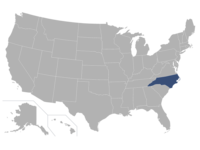
Raleigh, NC