‘All of the joy and grief’: Delaware family perseveres with rare, degenerative disease
Oct 09, 2026 | 6:46 am ET
Description
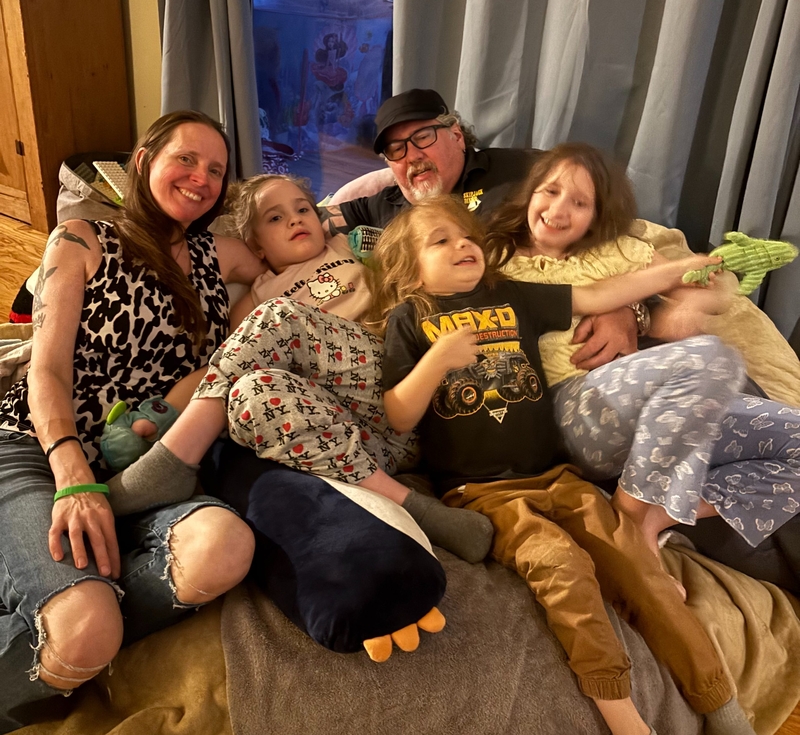
Photo courtesy of Spotlight Delaware
Why Should Delaware Care?
Sanfilippo Syndrome is a genetic condition that impacts 1 in every 70,000 children. Last month, federal regulators approved a gene therapy treatment to prevent complications for those children born. One Delaware family’s 5-year-old son had access to the gene therapy through an experimental trial, and his family called it a miracle.
Five years ago, doctors in Ohio injected an experimental gene therapy treatment into an infant boy from Delaware that they hoped would keep him from suffering from a rare degenerative disease that his older sister had already developed.
Five years later, his mother, Molly Merrill, called the treatment a “miracle.”
Today the boy, Declan Merrill, attends kindergarten in the Christina School District and is fluent in sign language, his mother said. It stands in unfortunate contrast with his older sister Mickey, who lost her ability to speak and has not been able to attend a mainstream school.
Last month, federal regulators from the U.S. Food and Drug Administration approved the gene therapy treatment for use outside of experimental settings. Prior to the approval, treatment was limited to just managing symptoms of the degenerative and fatal disease, called Sanfilippo syndrome.
Molly and Don Merrill credit their son’s success to his older sister Mickey.
“It’s only because of Mickey that we knew there was a chance of him having it,” Molly Merrill said.
Even before Declan was born, doctors diagnosed him with the ailment. And because of the early diagnosis, Declan’s treatments and services were ready. As soon as he entered the world, he immediately began receiving occupational and speech therapy.
Still, Molly Merrill said her son is not “cured” of Sanfilippo, and he is still in the mild-to-moderate range of the disease. While Declan is able to walk and talk, he does deal with speech delays. When he is unable to articulate with his voice, he switches to sign language.
Dr. Ricki Carroll, a complex care and palliative care pediatrician at Nemours Children’s Hospital, said doctors do not know whether Declan’s treatment will last long term, or whether it is effective for every part of the body that could be affected by the disease.
The syndrome is a genetic condition caused by a gene change that affects the body’s ability to make an important enzyme. Without the functioning enzyme, a buildup of waste material can collect in the body and brain, leading to progressive damage over time.
Carroll said that if a child receives the gene therapy and is still experiencing hearing impairment, it could be because the child developed that before the treatment, or gene therapy may not have an effect on all parts of the body.
“But the longer we watch and children continue to do well, the more optimistic we are,” she said.
Therapy not approved for older kids
In Mickey’s early years, she only knew one speed for life — running.
Molly Merrill said Mickey was extremely hyperactive, often knocking household items off of surfaces as she raced through the house.
But she never fully developed an ability to speak, and by age five she started losing her ability to hear.
Although only 1 in 70,000 children are born with Sanfilippo Syndrome, Carroll said many of its symptoms, such as delayed speech, are common in various conditions.
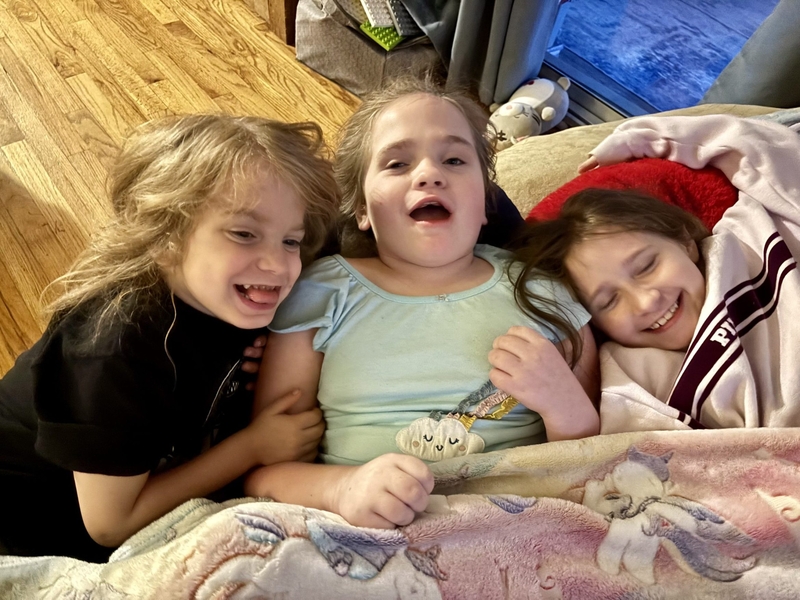
Mickey was ultimately diagnosed with Sanfilippo syndrome when she was 3 years old, just a few months after the birth of Molly and Don Merrill’s second daughter, Maya, who does not have syndrome.
But Mickey was not eligible for the gene therapy that her younger brother received because of her age, Molly Merrill said.
Carroll said the gene therapy was not approved for older children because it was not tested for older age groups, and doctors do not believe the therapy would be helpful for older children because the disease is progressive.
“The longer you have harmful buildup, the more harm it’s going to do to the body and specifically the brain,” Carroll said.
Now, Mickey takes six vials of medicine every morning at 5:45 a.m. She must eat through a feeding tube. She has necrosis in her hips, and her bones are falling apart. Still, Mickey is a happy child who especially enjoys frozen yogurt, her mother says.
Molly Merrill said the approval of the gene therapy has marked a “strange time” for the Sanfilippo community and her family.
While there is finally an answer for young children who, like Declan, may receive gene therapy as an infant, there is no option for older children like Mickey.
“It’s all of the joy and grief you could possibly imagine in the exact same moment,” Molly Merrill said.
Continuing the fight for Mickey
Molly and Don Merrill were stunned when they were told that Mickey would likely die at 12 years old because of the disease.
“We pretty much said, ‘Today we cry, tomorrow we fight,’” Don Merrill said.
Don Merrill said he felt “useless” when they received their daughter’s diagnosis, but he knew they had to take action and help their daughter fight.
Together, the Merrill family and their friends came together to create different fundraising opportunities for Sanfilippo Syndrome. The family also created their own nonprofit organization, The Save Mickey Association, to help raise money and awareness.
Don Merrill said they have held events like motorcycle rides and chili contests. Today, the family focuses on their larger events like “Mickey Fest,” which features live music and games for families, and “Chefs Unite,” which connects Delawareans with executive chefs and lets them eat food that is prepared and plated in front of them.
The money the Merrill family raised has gone toward national organizations studying Sanfilippo Syndrome.
While Declan’s gene therapy is not available to older children like Mickey, the Merrill family is not giving up any efforts to raise money for Sanfilippo research.
‘We’re not done because we don’t have a treatment for Mickey,” Molly Merrill said.
Get Involved
On Nov. 2, the Merrill family will host the fundraiser, Chef’s Unite, at Deerfield Gold Club in Newark. The event will give attendees the opportunity to meet regional executive chefs and taste food that is prepared live. For more details, click here.

Dover