Virginia localities rethink use of license plate readers amid privacy concerns, report states
Nov 09, 2026 | 5:26 am ET
Description
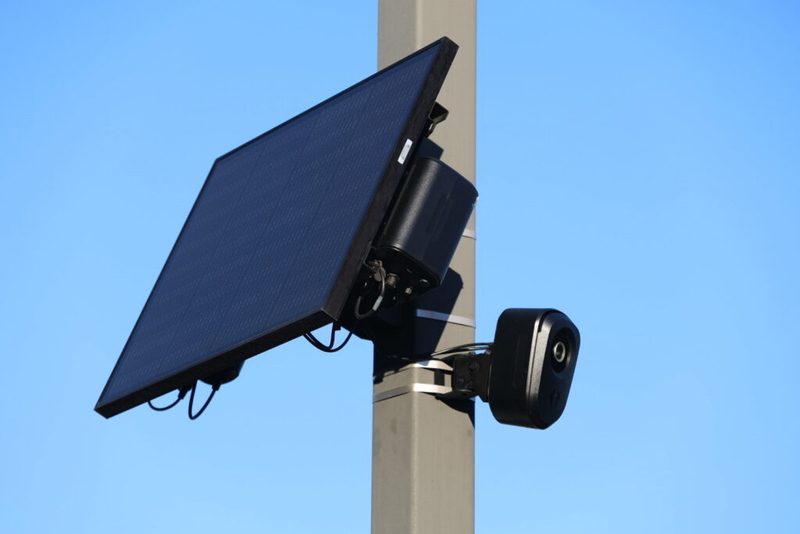
A view of an automated license plate reader. (Photo by Nathaniel Cline/Virginia Mercury)
Seventeen Virginia localities using automatic license plate readers to identify vehicles and investigate crimes are reconsidering or scaling back ALPR use, vendor relationships, or camera installations, a new report found.
The reconsideration comes as local governments and law enforcement agencies face public scrutiny after alleged misuse and disagreements over how authorities use the readers.
Nearly all of Virginia’s law enforcement agencies with license plate readers responded to a statewide survey, up from 70% last year.
But the responses give only a limited picture as agencies reassess their use of the devices, leaving Virginia Crime Commission staff unable to determine whether agencies fully comply with every statutory provision.
Still, speakers at Thursday’s commission meeting argued there may be some noncompliance.
“Dozens of agencies across Virginia (are) breaking the law, with only two people being charged,” said Duane Barron, a board member for Justice Forward, criticizing the report for not assessing whether ALPRs actually make Virginia safer or reflect public views.
Report results
Last year, staff found several areas of non-compliance that raised concerns regarding agency policies, data retention and data sharing.
This year’s survey found fewer agencies reporting non-compliance in these areas, including six agencies reporting no policy, down from 26.
Fewer agencies also reported data retention periods over 21 days, down from 33 to seven, and fewer reported continuously sharing ALPR system data with other state law enforcement agencies, down from 20 to four.
The few agencies sharing camera data said it was done to assist with terrorist attacks or threats, at the request of a federal agency for case assistance, a murder investigation and criminal investigations.
Under state law, law-enforcement agencies may share data obtained through ALPR systems under certain circumstances. The statute prohibits sharing or disseminating the data to “any database of any other state, federal, private, or commercial entity.”
The statute does not, however, expressly prohibit sharing or disseminating the data directly to out-of-state or federal law-enforcement officers.
Staff said only two criminal charges have been filed for unauthorized use, despite approximately 20 reported incidents.
Commission members questioned why the other reported incidents had not resulted in charges and argued that existing consequences might not deter violations, underscoring the policy stakes.
Senate Majority Leader Scott Surovell, D-Fairfax, proposed decertifying officers who violate ALPR policy and called for stronger consequences for agencies that fail to follow it.
Other members questioned whether enforcement should be non-discretionary and proposed limiting ALPR access to designated or certified personnel as another safeguard to improve compliance.
House Majority Leader Del. Charniele Herring, D-Alexandria, said members could consider the policy ideas at the next meeting on Tuesday.
Last year, Herring carried the commission’s recommendation, which led to successful legislation allowing the use of license plate reader systems, like those operated by Flock.
The new law establishes statewide approval, restricts police use of ALPR technology, requires documentation and reporting, and creates oversight to monitor use and accountability.
“My primary concern … was to ensure that we were using technology in a responsible manner that balances people’s right to privacy and their safety,” Herring said.
Public reacts to report
No public-testimony speaker clearly advocated for keeping ALPRs in use; most speakers called for a statewide ban on the readers, including Flock — most commonly used by agencies — Axon and Motorola.
However, some acknowledged limited potential benefits, including Barron, who said ALPRs might help locate a stolen car or lost scooter, but argued that wasn’t the central question.
Tamara Lewis, a National Association of Criminal Defense Lawyers representative, argued that the technology could help identify stolen vehicles or respond to Amber Alerts, while pushing for warrants and much shorter data retention.
“These are no longer tools that merely identify license plates. These are mass surveillance networks that record the travels of everyone with the vehicle,” Lewis said.
Hampton Commonwealth’s Attorney Anton Bell, who sits on the commission, said his colleagues have seen “great benefits” from license plate readers in response to the report.
“However, with any law enforcement tool, we recognize there has to be always be checks and balances on anything where there’s the availability or opportunity for abuse,” Bell said.
What’s next
Lawmakers will return to Richmond for the next General Assembly session in January to discuss related legislation. Some lawmakers have publicly expressed interest in banning the readers, while others have called for more transparency and stronger oversight.
Del. Jackie Glass, D-Norfolk, carried two proposals last session that would have established statewide oversight, operating standards and training requirements for ALPRs. The bills were continued to January.
No related legislation had been filed as of Friday afternoon.
The commission will hold its final meeting before the next session on Tuesday. The agenda has not been set.
Richmond, VA