Alabama sells $190 million worth of bonds to Regions division to finance Escambia prison
Oct 28, 2026 | 12:49 pm ET
Description
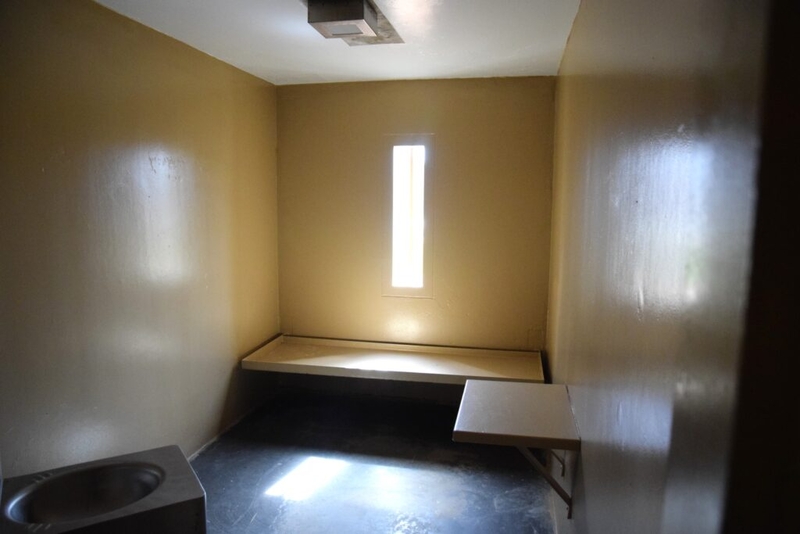
A prison cell in Holman Correctional Facility in Atmore, Alabama, as seen on Oct. 22, 2019. The state of Alabama sold $190 million of bonds to a division of Regions Bank this month to finance the construction of a 4,000-bed men's prison in Escambia County. (File)
Alabama sold more than $190 million worth of bonds earlier this month to Regions Capital Advantage, a division of Regions Bank, to finance the construction of a new men’s prison in Escambia County.
A document of the bond sale on the Electronic Municipal Market Access indicated the bonds were issued by the Alabama Corrections Institution Finance Authority in August and were sold in a private transaction on Oct. 6. The identity of the buyer was initially redacted from the documents. The Alabama Department of Finance identified Regions as the buyer in a statement Wednesday.
“To align the additional indebtedness with the optional redemption date of its Series 2022 A Bonds, the Authority elected to pursue a direct loan through an invitation for bids,” the statement said. “This approach was intended to secure more favorable rates and lower issuance costs than might otherwise have been achieved through a traditional public bond sale.”
A message seeking comment was left with Regions on Wednesday.
According to the terms, the bonds will mature in 2046 and carry an annual interest rate of 4.86%. Interest payments will be due in January and July beginning next year. Alabama has the option to call the bonds in July 2032.
Sen. Greg Albritton, R-Atmore, the outgoing chair of the Senate Finance and Taxation General Fund Committee, which oversees the Department of Corrections’ budget, said Tuesday he knew the bonds had been sold but not the identity of the lender.
“I think because they got a better deal,” Albritton said. “The amount that was borrowed and things such as that, it seemed to be the appropriate way to move.”
ACIFA in August authorized the state to borrow $200 million to pay for the Escambia County prison.
Alabama prisons have been plagued for decades by overcrowding and violence. State lawmakers in 2021 authorized $1.3 billion to build two 4,000-bed facilities in Elmore and Escambia counties, hoping the facilities would require less staffing, be safer than existing prisons and allow the Department of Corrections to close aging facilities.
But the cost of building the facilities in Elmore and Escambia counties has soared. The prison in Elmore County, named the Gov. Kay Ivey Correction Complex, has cost $1.25 billion. The company in charge of construction missed a completion deadline earlier this month. The Escambia facility is expected to cost between $700 to $900 million, according to Albritton.
Alabama used a different process to sell the bonds for the Escambia prison than the one in Elmore. The state chose to go through a “direct placement” and sell the bonds to a lender instead of selling them through the traditional public process.
The bonds for Elmore were underwritten by investment banks Frazier Lanier and Stephens, with Wells Fargo and Raymond James also participating in the process. The institutions purchased the bonds and then sold them to their clients who then collected the interest payments.
Albritton said selling bonds through direct placement could allow the sale to move forward “without fanfare and without difficulty.”
“Last time we tried to sell bonds, but it was a matter that it went to a point that we had riots in England, in San Francisco, in Birmingham, because Alabama was trying to sell bonds to build prisons.”
The state in 2022 attempted to sell $725 million in bonds for the Elmore prison, but only raised $509 million in the initial offering. Bill Poole, then the Alabama State Finance Director, blamed a “lack of interest in long-term maturities” in the market.
Activist investors had encouraged investors not to purchase the bonds, citing the ongoing violence in Alabama prisons and questions about the new facilities’ ability to address the crisis, though Poole said at the time the activists’ efforts were not a “significant factor” in the bond sales.
“Going public isn’t always the best thing to do,” Albritton said. “Not only did that affect the public market, but it also affected people even willing to loan. It may have been that the public market would not have made the purchase.”
Montgomery