Alabama bill would restrict drag performances and overnight programs
Dec 10, 2024 | 7:57 am ET
Description
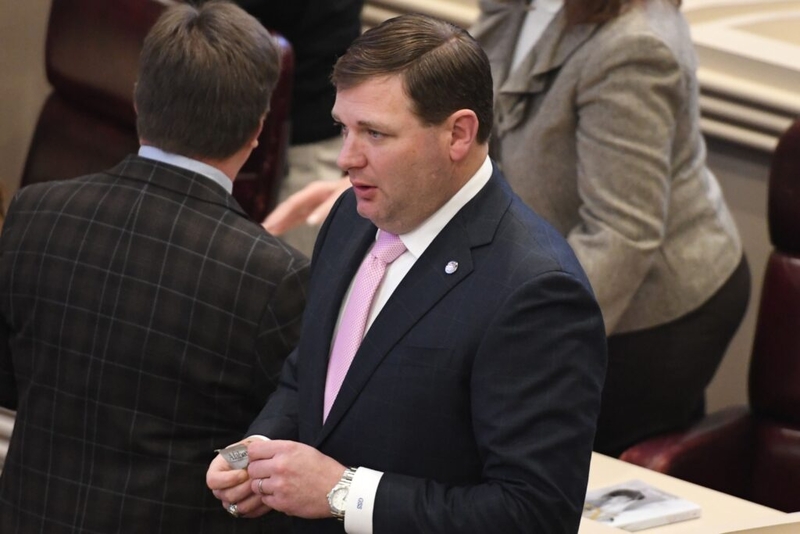
House Majority Leader Scott Stadthagen, R-Hartselle, stands on the floor of the Alabama House of Representatives on Feb. 8, 2024 in Montgomery, Alabama. Stadthagen has sponsored a bill that would limit drag shows and participation in overnight camps. (Brian Lyman/Alabama Reflector)
An Alabama state representative has filed a bill that would place limitations on drag performances and overnight programs.
HB 67, filed by House Majority Leader Scott Stadthagen, R-Hartselle, would ban public K-12 schools or libraries from presenting or sponsoring drag performances in the presence of a minor without consent of a parent or legal guardian. The bill would also prevent state operated or funded programs from allowing minors to share multi-occupancy bathrooms, changing facilities or sleeping quarters unless they are family and have parental or guardian consent.
The legislation comes amid ongoing conservative attacks on LGBTQ+ individuals, particularly transgender people, in public spaces.
Since 2021, Alabama has restricted bathroom use by transgender individuals; banned discussions of gender and sexuality up to fifth grade; banned transgender athletes from playing in school sports of the sex with which they identify, and made it a felony for physicians to prescribe puberty blockers and hormones to transgender minors.
Libraries have also come under attack from right-wing activists for having books with LGBTQ+ content.
Stadthagen Monday did not cite cases of drag performances in libraries or schools in Alabama.
“When viewed through an unbiased prism, this legislation is a common sense solution to a difficult and, I believe, dangerous societal controversy,” he wrote in a text message
Drag performances are defined in the bill as “a performance in which a performer exhibits a sex identity that is different from the sex assigned to the performer at birth using clothing, makeup, or other physical markers.”
Stadthagen wrote that the bill is “as much a preventative measure as it is a reactive measure.”
“You don’t wait to put in a fire suppression system after a fire has broken out and destroyed your home or business,” he wrote. “You put in a fire suppression system to prevent a fire from breaking out in the first place, and that is in many ways the purpose of this bill, to prevent the worst case scenario from ever happening.”
Stadthagen also cited an incident at Space Camp and said will help prevent similar events from occurring.
Conservative leaders in the state earlier this year targeted a transgender employee after a parent made a complaint on Facebook about their presence at Space Camp. According to Al.com, the U.S. Space and Rocket Center’s investigation found no evidence of inappropriate behavior.
The Alabama Trans Right Coalition (ALTRAC) wrote in a statement Friday provided by organizer Allison Montgomery that the bill is “intentionally vague bill that will be interpreted so broadly as to infringe on the First Amendment rights of all Alabamians.”
“Trans kids do not deserve to be humiliated by state law that ignorantly declares them opposite the gender they know themselves to be — they deserve to be themselves,” the statement said. “Alabama already denies them life-saving therapy and medical care and is trying to erase all mention of people like them from its archives and libraries.”
The group also raised questions about female students dressing up as George Washington, which could be in violation of the law.
“We urge the members of the Alabama legislature to stop using their power to pick on transgender children,” the statement said. “They should instead work to provide better education and more opportunities for all children in the state.”
Alabama Equality, an LGBTQ+ rights group said in a Friday statement that the bill is “a great example of yet another misguided priority that takes us further away from the real challenges facing our state.”
“Instead of concentrating on what matters most—improving our schools, expanding access to healthcare, and creating good jobs—this bill targets cultural issues that won’t move the needle on the everyday struggles families face,” the statement said.
Montgomery