After unanimous vote, Vance County neighbors 1, debris landfill 0
Dec 24, 2021 | 1:34 am ET

Four months. Hundreds of pages of documents and maps and charts. A dozen hours of testimony, some of it heated.
All of it had boiled down to the Jan. 14 meeting of the Vance County Board of Adjustment, which would rule on whether the residents of Egypt Mountain Road would get stuck with a Land Clearing and Inert Debris landfill in their rural neighborhood.
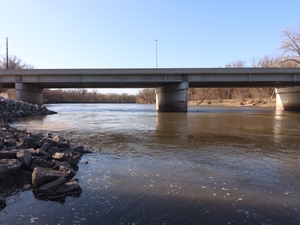
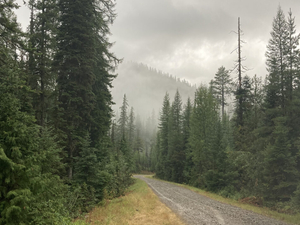
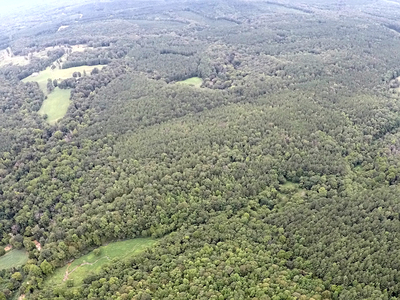
LCIDs, as they’re known, accept tons upon tons of trees, stumps, brush, unpainted wood and concrete, often from construction sites. K&K Organics, based in Wake Forest, had proposed building such a facility in Kittrell, within a half-mile of 60 homes, on roughly 80 acres of steep, rugged and forested terrain that bottoms out at Long Creek, a tributary to Tabbs Creek and the Tar River.
The LCID would operate Monday through Friday, nine-and-a-half hours and 120 truck trips per day, for 20 years.
Since September, other than posing direct questions — and making an occasional aside — the board had been pokerfaced about its intent.
Tom Terrell, the combative attorney for K&K Organics, had cited state statutes that he argued sharply limited what the five-member board could consider in its decision.
The board could not account for residents’ “generalized fears” about what “might happen,” if say, a semi-truck barreling down the very narrow Egypt Mountain Road, ran off the shoulder or collided with a car. Or if flooding, already common, worsened. Or if runoff from the landfill wound up in the Tar River, a drinking water supply. Or if illegal hazardous material were dumped in the landfill, then seeped into the groundwater and private drinking water wells, unbeknownst to anyone until it was too late.
Nor could the board use their “own knowledge to override the evidence.” The members, who presumably know many a fold and pleat in the landscape of Vance County, had to ignore those memories and experiences.
Terrell’s final Hail Mary pass was to claim that the board could not weigh the LCID’s potential harm to the waterways and aquatic life. Only the public health was at issue, Terrell said, not the environment.
“Public comes from the Latin, ‘publicus’ — people,” he said. “Public only refers to people.” (Technically, publicus is derived from populus, “the people.” Publicus can also refer to belonging to the people, state or community.”)
To separate public health from the environment is not only unwise, but also impossible. Federal and state regulations are based on protecting “human health and the environment.” The NC Department of Health and Human Services has an “Environmental Health” section that oversees private drinking water wells. And from 1989 to 1997, the NC Department of Environmental Quality was known as the Department of Environment, Health, and Natural Resources.
Jerry Eatman, attorney for the neighbors, offered a pointed rebuttal: “Water is central to public health. To say it doesn’t ignores facts.”
Terrell acknowledged that when “water is degraded it can harm the public health, but that’s not in the evidence.”
What was in the evidence, though, included likely harm to threatened species of mussels, which are key to filtering pollution and supporting a healthy watershed. “All of us want to protect mussels,” said Terrell. “But there is nowhere in the law that says mussels are a person, and if that mussels are harmed, that would harm people.”
While no one argued that mussels are people, there is an artificial disconnect between the cleanliness of the environment and the health of a community. Recent scientific research has shown people who live near major air pollution sources and contract COVID-19 are more likely to suffer more severe symptoms. Other research has shown that residents who live within three miles of industrialized hog farms are more likely to die sooner and suffer from chronic disease than people who don’t, although the link isn’t entirely clear.
Toxic algae blooms are proliferating in the Chowan River Basin — a drinking water supply for more than 125,000 people— in part, because of manure runoff from poultry farms. Even climate change can be attributed to humans’ refusal to recognize that we’re part of — and rely on — a larger, interconnected ecosystem.
And so now the time came for the board to vote.
Raleigh, NC