After firefighting deaths, advocates alarmed by ‘deepening wildfire crisis,’ agencies’ strategies
Aug 25, 2026 | 7:02 am ET
Description
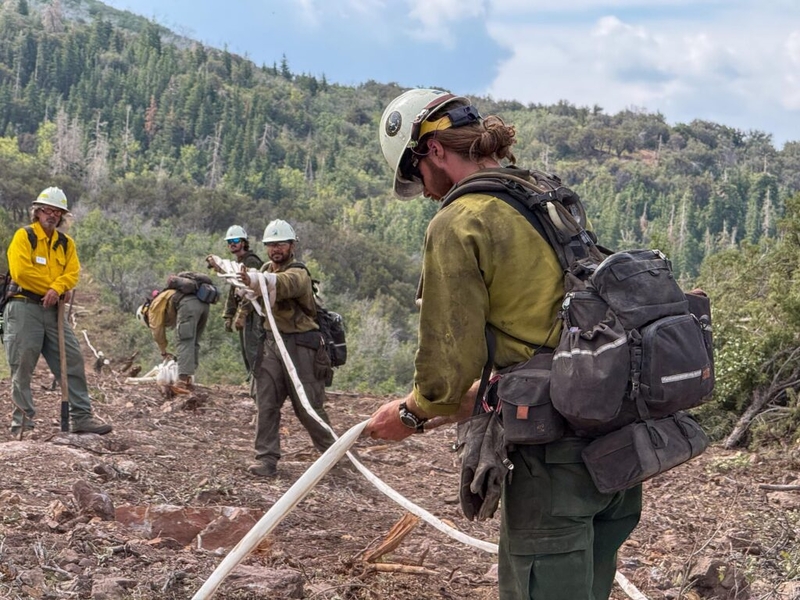
Firefighters at the Widemouth 2 Fire manage hoses in a photo shared by fire officials on Aug. 14, 2026. (Photo courtesy of inter-agency fire officials via InciWeb)
Help was on the way. Five firefighters were about to be flown to safety after a new wildfire broke out on rugged terrain at the Utah-Colorado border in June, whipped by furious, dry winds.
But it was too smoky for the helicopter to land, according to a preliminary federal report, and the raging fire overtook the crew on June 27. Four of its members died as a result in the deadliest such entrapment in the nation in over a decade.
The U.S. Wildland Fire Service, a new agency under the Department of the Interior, and the U.S. Forest Service issued preliminary information in July, laying out the basics of what happened in a two-page report. But the firefighters’ families and the public are still waiting for full details, and it could take several months for a team of investigators to compile and release their findings.
Since then, the tragedies have kept coming, including in Utah. Two pilots fighting central Utah’s Widemouth 2 Fire were killed earlier this month when their helicopter crashed. The National Transportation Safety Board and Federal Aviation Administration are investigating.
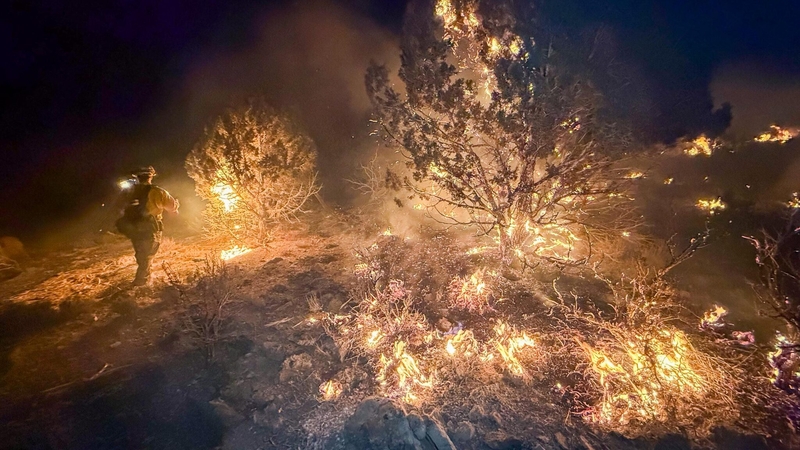
Advocates for wildland firefighters point out that this year’s dangerous season is intensified by heat and drought making fires faster and harder to contain. It’s also characterized by an aggressive strategy from federal land management agencies instructing them to stamp out fires early and quickly.
Timothy Ingalsbee, executive director of the group Firefighters United for Safety, Ethics and Ecology, wants to know to what extent that suppression policy informed the five-member Rifle helitack crew’s assignment battling the Gore and Knowles fires in southwest Colorado.
Ingalsbee, an ecologist and former firefighter, said the full-suppression approach reverses a longtime, science-backed strategy of allowing fires to burn in some further-removed areas to keep forests healthy, which also prevents crews from taking unnecessary risks.
“I’m pretty anxious about tragedies yet to happen, because we still have the same policy, blindly attacking all fires, instead of strategically, wisely managing and prioritizing fires,” Ingalsbee said.
Among the other details he’s eager to learn: the crew’s specific goals that day, their escape plan and when they learned about the new fire, which had been reported earlier that afternoon before racing toward them in the steep, remote terrain.
Emily Barker, 38; Nick Hutcherson, 27; Nathan Matthews, 43; and Sydney Watson, 27, were caught in the burnover incident. Matthews succumbed to his burn injuries roughly a month after the incident. Another member of their team was injured but survived.
In an unsigned statement to Utah News Dispatch, the Wildland Fire Service said the safety of its firefighters is its top priority.
“Interior’s suppression policy does not encourage individual crews to take on greater personal danger. Aggressive initial attack refers to committing more resources to a fire early, not increasing risk to individual crew members,” the statement reads.
The agency said large wildfires now represent the greatest risk to life, property, infrastructure and the environment in the West.
“Our full-suppression approach is driven by this unusually severe fire year stemming from a warm winter, low snowpack and dry fuel,” the statement reads. “Our firefighters are empowered to exercise the same discretion they’ve always had; this year’s suppression policy does not change that.”
The Wildland Fire Service went on to say the investigation into June’s burnover is nearing completion, though it didn’t give a timeline.
“The findings and recommendations from that report will be used to make lasting improvements to our wildland fire program and to prevent future fireline fatalities,” the agency said. It also extended condolences to those in mourning.
Riva Duncan, president of the advocacy group Grassroots Wildland Firefighters, called the tragedies alarming and “a symptom of a deepening wildfire crisis, a deepening climate crisis, with unprecedented fire behavior.”
Duncan, a retired Forest Service fire chief, said she’s waiting for the reports to come out to learn more about the circumstances. But she noted forest fires in the United States are starting earlier and burning faster and longer.
“Some of the fire behavior we’re seeing, you could have 10,000 firefighters. You can’t put them in front of these flaming fronts. You’d kill them all,” Duncan said. “And so there becomes a certain point where you have to do what you can do, and it’s not going to be stopping the fire. It’s going to be evacuating. It’s going to be point protection on high values, and it’s a complete shift.”
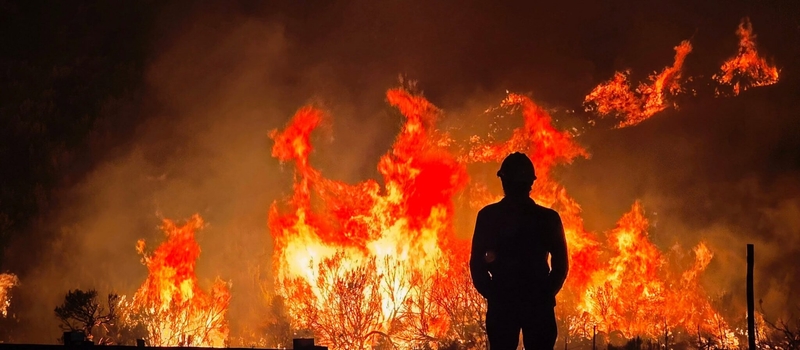
This year’s low snowpack and tinder-dry conditions have helped fuel fires’ explosive growth. And across the Western U.S., the pace has been picking up for decades, according to researchers at the University of Colorado Boulder. Their 2024 study found the daily growth rate of wildfires grew by roughly 250% over 20 years.
Fires are also failing to die down at night like they used to. Other research out this summer shows more are continuing to rage overnight due to hotter, drier conditions brought on by climate change.
Duncan and fellow advocates have raised concerns about burnout, too. Over the winter, she noted, crews from Western states were dispatched to Florida and Georgia to fight fires there.
“I remember talking to a firefighter in May about that, and they were like, ‘I’m tired already. It’s just May,’” Duncan said. “I think that’s a huge concern.”
Crews from overseas have flown in to help, including Canadians, Australians and New Zealanders, Duncan noted, and members of the U.S. military have also answered the call for backup.
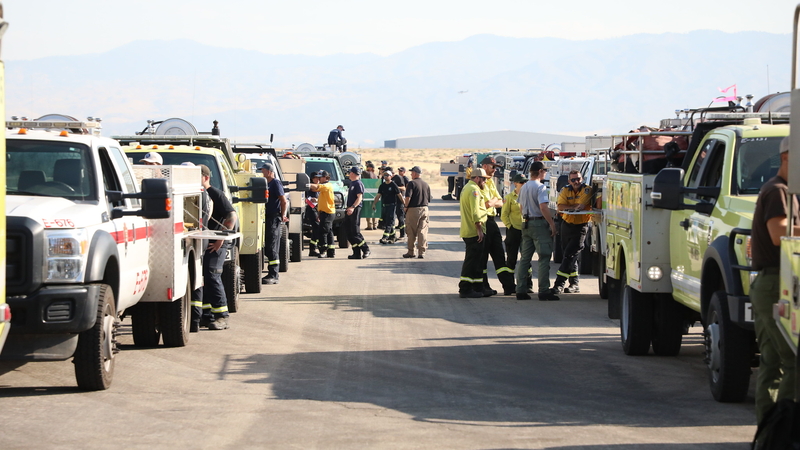
And while firefighting is inherently dangerous, researchers at the University of Utah have been building datasets in recent years to help manage the risk. They’ve developed a mapping tool known as a Self Separation Distance Evaluator, used by the Forest Service, to help pinpoint safer zones for crews on the ground.
They use data from satellites and other sources to map topography, fuel conditions and even the height of grasses and trees to predict how hot the fire will burn and how big a clearing needs to be for crews to take refuge there and avoid injury. And they can do so for an entire national forest, helping teams plan far in advance of a fire, said Mickey Campbell, research assistant professor in the university’s School of Environment, Society & Sustainability.
“Inevitably, something is going to happen,” Campbell said. “But we do everything we can to try to mitigate the risk.”
- 11:23 amThis story was updated to include a new statement from the U.S. Wildland Fire Service.
Salt Lake City, UT