After 20 years of failure, a risky mining plan doesn’t deserve the benefits of its past permits
Aug 22, 2026 | 7:00 am ET
Description
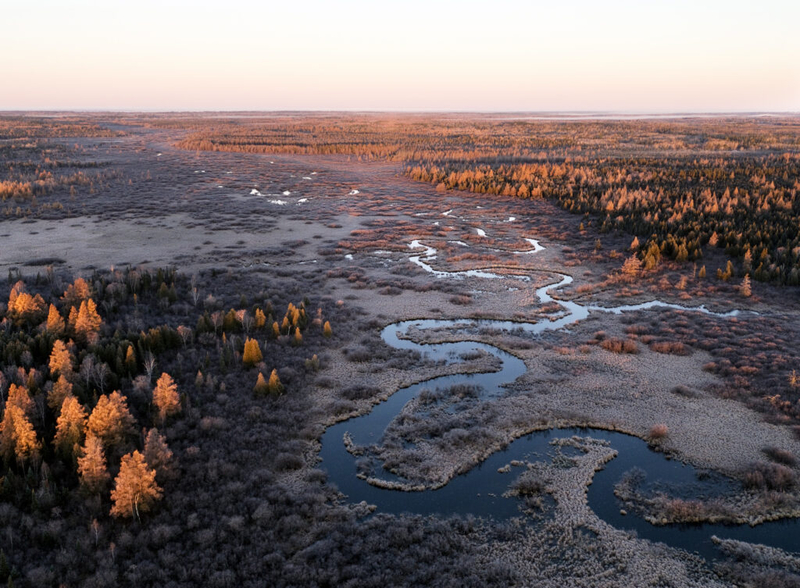
(Drone photo by Rob Levine/Minnesota Reformer)
In the legal fights over the federal government’s ruthless immigration crackdown, defense lawyers have recently enjoyed a great deal of success with a novel argument: Because of a well-established pattern of dishonesty and deceit in their filings, federal prosecutors should no longer enjoy the “presumption of regularity” — the notion that public officials are presumed to act honestly and in good faith.
The simple logic: A conversation with a well known prevaricator is fundamentally different from a conversation with a person who has a track record of honesty. The first instance calls for maximum skepticism, not good will.
This principle comes to mind reading a press release from a company called NewRange Copper Nickel — formerly known as PolyMet — as it touts a set of “project enhancements” for its long stalled copper-nickel mine near the northeastern Minnesota city of Babbitt. The announcement makes many nice-sounding promises about plans for the state’s first copper-nickel mine, including its goal of “reducing environmental impact.”
To anyone who has followed the NorthMet saga as it has wound its way through the courts for the past eight years, this triggers a warning light. The glacial progress of this project is not a consequence of regulatory overreach or delay; it is the inevitable outcome of shoddy geological, engineering and legal work.
NewRange wants to kickstart its ill-conceived plan without doing the work that it demands. The company says the project holds “21 of 24 permits required to begin NorthMet operations.” Sounds good, right? Except that those three missing permits happen to be the most crucial, including the overarching permit to mine. The Minnesota Department of Natural Resources approved the permit to mine in 2018, but it was reversed by the Minnesota Court of Appeals in 2020. That decision was affirmed by the Minnesota Supreme Court in 2021.
In press announcements touting the revived proposal, neither New Range nor the DNR mentioned the status of the permit to mine. The company’s message is that the proposed mine meets all of Minnesota’s “tough” mining standards.
Among the many problems with the proposed NorthMet project, however: The plan for the storage of the tailings — the waste left over from processing, which is 99.7% of everything to be mined from the low-grade ore. Though NewRange hasn’t yet applied for amendments to its permit to mine, the company now says it won’t store the waste in an existing tailings pond on site. That was the plan for the past 20 years, despite compelling arguments that leakage from the pond would pollute nearby surface waters.
Under state law governing reactive mine waste, mining companies are obligated to develop a mine closure plan that ensures the safe storage of mine waste. For good reason: If mining waste spills into public waters, a chemical reaction ensues that creates a toxic slurry filled with heavy metals and neurotoxins. NorthMet would be the first test of these so-called “sulfide” mining rules.
At every turn NewRange’s plan to satisfy this law was filled with dubious claims. For example, the previous plan had been to store the tailings in a man-made basin whose design was suspect, that was built to leak, and whose underlying geology was unexplored.
Tony Runkel, lead geologist with the Minnesota Geological Survey and an expert on how groundwater flows through bedrock, submitted comments on the DNR’s 2,169 page PolyMet supplemental draft environmental impact statement, noting that “well-known techniques” were not applied in the hydrogeologic studies at the mine site and tailings basin area.
In his comments on the final Environmental Impact Statement from 2015, Runkel concluded that a clearer picture of the bedrock could have been achieved by “…including information derived from a number of well-established, common practice techniques that provide greater insight into [water] transport through fractured bedrock.” In other words, they didn’t do the basic work.
The most preposterous part of New Range’s plan to address mine waste? It wanted to spread bentonite — basically, the clumping agent in cat litter — into the tailings pond, under the premise that this would forever prevent water from contacting the toxic tailings.
That was too much for the Minnesota Supreme Court, which ordered a hearing on the plan in 2021. Despite relentless advocacy from the DNR and NewRange, Administrative Law Judge James E. LaFave ruled that it would not work. NewRange’s own engineer testified that 298 million gallons of water would traverse the tailings every year.
MPCA was ‘arbitrary and capricious’ in granting PolyMet permit, Supreme Court rules
This was not the only problematic aspect of NewRange’s plans. The water pollution permit issued by the Minnesota Pollution Control Agency was invalidated first by the appeals court and then the Supreme Court in 2023, which “rebuked the MPCA for its irregular procedures and ‘arbitrary and capricious’ decisionmaking in issuing the permit.”
The Wetlands Destruction Permit, granted to PolyMet in 2019 by the Army Corps of Engineers, also fell apart under scrutiny because the company violated the Fond du Lac Band of Lake Superior Chippewa’s water quality rights and standards.
Last year the main engineering firm contracted by NewRange split with the company. A few months ago the outside law firm defending the permit to mine in court abruptly withdrew. Neither development was mentioned publicly but it’s hardly a wild inference to read these as signs of a troubled project.
The project also has new owners and operators, and, most importantly, a lawyer representing the company informed the DNR last month of an entirely new plan to store the mine tailings, following years of inaction in the face of a Supreme Court ruling calling for a contested case hearing on the bentonite — kitty litter — reclamation technique, needed to satisfy the DNR’s reactive waste rule.
To date, NewRange has never modeled for climate change risks, such as the 500-year flood that deluged nearby Duluth in 2012, or the 200-year rainstorm event in 2024 that caused major damage to the tailings basin. The latter required emergency remediation.
In their new proposal NewRange said it will change the way it mines the ore, the way it processes the ore, the way it will transport the ore, and the way it stores the waste tailings.
At what point does the DNR think that NewRange should start over with an entirely new environmental impact statement, rather than just tweaks to the existing one, even though the project is hardly recognizable from the previous plan? NewRange and the DNR are thinking they can change nearly everything about the proposal yet still retain permits that are already deeply flawed or non-existent. Even Microsoft makes you get a new Windows license if you replace too many parts on your PC.
The DNR and NewRange say “trust us.” But virtually everything they’ve done in this 20-year project screams neither are trustworthy. They want us to forget the history of this project and avoid the public scrutiny, transparency and costs that would be part of a brand new process.
At this point the responsible thing to do is start over. This time the DNR should force NewRange to follow the rules.

Saint Paul, MN