Advocates for homeless Vermonters say new rules put ‘process over people’
Description
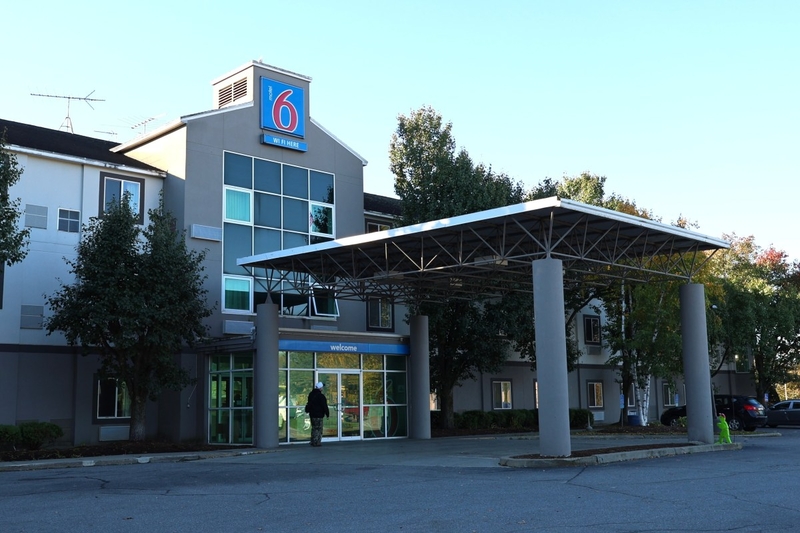
Motel 6 in Colchester on Oct. 20, 2026. Carly Berlin/Vermont Public
Carly Berlin covers housing and infrastructure for Vermont Public, in partnership with VTDigger.
At a series of heated meetings, advocates for unhoused Vermonters called on Gov. Phil Scott’s administration to reverse course on its implementation of a sweeping homelessness law passed earlier this year.
The architects of the legislation and others have argued that the Department for Children and Families’ new rules governing access to motel rooms are overly restrictive and delay or block unhoused people from entering shelter. Advocates say applicants calling for a motel voucher have routinely sat on hold with the state for hours only for calls to drop, or to learn that there are no rooms that suit their needs available near them, leaving them to sleep outdoors.
Some are calling on a legislative oversight committee to reject officials’ rules.
“This is process over people, and it is not comporting with the intent of the statute to be flexible – to bring people in instead of keep them out,” said Leah Burdick, a staff attorney for Vermont Legal Aid, at a hearing last week.
DCF officials have defended their work, arguing that they had little time to draft the new guidelines after the law went into effect in June. They say they have cut down on wait times in recent weeks, and that they need to prioritize people with the highest needs for a limited number of available motel rooms.
“We want to fix the problem of homelessness. We have the task of putting people into 700 rooms,” DCF Commissioner Sandi Hoffman told lawmakers, following an hour and a half of testimony from advocates imploring officials to effectively scrap their rules and start over.
The law, Act 143, was an attempt to better organize the fragmented system serving the over 4,800 people experiencing homelessness in Vermont. It set up a “continuum” of shelter options for unhoused people, from rental aid to prevent homelessness to highly structured shelters to low-barrier settings with looser rules around sobriety.
Private hotels and motels, which have been the single largest provider of shelter in recent years via Vermont’s motel voucher program, remain a part of the continuum as a kind of last resort. Under the law, their use is more limited, with lower caps on the number of rooms the state can use and how long individuals can stay in them.
Act 143 was designed to go into effect in phases over the course of several years. DCF’s first round of new rules, which took effect Sept. 1, focused on changes to the state’s use of motels as shelter.
Officials ended the use of the 211 helpline for motel intake on nights and weekends, effectively requiring that people seek vouchers from DCF during regular business hours. Meanwhile, DCF has enacted a new screening process, asking people a list of detailed questions to determine whether they should get priority access to a motel room.
That screening process has become a main point of contention for advocates and legislators. Act 143 required “a brief, standardized initial assessment” for people seeking aid. The new system put in place by DCF, critics say, is lengthy and confusing, sometimes requiring multiple phone calls over the course of several days.
The questionnaire itself asks people to describe their current housing situation, medical conditions, and community supports. Their answers guide a DCF worker to assign them a score based on their risk. That score has immediate stakes for whether or not someone gets a motel voucher.
The highest scoring households — which include all families with minor children, along with people experiencing acute medical or domestic violence emergencies — get a motel placement when any space is available. But lower scoring households only get referred to a room when there are 50 to 100 rooms available, depending on their level of need, according to DCF guidelines.
Jessica Radbord, an attorney with the ACLU of Vermont, obtained public records showing how DCF has trained staff on the new assessment. In one hypothetical exercise, an applicant is staying with a partner who has a history of physically harming them. The applicant reports escalating tension to DCF, including verbal threats, along with the fact that the home has hazards like a lack of heat. DCF workers are instructed to code the risk as a three out of four, because violence is not actively occurring.
“That lower score … makes placement, especially when rooms are scarce, less likely, even if rooms are immediately available,” Radbord told lawmakers last week.
Despite the hurdles described by advocates, the number of motel rooms in use by the state has actually increased markedly since the new rules went into effect: from 390 rooms in late August to 668 on Oct. 19. That’s still under the 700 rooms allowed by law.
DCF officials say fewer people were seeking motel vouchers over the summer because they’d likely run out of their allotted days for the year, or had found other accommodations during warmer weather, and are now seeking shelter again.
Read the story on VTDigger here: Advocates for homeless Vermonters say new rules put ‘process over people’.
Montpelier, VT