$32M from SC would end barrier island dispute. Some legislators want to keep fighting.
Apr 09, 2026 | 5:57 pm ET
Description
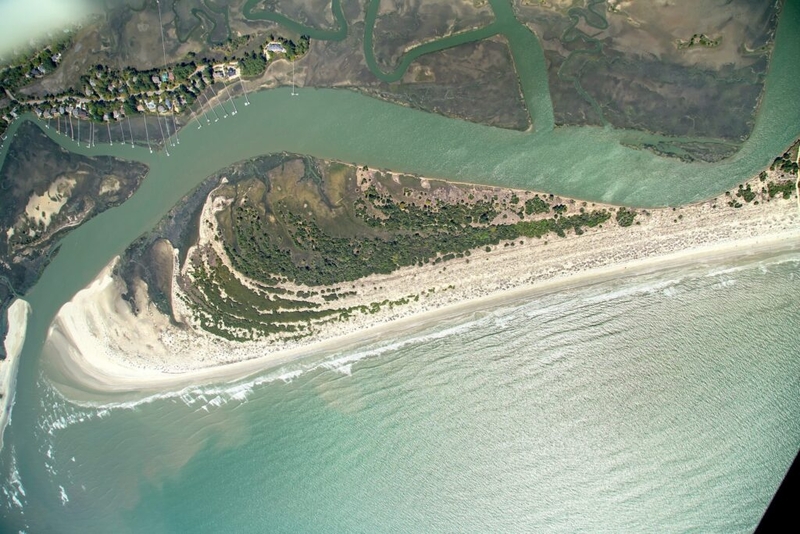
South Carolina legislators must decide whether to spend $32 million to end a long-running legal dispute over Captain Sams Spit, as seen from above. (Photo courtesy of Town of Kiawah Island)
COLUMBIA — A 17-year legal fight over an undeveloped portion of a barrier island near Charleston could come to an end if legislators agree to spend $32 million as part of a pending settlement agreement.
That’s a big “if.”
Whether to accept the settlement amount offered or take the risk of continuing to fight is the question legislators must answer in drafting their final spending plan.
The budget package approved by the House last month included the full amount, which would end the legal fight. But the version advanced out of a Senate committee Thursday included just $1, a common way of setting up negotiations between the two chambers.
Deciding not to pay the settlement amount would allow the case, which stemmed from a developer that wanted to build a neighborhood on Captain Sams Spit, to continue in the federal courts, state attorney Emory Smith told a state fiscal oversight board last week.
If the state won the legal battle, taxpayers might pay less than the agreed-upon amount. But if the state lost, taxpayers could end up on the hook for $200 million or more in damages, plus legal fees, according to lawyers in the state attorney general’s office.
“This is effectively a gamble,” Sen. Wes Climer, a Rock Hill Republican, said during budget discussions Tuesday.
Regardless of the outcome, rejecting the deal could mean years of continuing litigation, Smith told the oversight board, the State Fiscal Accountability Authority, which includes the governor and the chief budget writers of the House and Senate.
“There are always uncertainties in complex litigation,” said Smith, general counsel to the attorney general’s office. “We believe this settlement is a way that resolves those uncertainties in a reasonable way for all the parties’ concerns.”
Also at stake is the permanent protection of 170 acres of undeveloped land. In exchange for the settlement amount, Kiawah Development Partners would turn over the 130 of 170 acres it owns to the state and the Town of Kiawah, Smith said.
South Carolina would own the bulk of the spit, including a 92-acre portion to turn into a public nature preserve under the Department of Natural Resources’ Heritage Trust program.
The 2-acre Beachwalker County Park the developer also owns but leases to Charleston County would go to the Town of Kiawah Island, which would negotiate a deal with the county to protect that portion from development.
“We are pleased to report that after 17 years of litigation over Captain Sams, a tentative settlement has been reached that would prevent all development and ensure its protection as a natural area in perpetuity,” Kiawah Development Partners said in a statement.
The Town of Kiawah, which would pay $3.5 million toward the total $37 million settlement, has already approved the deal. As has the Conservancy of the Sea Islands, a local land trust, which would fund $1.3 million of the total.
Settle or keep fighting?
Legislative approval is the final step to approve the agreement.
The state should “know when to hold, know when to fold,” said Senate Finance Chairman Harvey Peeler, who sits on the fiscal oversight board and voted against settling. This time, it’s time to hold, Peeler said.
“I don’t want to throw in the towel,” the Gaffney Republican said during last week’s meeting.
Peeler voted against the deal. The rest of the board voted in favor: Gov. Henry McMaster, House Ways and Means Chairman Bruce Bannister, Treasurer Curtis Loftis and Comptroller General Brian Gaines.
A similar fight played out in the House last month, as members of the Freedom Caucus tried to get the $32 million for the settlement thrown out of the House’s version of the budget.
The ultra-conservative caucus regularly tries to throw out anything members consider wasteful spending, which encompasses most of the budget outside of roads and bridges, education and law enforcement. But the settlement drew some concerns from members of the majority Republican caucus as well.
If the state could win the case, it should keep fighting to pay less, Rep. James Teeple said during the debate.
“In my opinion, it’s theft from taxpayer dollars,” the Johns Island Republican said of the settlement.
That’s a risky move, Bannister replied. Even aside from the potential hundreds of millions of dollars in damages, the state would have to continue covering legal costs, potentially with interest, he said.
The Greenville Republican urged his colleagues to “make sure we don’t make dumb decisions because we’re trying to make political points.”
The legal history
The battle over Captain Sams Spit dates back to 2009, when Kiawah Development Partners sued the state, claiming delays and denials in permitting amounted to the state taking its land without payment.
The developer bought the land in 1988 with the intention of eventually building 50 luxury homes, which the company estimated would sell for between $3 million and $4 million apiece, Smith said.
But the spit, named for Robert Sams, a local planter who died in 1760, is susceptible to erosion from wind and waves.
To be sure portions of the low-lying spit didn’t disappear, Kiawah Development Partners proposed building walls along the beaches. When the state’s environmental agency approved only a portion of the original wall, the developer sued, claiming the decision equated to the state unlawfully taking private land.
Thrice, appeals over the company’s permits reached the state Supreme Court, which held that the developer did not have the right to build the walls.
Meanwhile, erosion ate away at the spit. The expiration of a contract between the developer and the nearby island town prompted a second lawsuit, as the town and conservation groups claimed the company failed to uphold part of the deal.
Under the agreement, the company had to conserve any undeveloped land and turn it over to the town. But the developers argued the state Supreme Court’s decisions about where it could build invalidated the deal.
That lawsuit would also end under the settlement.
“This agreement is a win for taxpayers, the state, and the companies involved, and closes a dispute that’s been dragging on for years, before my time as attorney general,” state Attorney General Alan Wilson said in a statement.
‘A natural treasure’
On Captain Sams Spit, bottlenose dolphins work together to corral schools of fish onto the beaches, then launch themselves onto mud or sand to grab them, a rare type of hunting called strand feeding.
Large sandpipers known as red knots stop on their migrations to rest and replenish their energy. Diamondback terrapins, a turtle that lives in estuaries instead of open ocean, nest in the high sand dunes.
“This is truly a natural treasure,” Kiawah Island Mayor Brad Belt said during a public forum on the settlement last month. “And that’s why this has been such an important exercise.”
The original development plans would have touched a relatively small portion of the spit, leaving the rest pristine. But any homes placed on the island could have disturbed the many plants and animals that depend on Captain Sams Spit, whether as a stopover on migrations or as a year-round home, said Amy Armstrong, director of South Carolina Environmental Law Project.
People strolling beaches or lounging outside their homes stress out wildlife. Residents bring pets and pests, which can drive other animals out of their homes. And the potential for a dock and boating nearby could expand the impact out into the water surrounding the spit on three sides, she said.
“The ultimate goal here has always been to entirely eliminate the threat of development,” said Armstrong, who represented conservation groups appealing permit approvals. “The only way you can really do that is by having some permanent protection.”
The settlement would accomplish that goal, Armstrong said. The Conservancy of the Sea Islands would hold conservation easements on the property, protecting it forever against development.
“There will never be a building there,” Donna Windham, the conservancy’s director, said during a meeting about the settlement last month.
At the same time, conservationists wanted to ensure people could still visit the island, which is a popular destination for kayakers, birdwatchers and beachgoers, Armstrong said. Research on the species that live and frolic there would continue under the settlement.
Deciding whether to accept a settlement or continue to fight is a balancing act, Armstrong said.
Legislators will need to decide if they’re willing to spend millions to protect the land, which she called “beloved by many, many citizens in our state.” Only two other barrier islands — Hunting Island and Huntington Beach, both state parks — remain undeveloped and accessible to the public, she said.
“It’s a lot of money,” Armstrong said, “but then again, not all that much money.”
Columbia